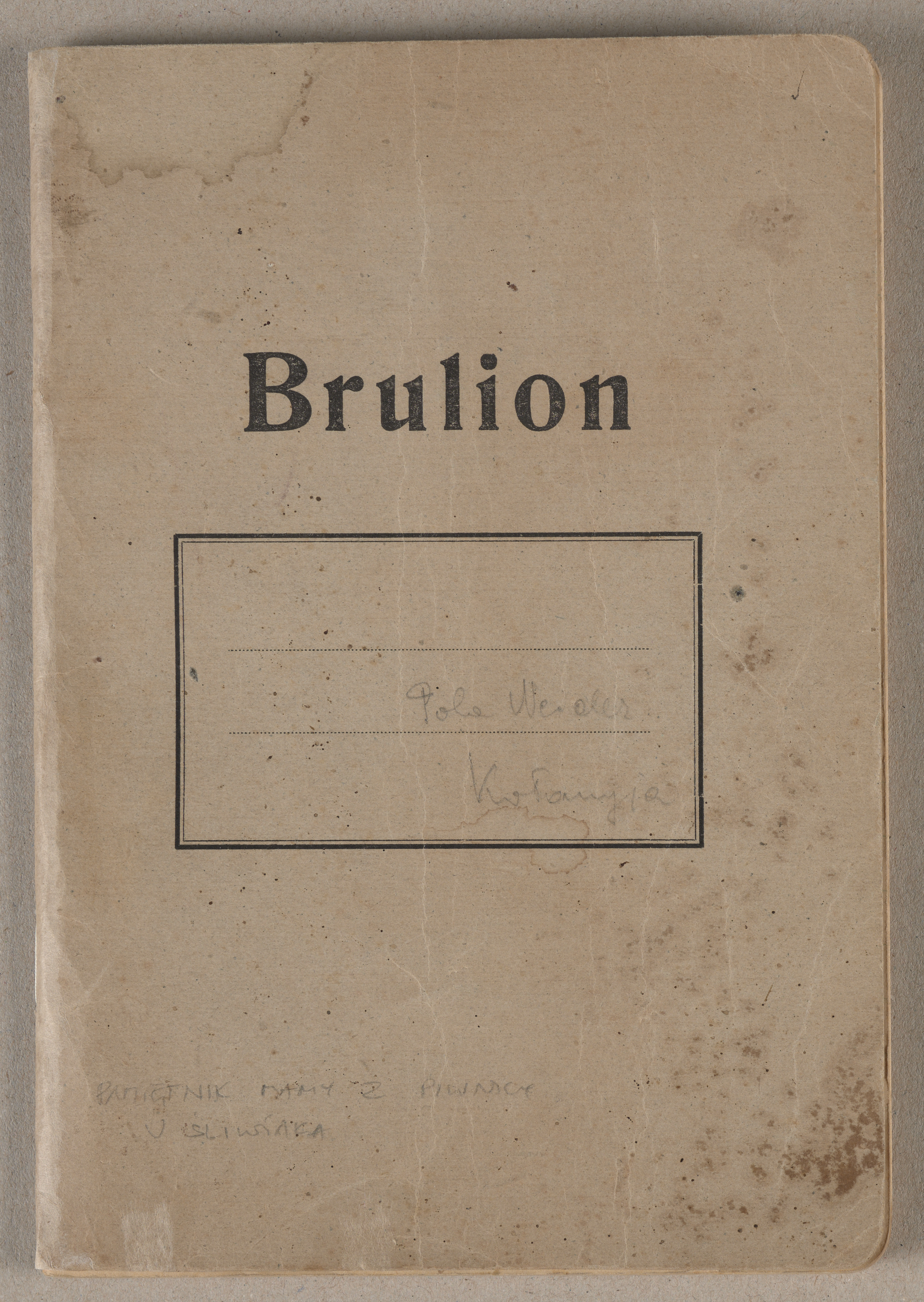
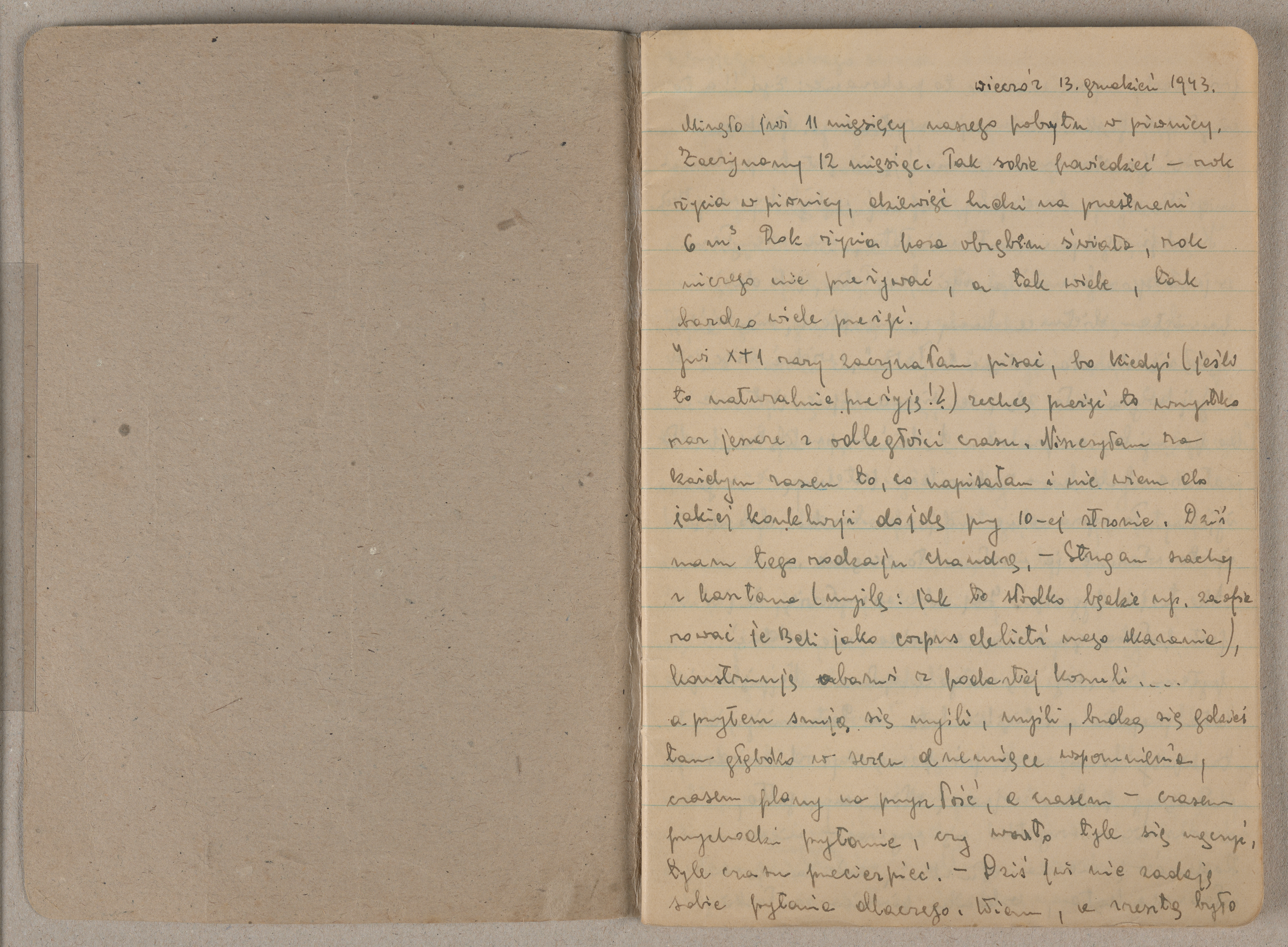
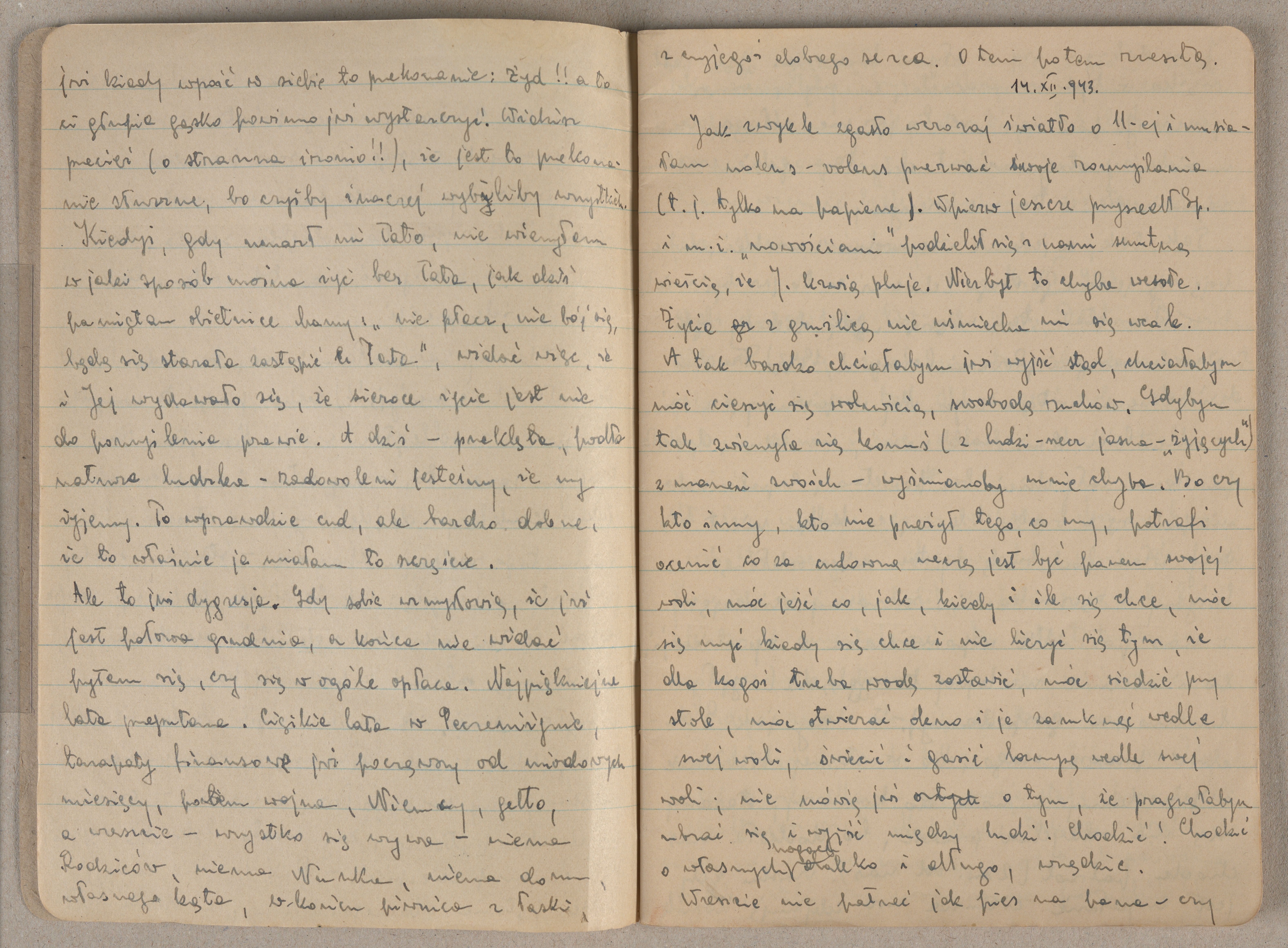
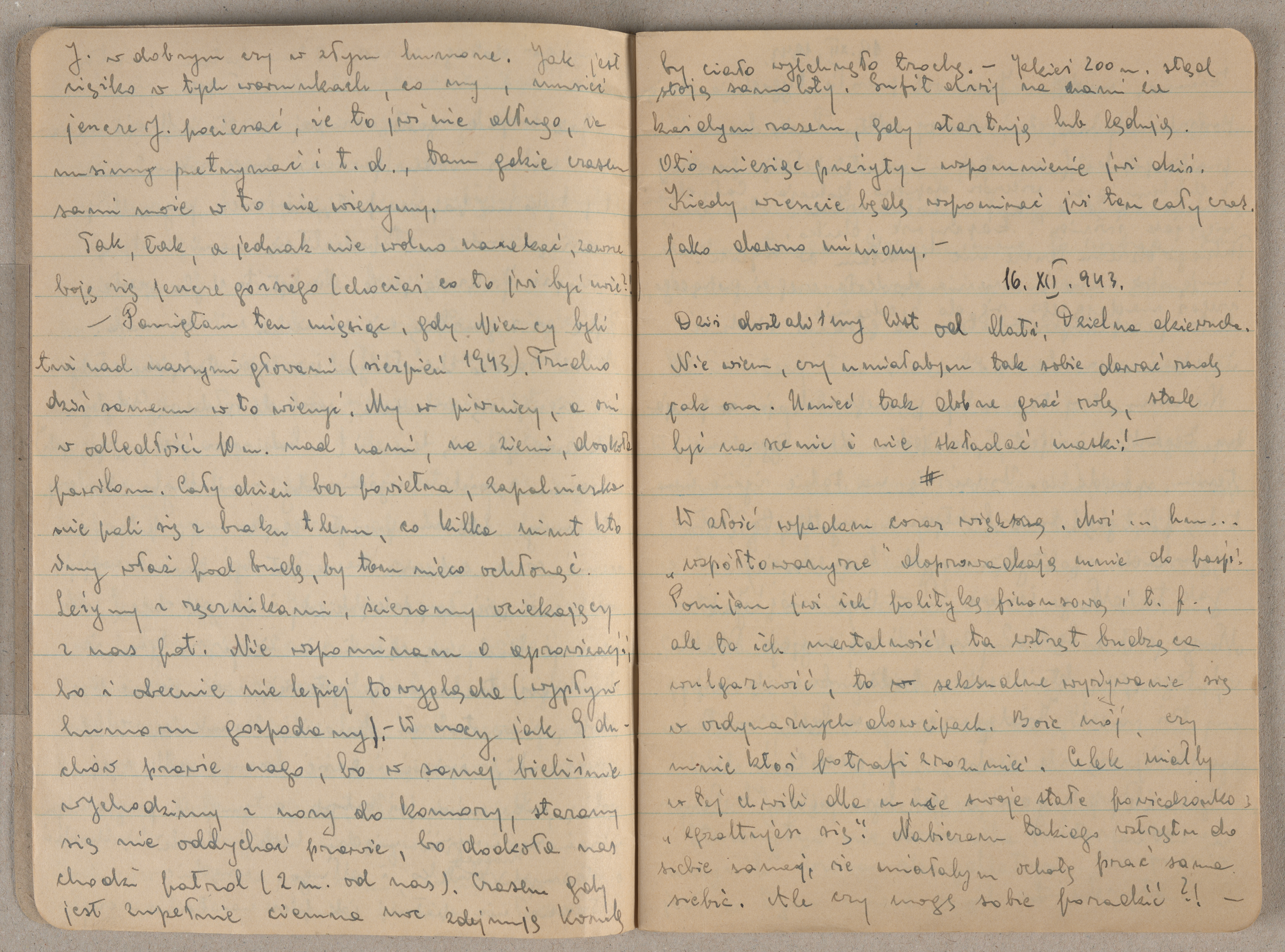
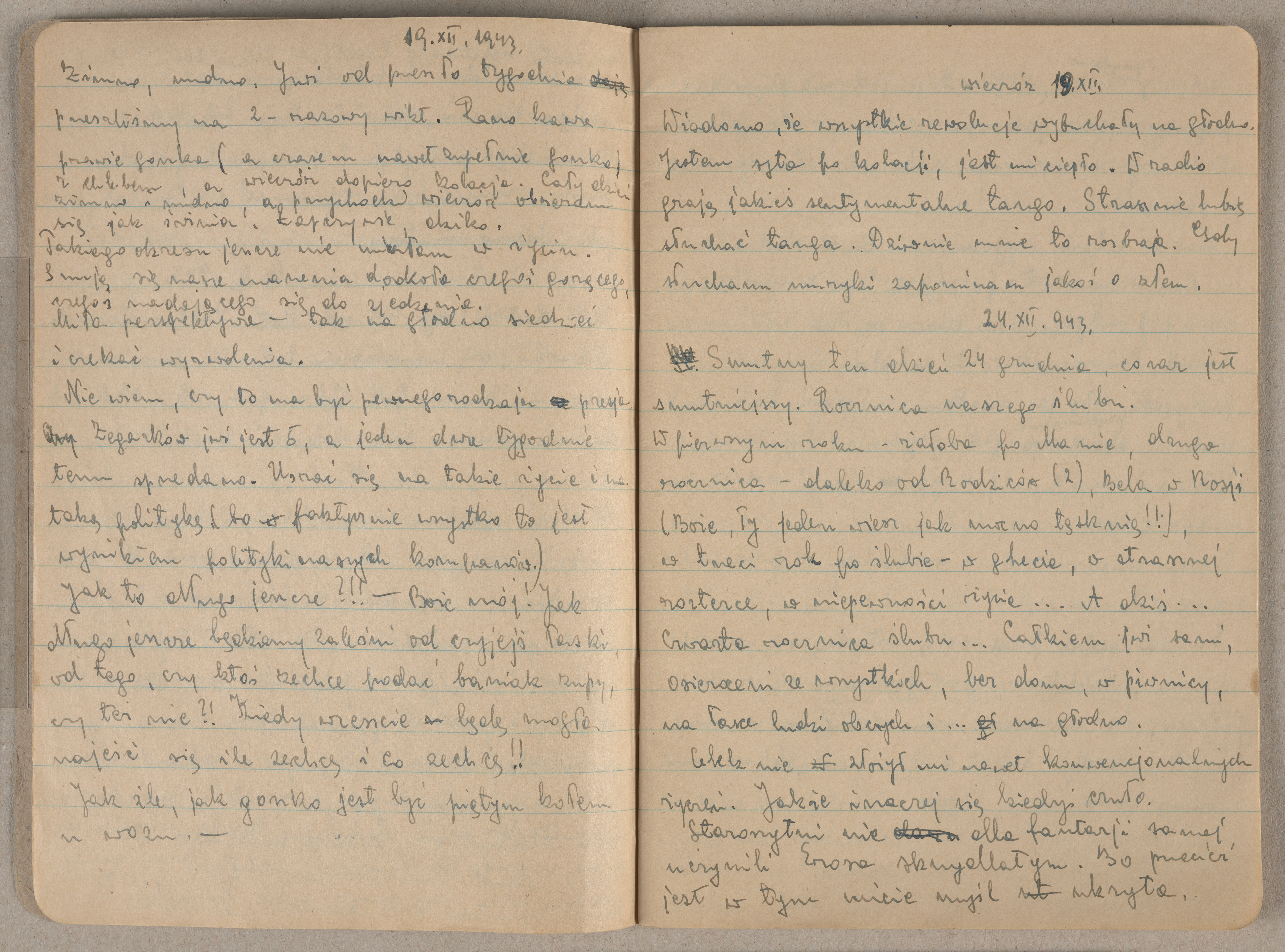
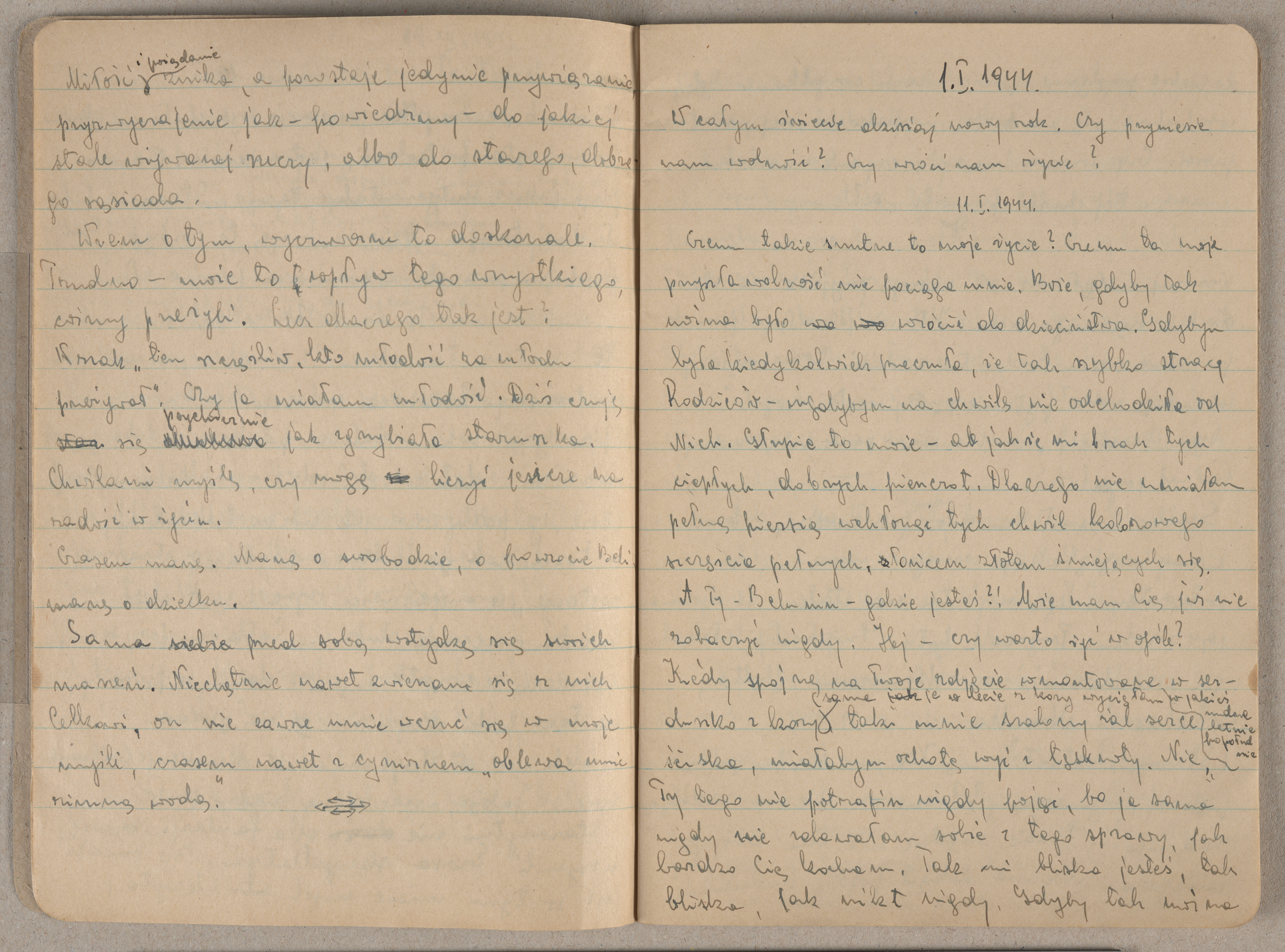
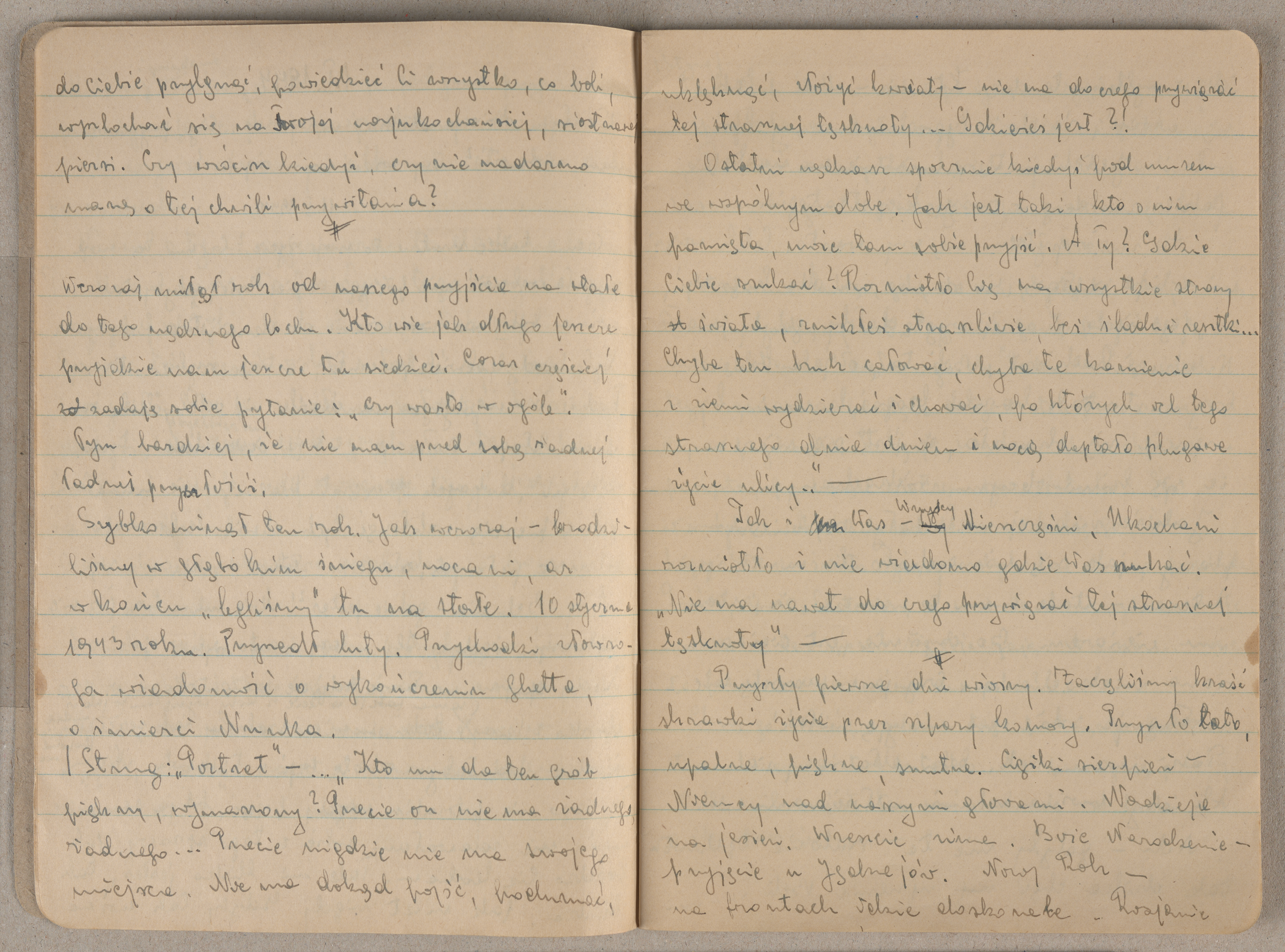
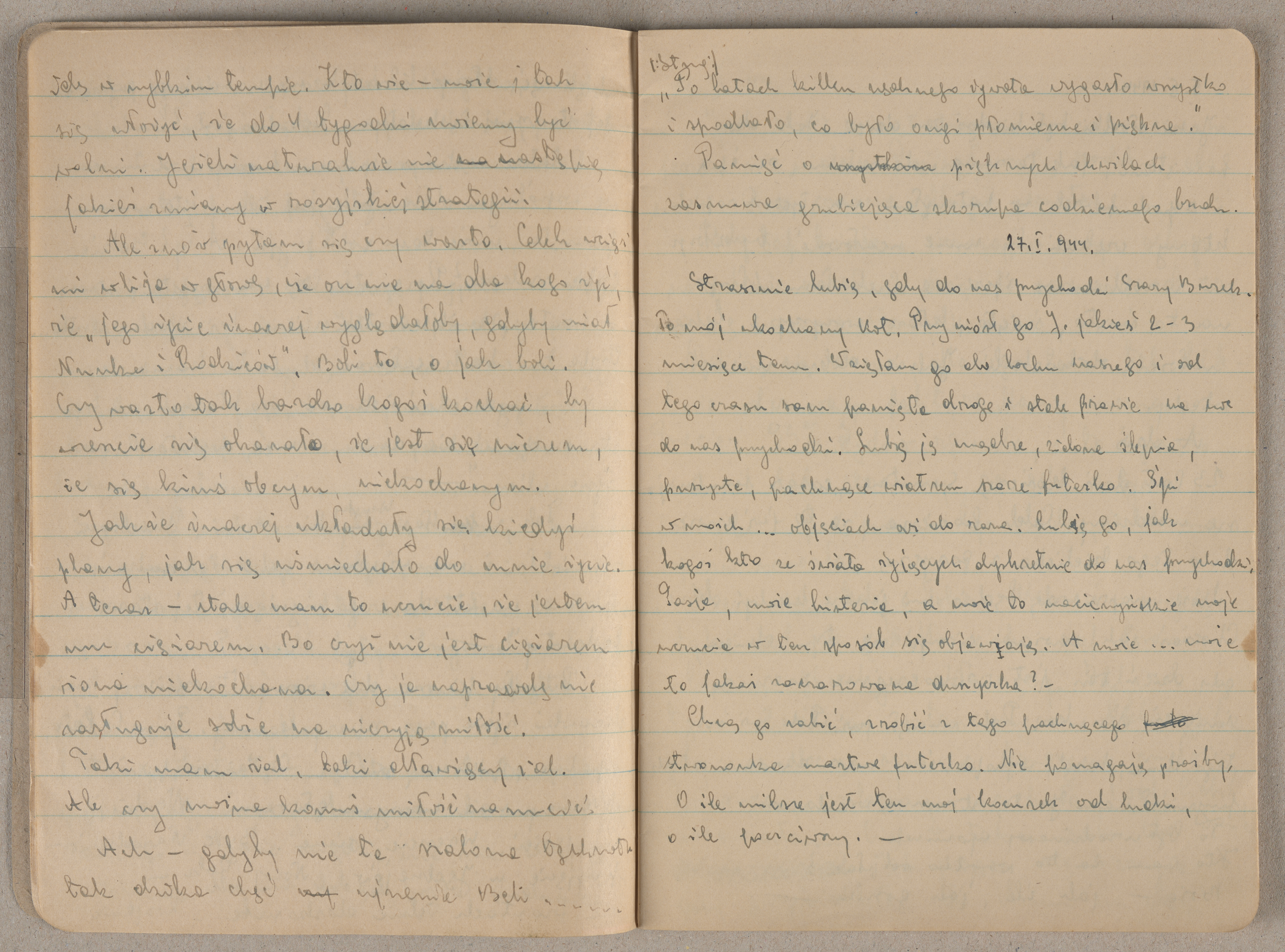
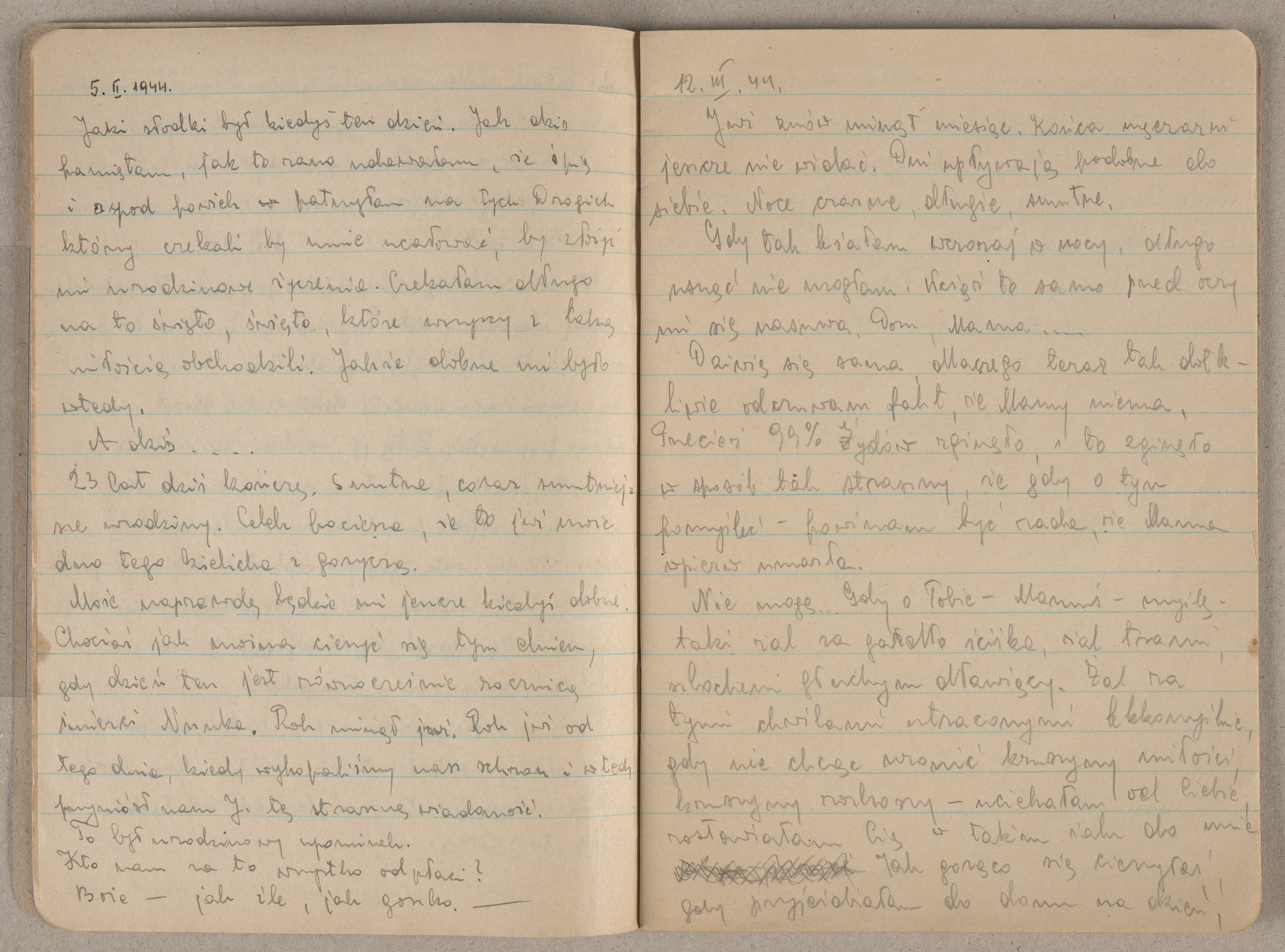
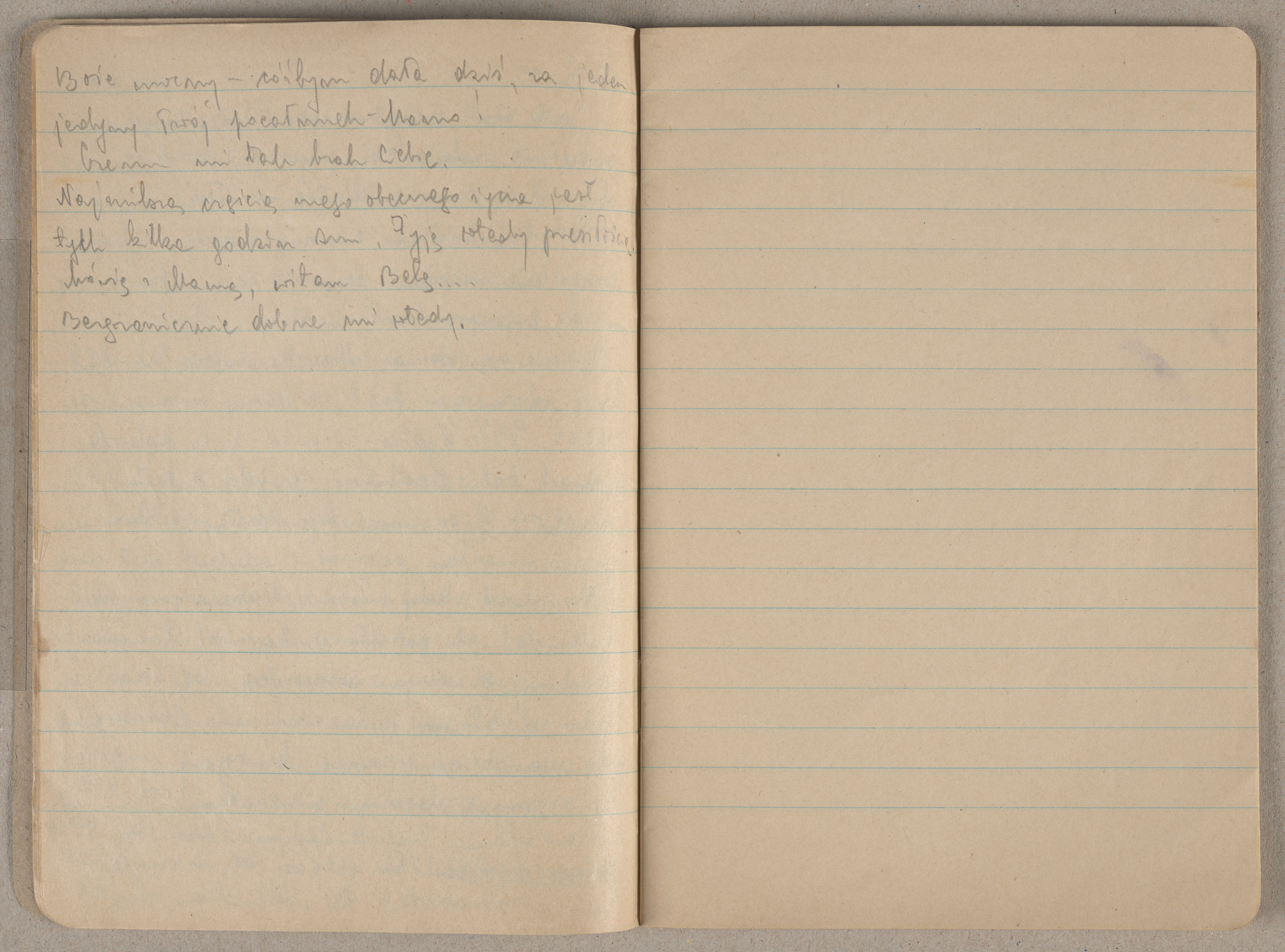
The diary, which is on display at the permanent exhibition of the POLIN Museum, contains the notes recorded by Pola Najder (born 1917 in Kołomyja), in the form of a diary she kept while hiding in a dugout on Andrzej Śliwiak's farm. In her memories, the author invariably refers to the room as a 'bunker', which brings to mind downright symbolic associations. Pola and her husband, Marceli Najder, spent over a year (from winter 1942/1943 to spring 1944) in a room with an area of 6 m², accompanied by eight men who were actually strangers to one another. Pola, as a young woman (barely twenty-five years old), found herself in a particularly difficult existential situation at that time. It is hard to imagine maintaining personal hygiene, or even self-esteem, being confined in such a small space with strangers, especially when they are all of the opposite sex.
Maintaining proper relations between the inhabitants of the bunker was extremely difficult due to the frustration caused by being together in a small space and the inability to change the situation, the constant fear that the Germans would discover the hideout, and physical exhaustion. Correct relations with the owner of the farm, Andrzej Śliwiak, and his wife, were also constantly tested. Initially, the hosts did not realize for how long they would risk their lives to save ten Jews hiding in the dugout on their farm.
In addition to the constant fear and tension, the people in hiding were troubled by rodents and insects sneaking into the bunker, as well as constant humidity, unbearable heat or cold (depending on the conditions outside). After all, the dugout, formerly used as a cellar for beer barrels, was not adapted to be inhabited by people. Sometimes, during the rainfall, it happened that the inhabitants' beddings and items they had managed to keep, which led to the formation of mould. Every now and then (as long as it was safe), efforts were made to clean and ventilate the room, and to change the straw in the beddings, to maintain at least a basic level of hygiene.
Marta Frączkiewicz