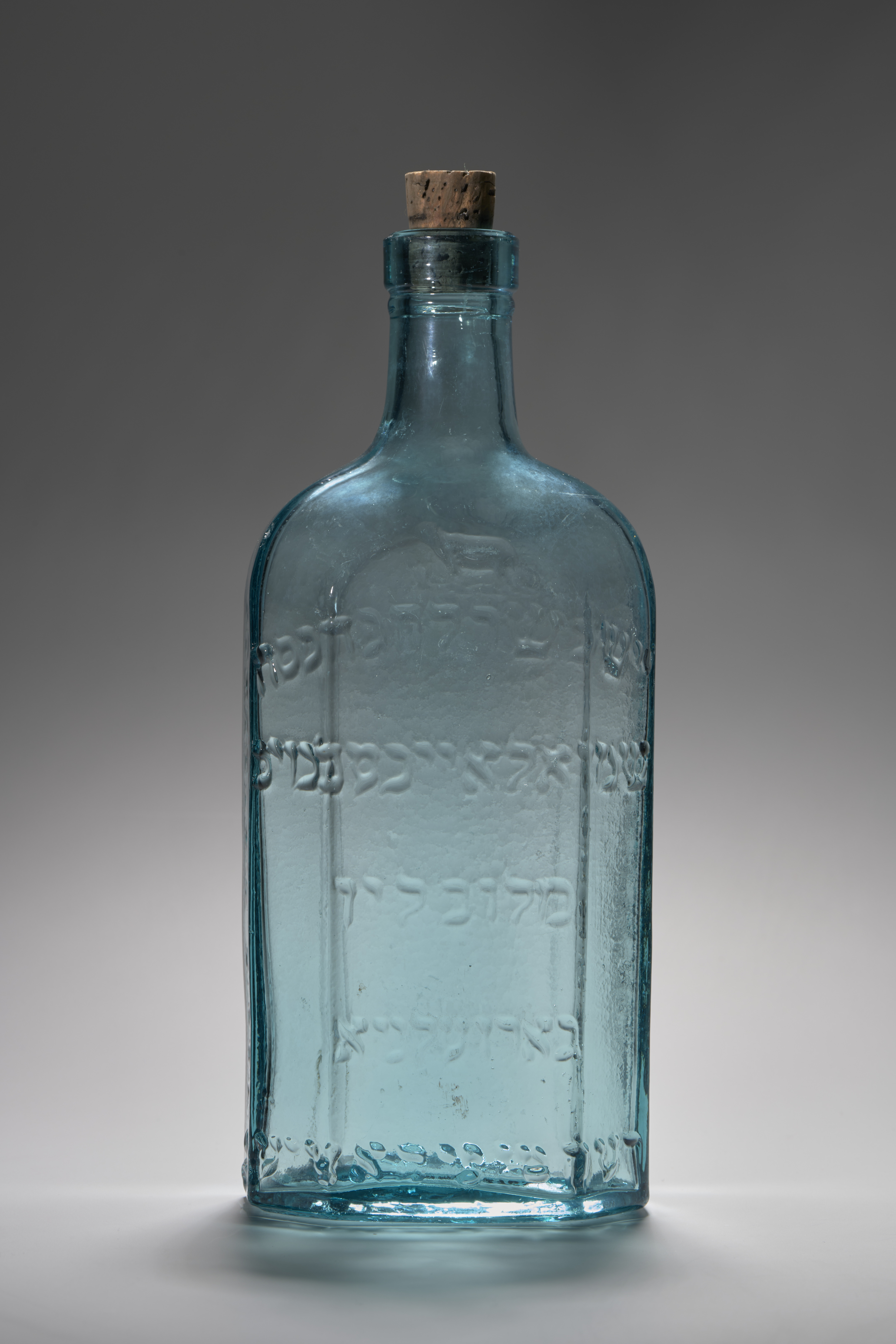
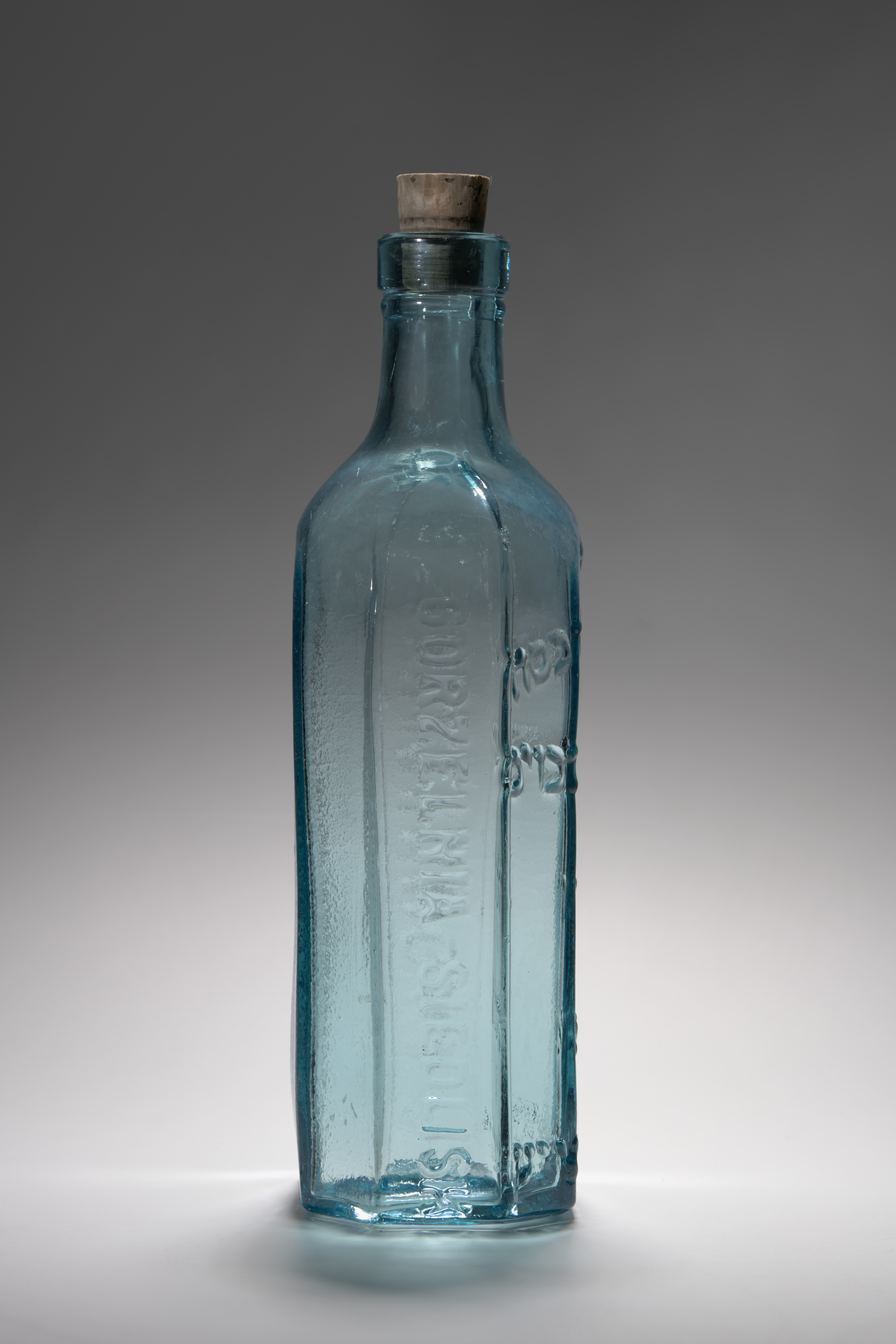
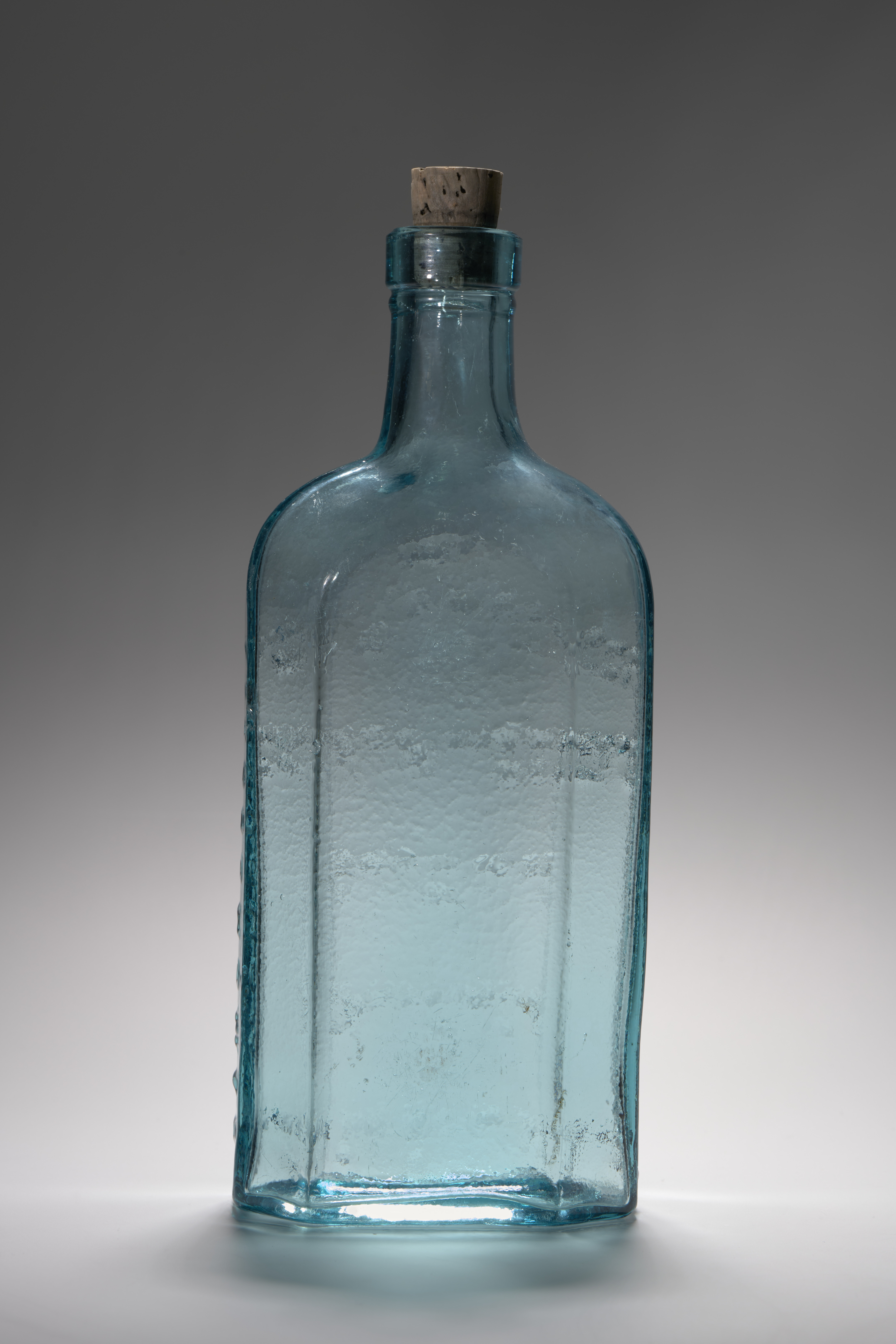
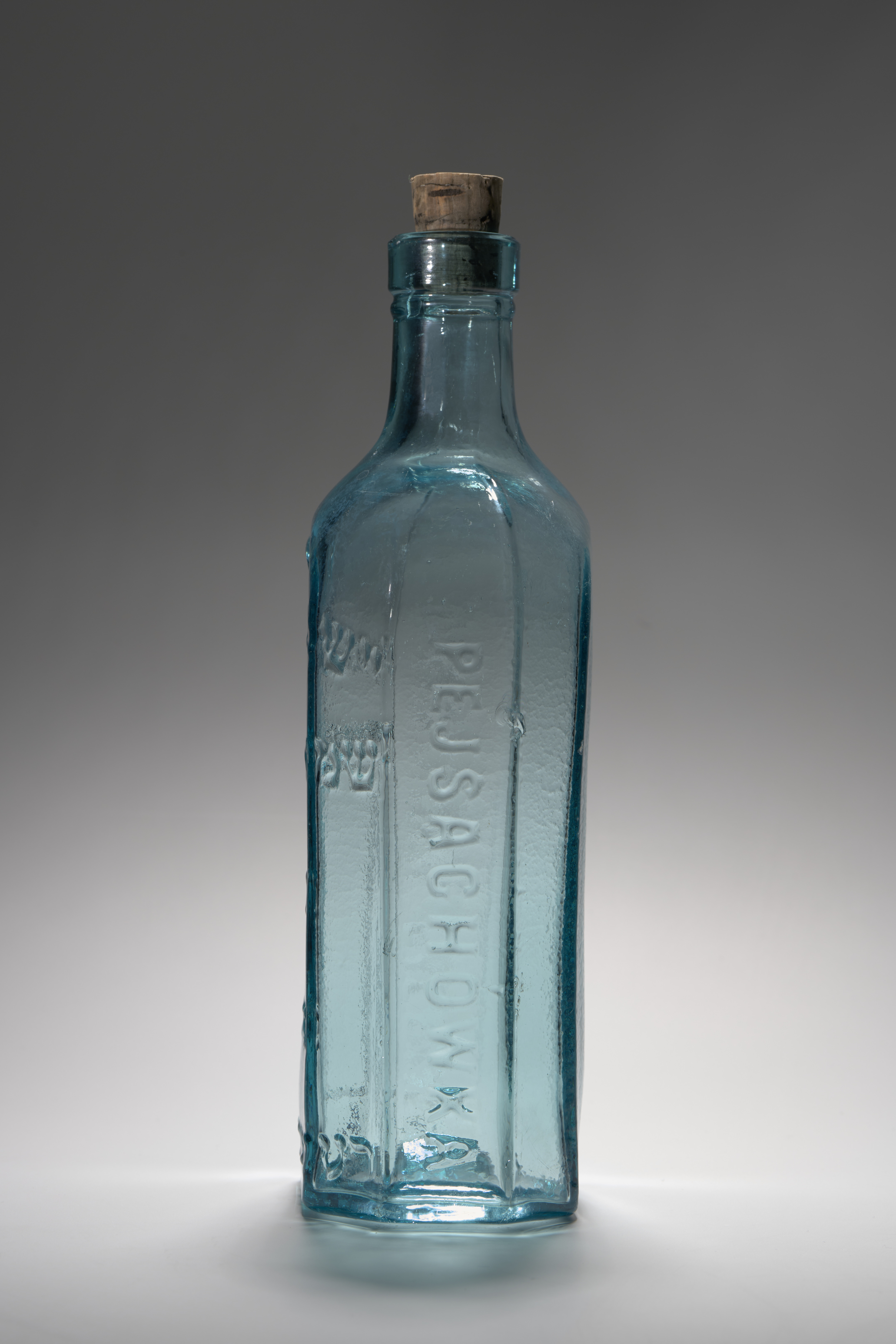
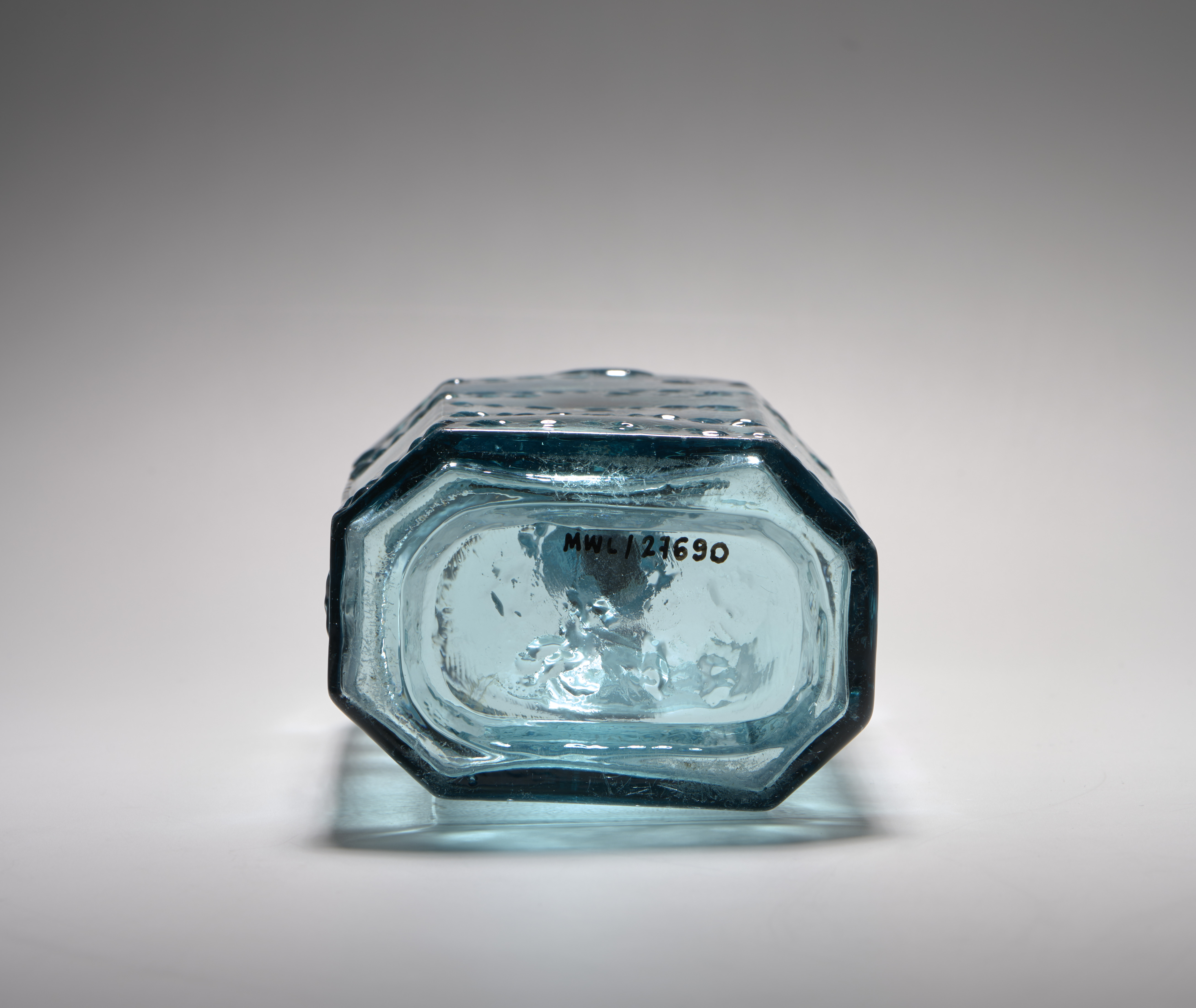
A four-wall glass bottle with chamfered corners, with a capacity of 0.5 litres, with a cork, intended for pejsachówka vodka, which is confirmed by the convex inscriptions on the glass. The inscriptions on the front wall are in Hebrew and overlap the side corners of the bottle: "Koszerna na święto Pesach/ Szmul Ajchenbaum/ z Lublina/ Gorzelnia/ Rektyfikacja" (kosher for Pesach/ Szmul Ajchenbaum/ from Lublin/ Distillery/ Rectification) Above the inscriptions, there is is a small image of a lamb (left profile). On the side walls, there are inscriptions in Polish: on one of the walls - "PEJSACHÓWKA", on the other one - "GORZELNIA SIEDLISK[O]" (Siedlisko distillery).
Pejsachówka was a kosher, strong, dry vodka, popular among Polish Jews. It was consumed during the Passover holiday, the name of which was pronounced "Pejsach" in Yiddish, hence the vodka. According to religious rules, no "chametz", i.e. leaven, or anything that may have come into contact with it and not properly purified, may be consumed or kept in a house during this holiday. Vodka belongs to the group of forbidden products, as it is obtained during the process of fermentation of cereals. Therefore, in connection with this important holiday, pejsachówka was created, which is not made from grain but from molasses or fruit (often plum).
The presented bottle was produced by an unidentified glassworks for the "Siedlisko" distillery of Szmul Ajchenbaum, which operated in the village of Siedliska near Fajsławice (Krasnystaw County, Lubelskie Province). The distillery was part of a 700-hectare estate purchased by Szmul Ajchenbaum in 1919.
The item was purchased for the collection of the Lublin Open Air Village Museum in 2009 from "Antyki" gallery (1909–1972) at Narutowicza Street in Lublin.