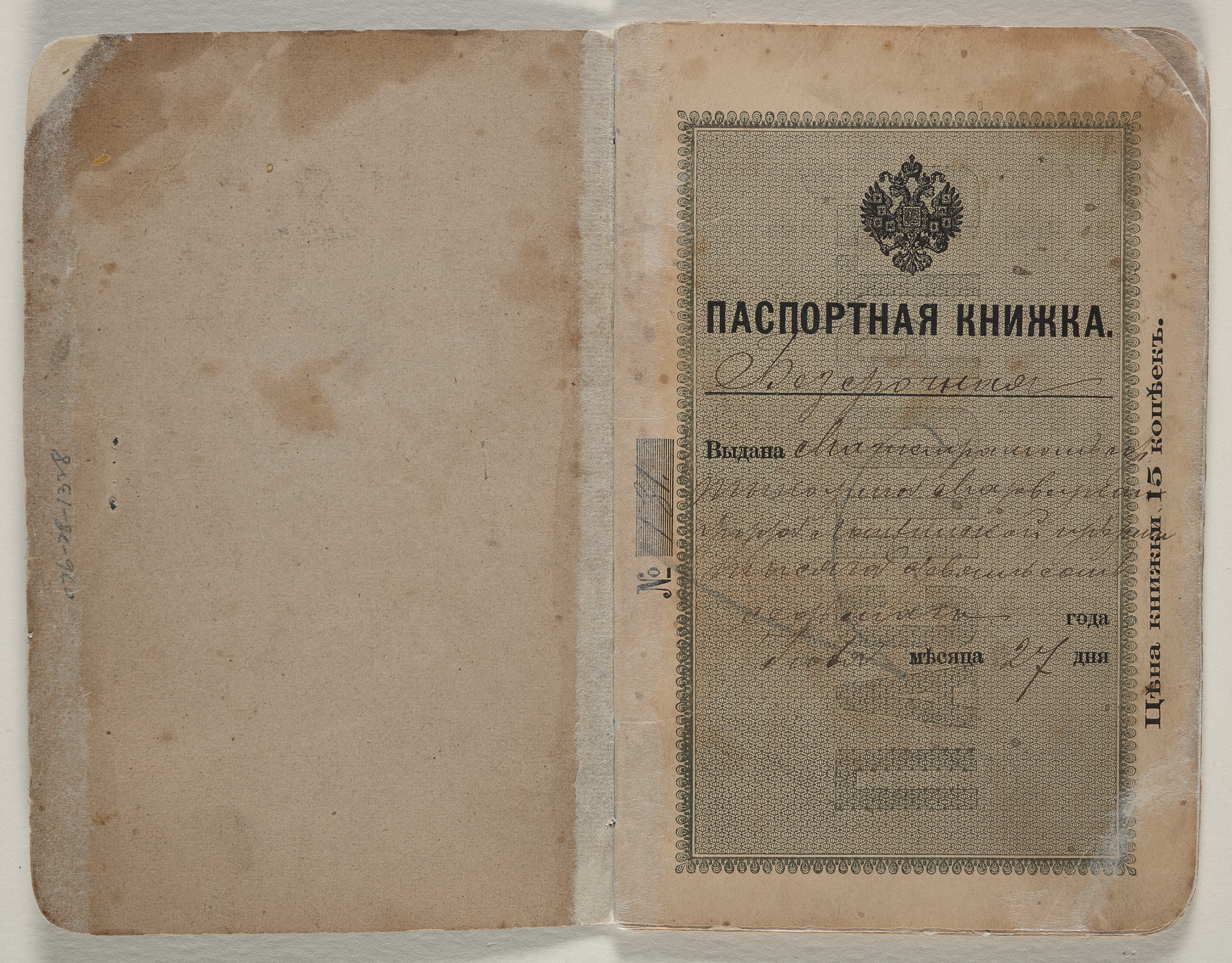
The 24-page Russian (and Russian-language) passport of Chai Fejga Ariewna Kurlander, a Polish Jewish woman from Tykocin who emigrated to the United States in the summer of 1907 (she crossed the Atlantic by ship from Rijndam of Rotterdam in August).
The content of the passport (in translation; compiled by MK):
Black cover (front and back) - impregnated canvas. Outer corners of cover and pages rounded.
On each page up to and including p. 11 printed grey background rectangle (with fine pattern inside giving the effect of shading the interior) with decorative edge, ending approximately 1 cm from the edge of the card. Side inscription across the entire rectangle: PASZPORT (PASSPORT)
At the top of the first page printed in black the emblem of the Russian Empire.
Translation of the content of the document (if not marked otherwise - printed content; handwritten text marked as "odr. Maria Karachentseva):
[inside cover - along outer edge in pencil, slanted letters:] 076-78-1378
[On p.1, unnumbered:] Passport.
[Unlimited
Issued [copies] by the Magistrate of Tykocin one thousand nine hundred and seven [overprint] in the year [copies] of July [overprint] in the month [overprint] of 27 [overprint] on
[No [overprint] 131.
[along right edge:] Passport price 15 kopecks.
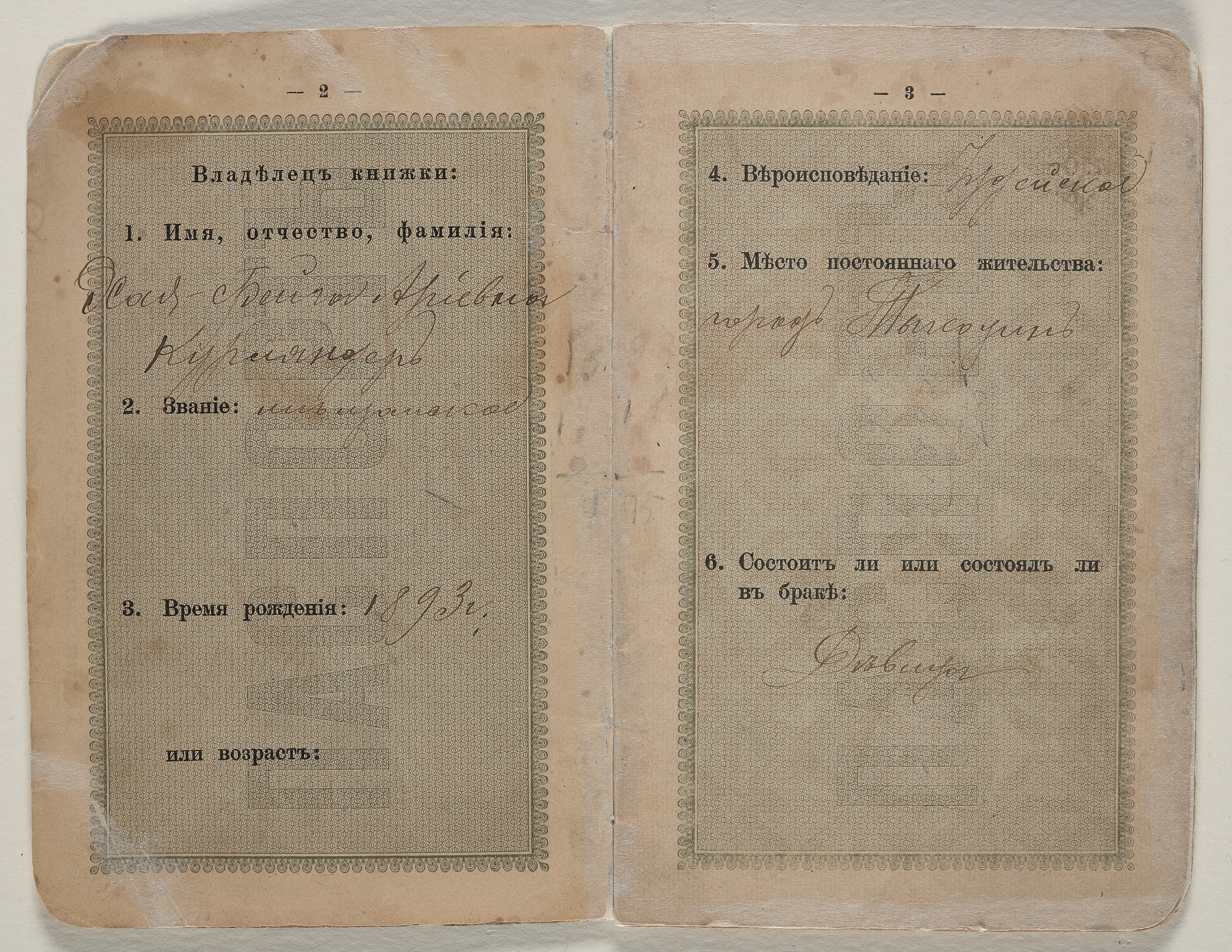
- 2 -
Passport owner:
1. first name, otczestwo, surname:
[odr.] Chaja - Fejga Ariewna Kurlander
2. social status: [odr.] bourgeois
3. time of birth: [odr.] 1893
Or age:
- 3 -
4. religion: [odr.] Judean
5. permanent residence: [ref.] town of Tykocin
Whether married or not:
[odr.] single
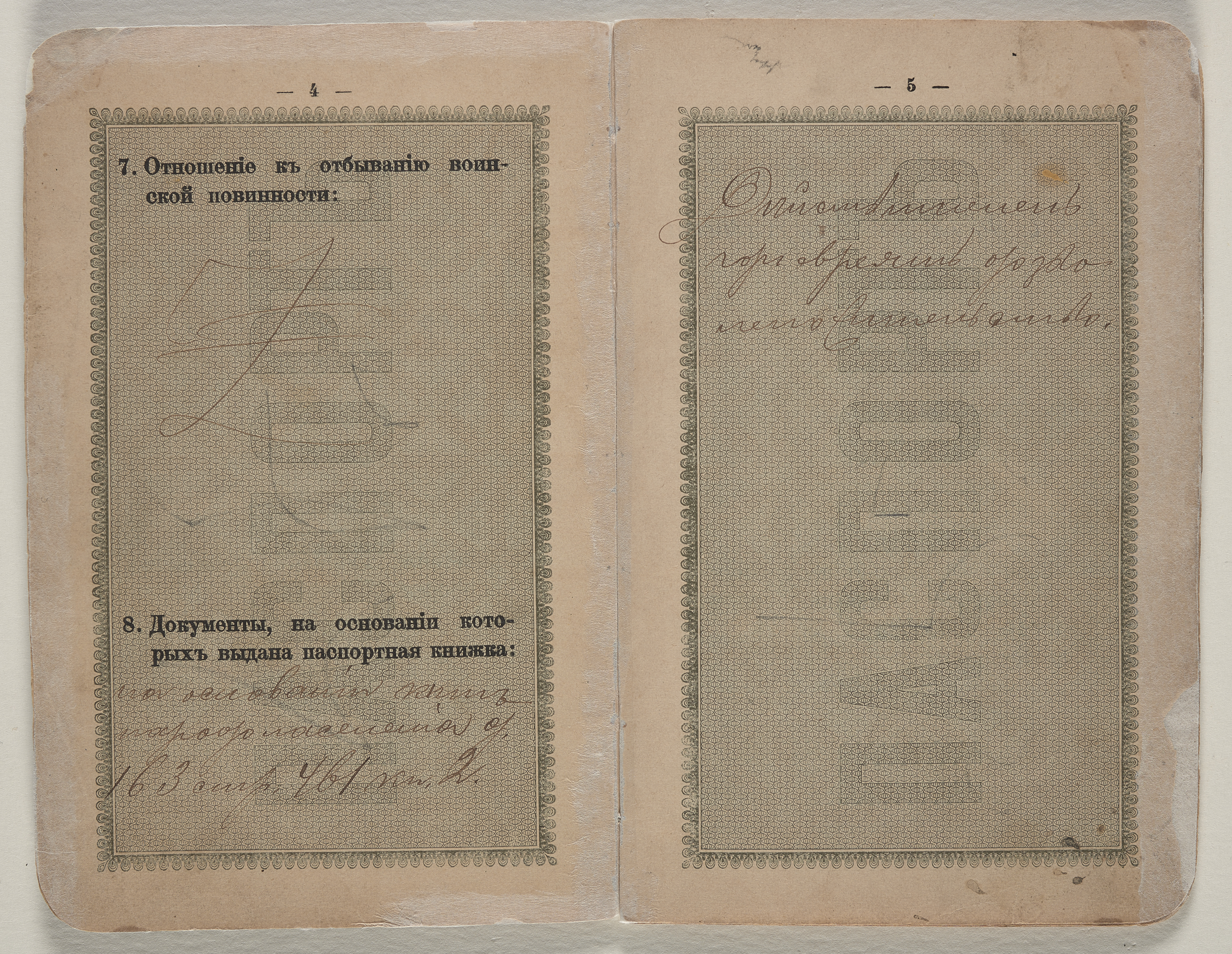
- 4 -
7. relationship to military service:
[tick mark].
8. documents on the basis of which the passport was issued:
[odr.] based on population books d. 163 p. 461 book 2.
- 5 -
It is valid
Jews were allowed to reside.
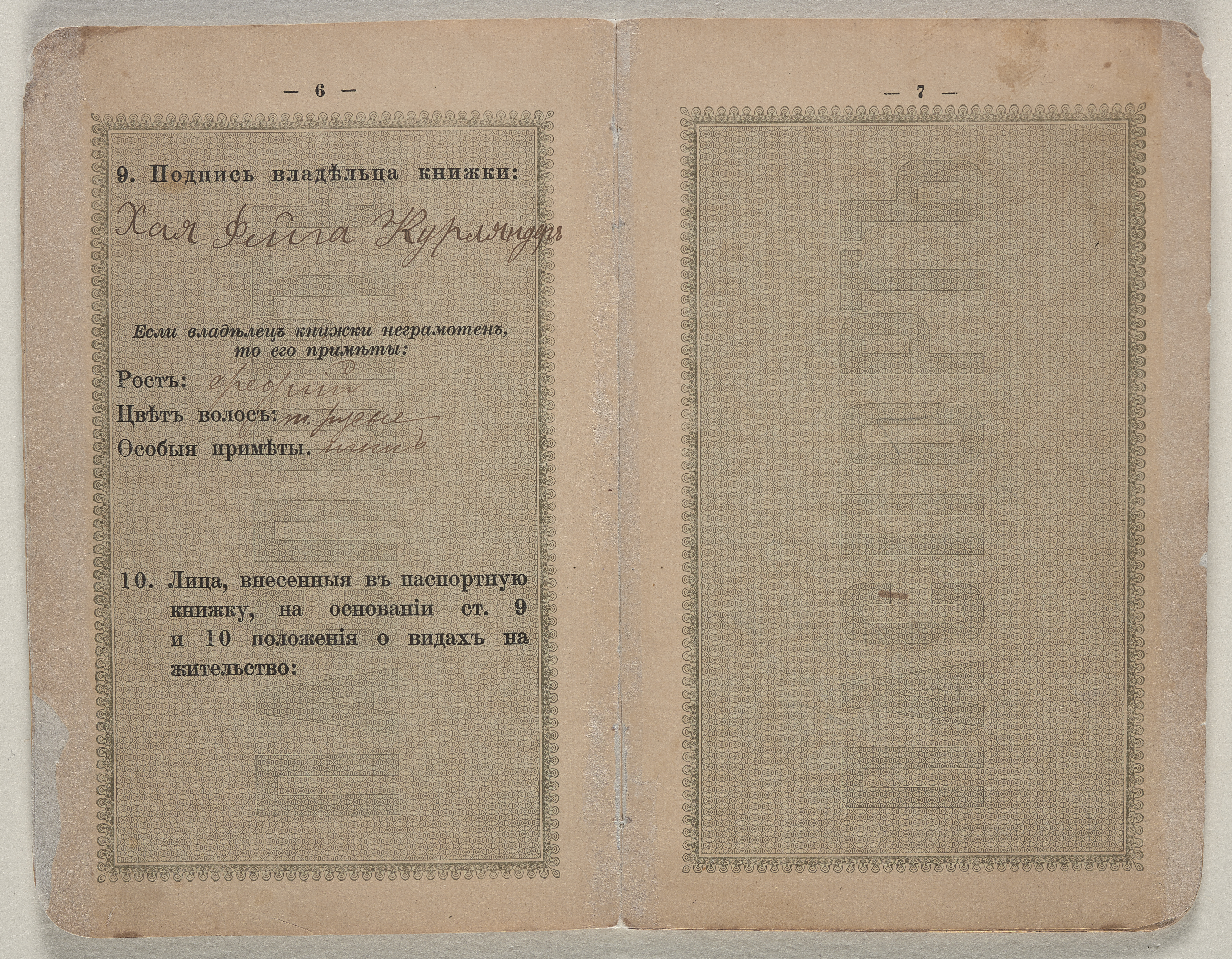
- 6 -
9 - Signature of the passport owner:
[from] Chaja Fejga Kurlander
[superscript in italics:] If the owner of the passport is illiterate then his features:
Height: [r.] medium
Hair colour: [redacted] c[dark] blond
Characteristics: [ref.] none
10. persons entered in the passport under Articles 9 and 10 of the law on residence proofs:
- 7 -
[no entry on page].
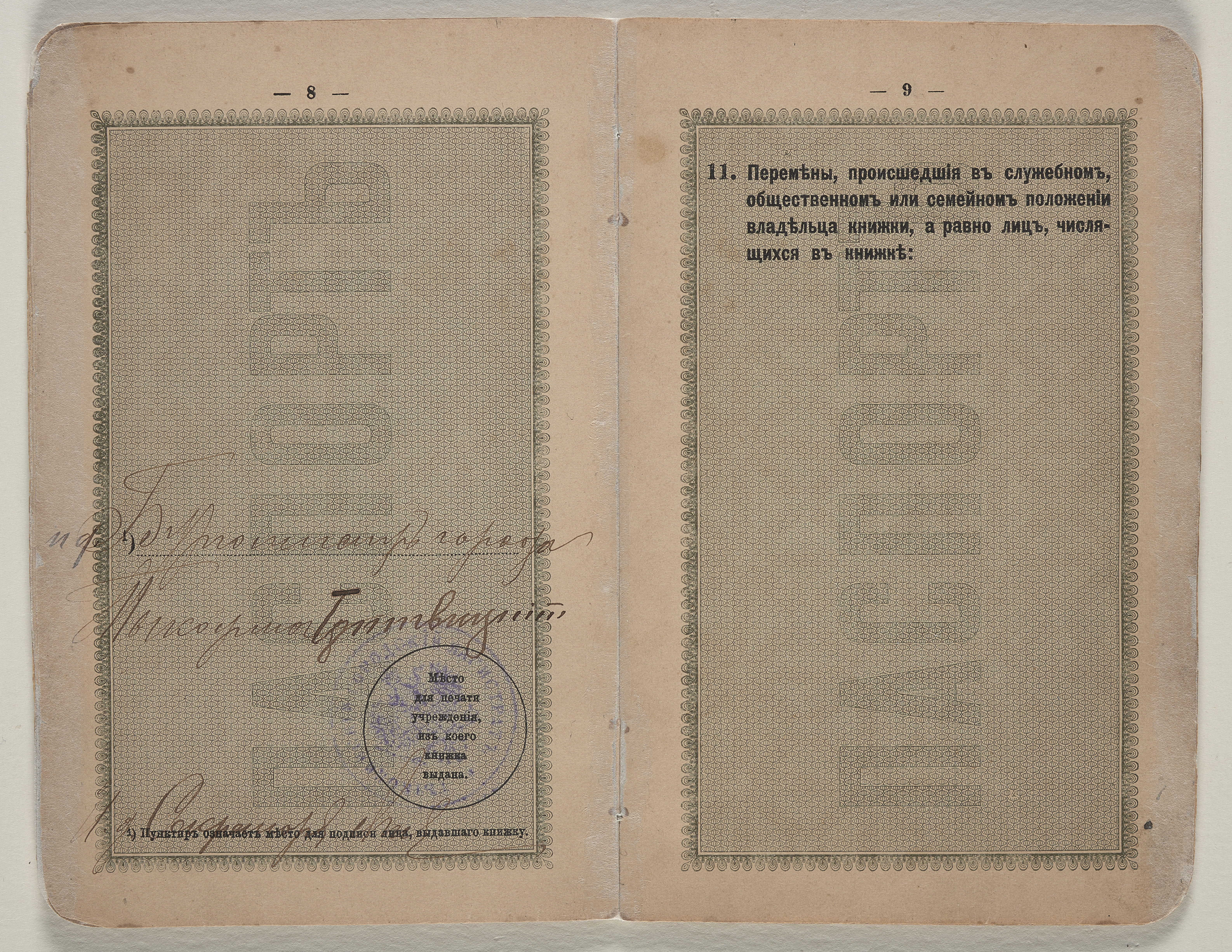
- 8 -
[Mayor of the Town of Tykocin [illegible surname].
[in the space for the stamp of the institution which issued the passport - a round stamp with an inscription in the rim: "Magistrate of Tykocin"]
[1) Dotted line indicates space for the signature of the person who issued the passport.
- 9 -
11. changes in the professional, social and marital status of the passport holder, as well as of the persons entered in the passport:
- 10 -
[no entry on the page].
- 11 -
[no entries on page].
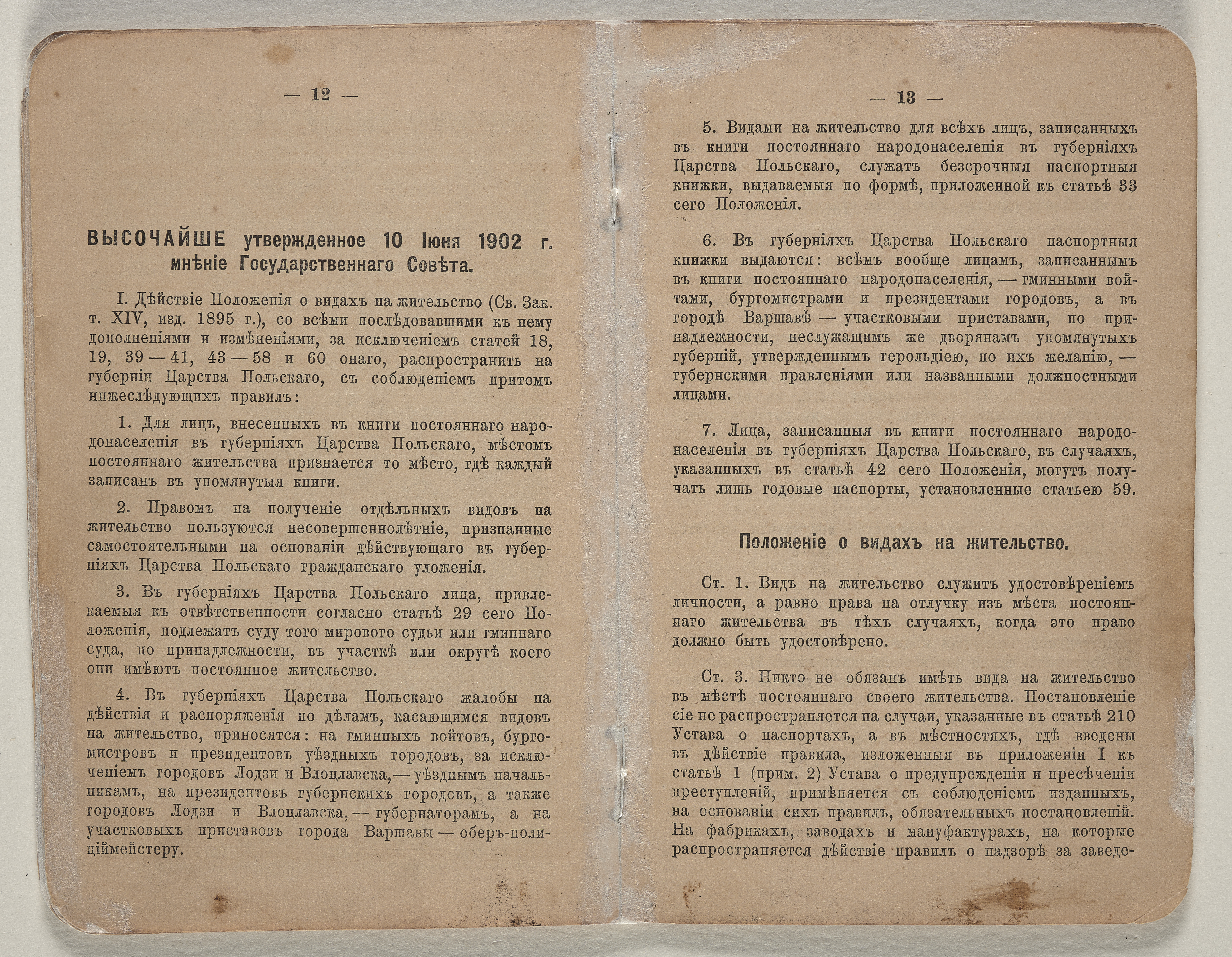
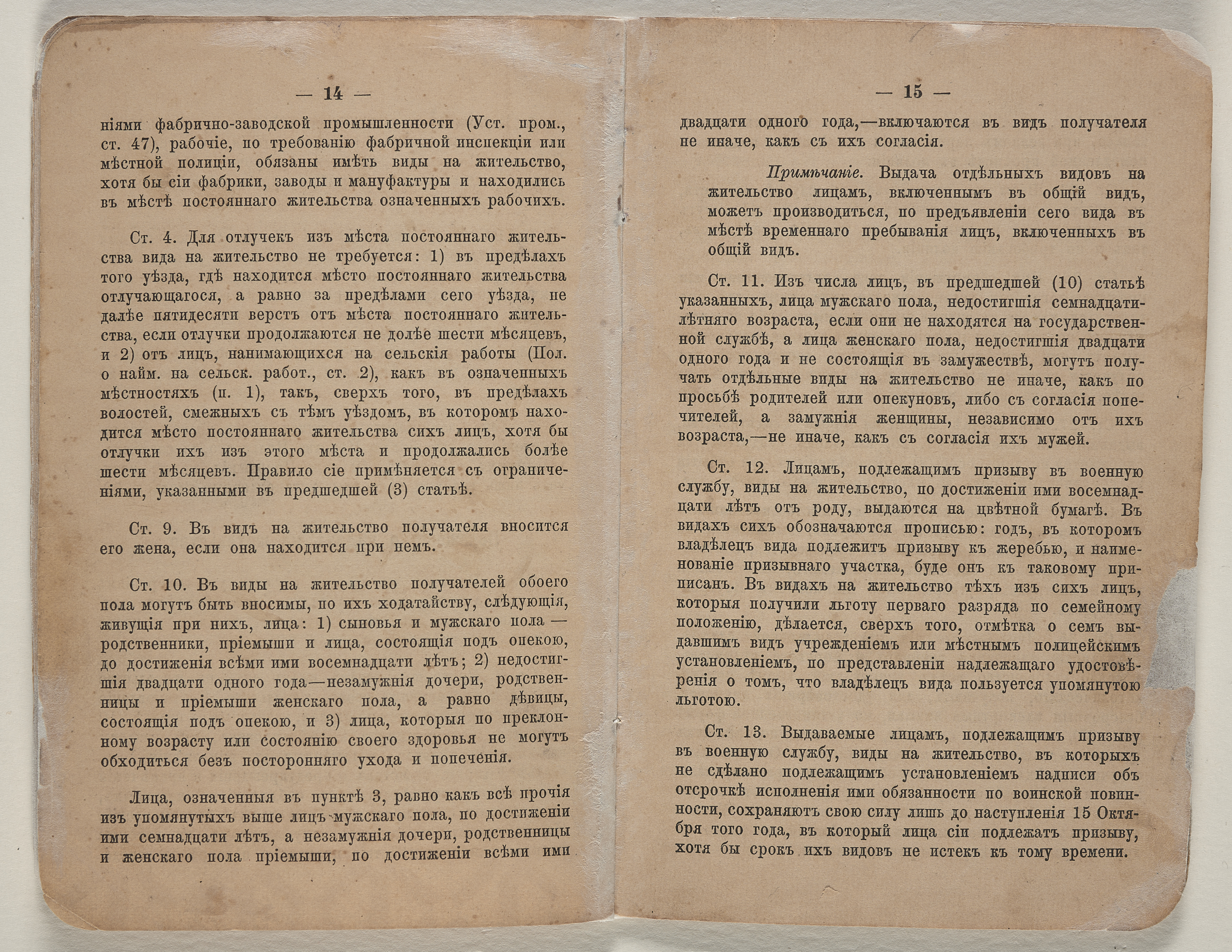
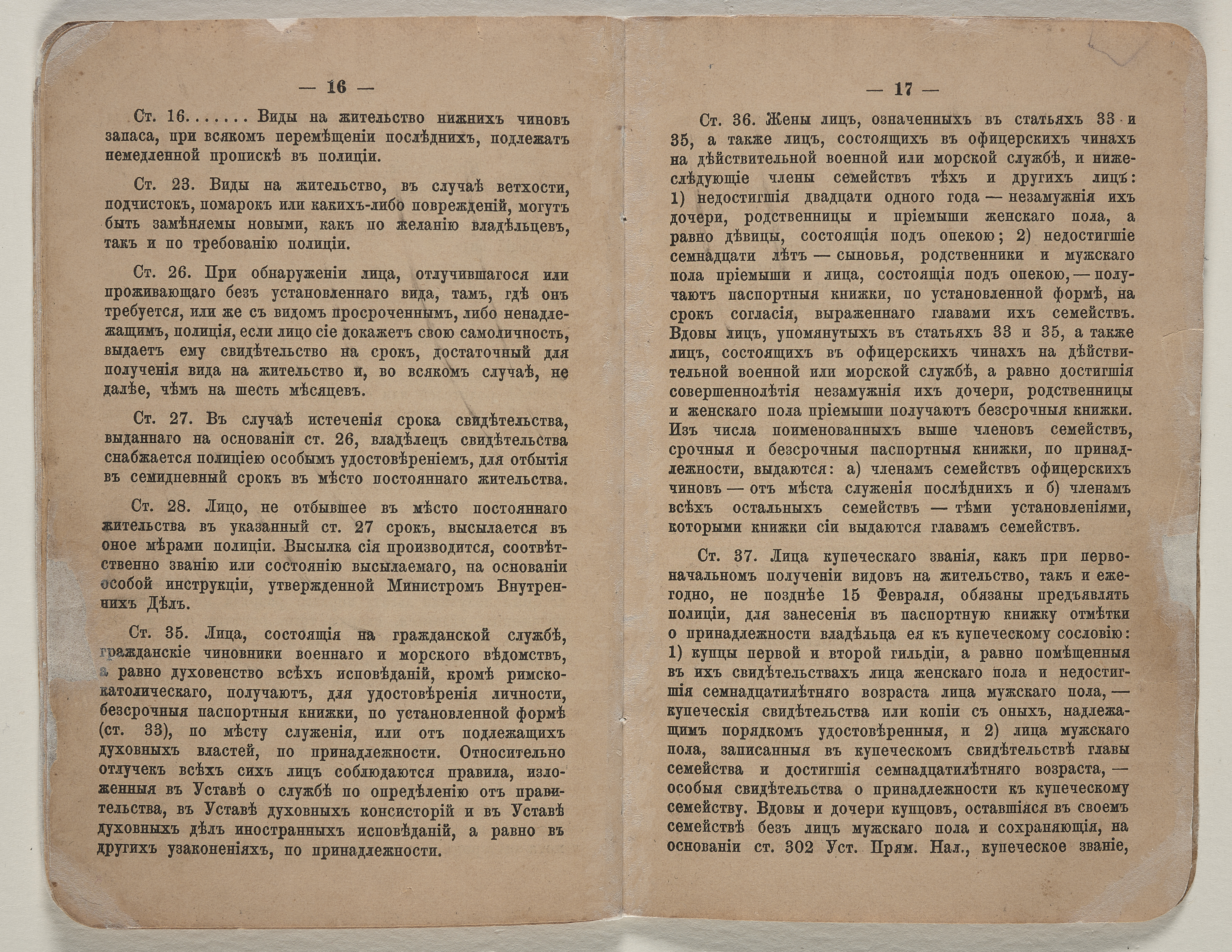
[on pp. 12-19:]
The highest approved sentence of the Council of State on10 June 1902. [...]
[...] 1. For persons entered in the permanent population books in the gubernias of the Kingdom of Poland, the place of permanent residence is the place where everyone is entered in the said books. [See Grzegorz Smyk, Instrumentalizacja procesu legislacyjnego w carskiej Rosji i jej wpływ na specyfikę rosyjskiego systemu źródeł prawa (Instrumentalisation of the legislative process in tsarist Russia and its impact on the specificity of the Russian system of sources of law), "Czasopismo Prawno-Historyczne", vol. LXV, notebook 013.]
[...]
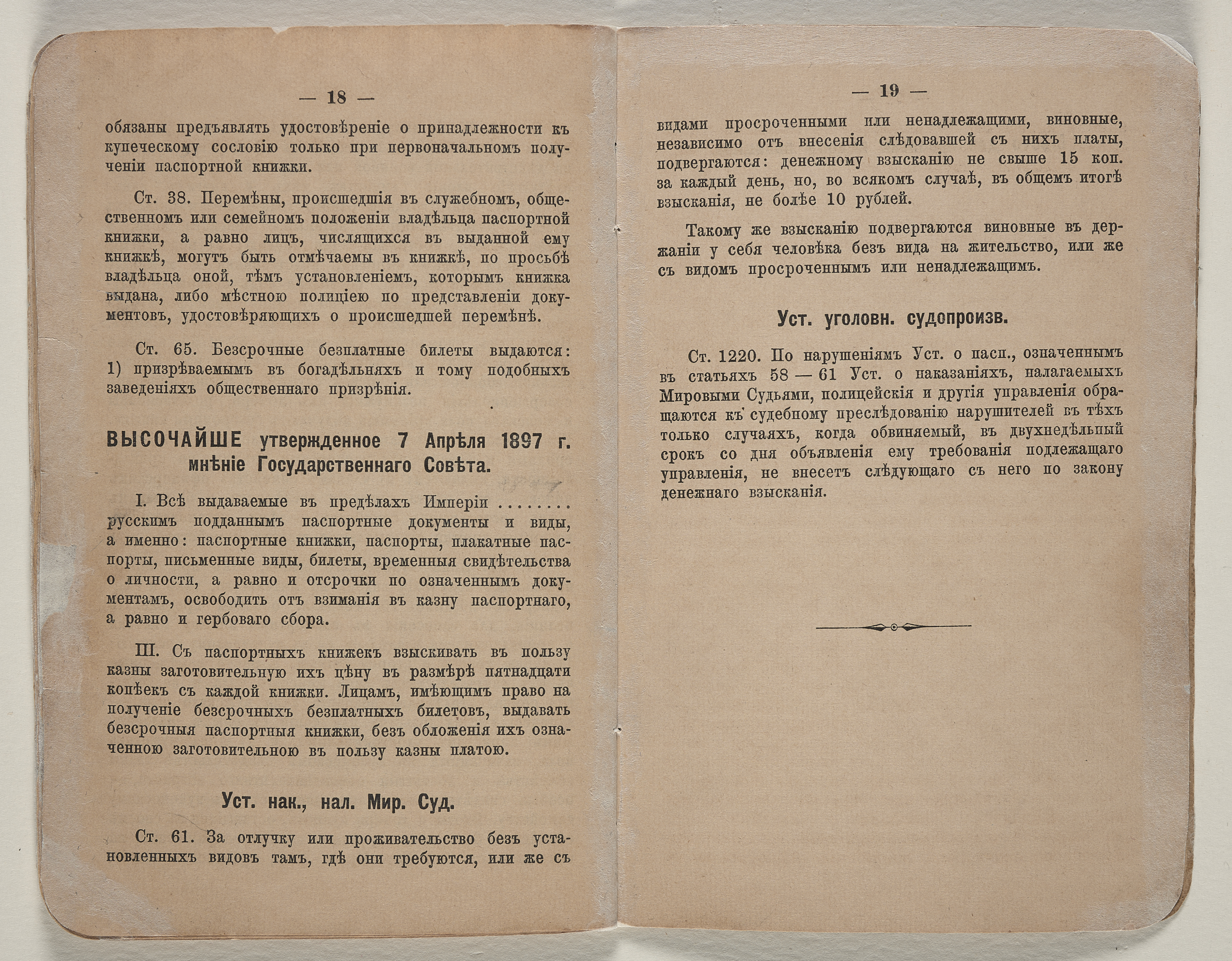
[on p. 18].
[...]
Law [Location - a type of legal act in the Russian Empire] on evidence of residence [...] Supreme approved on 7 April 1897 sentence of the State Council. [...]
Statute on penalties imposed by magistrates.
Article 61 [...].
Statute on criminal justice.
Article 1220 [...].
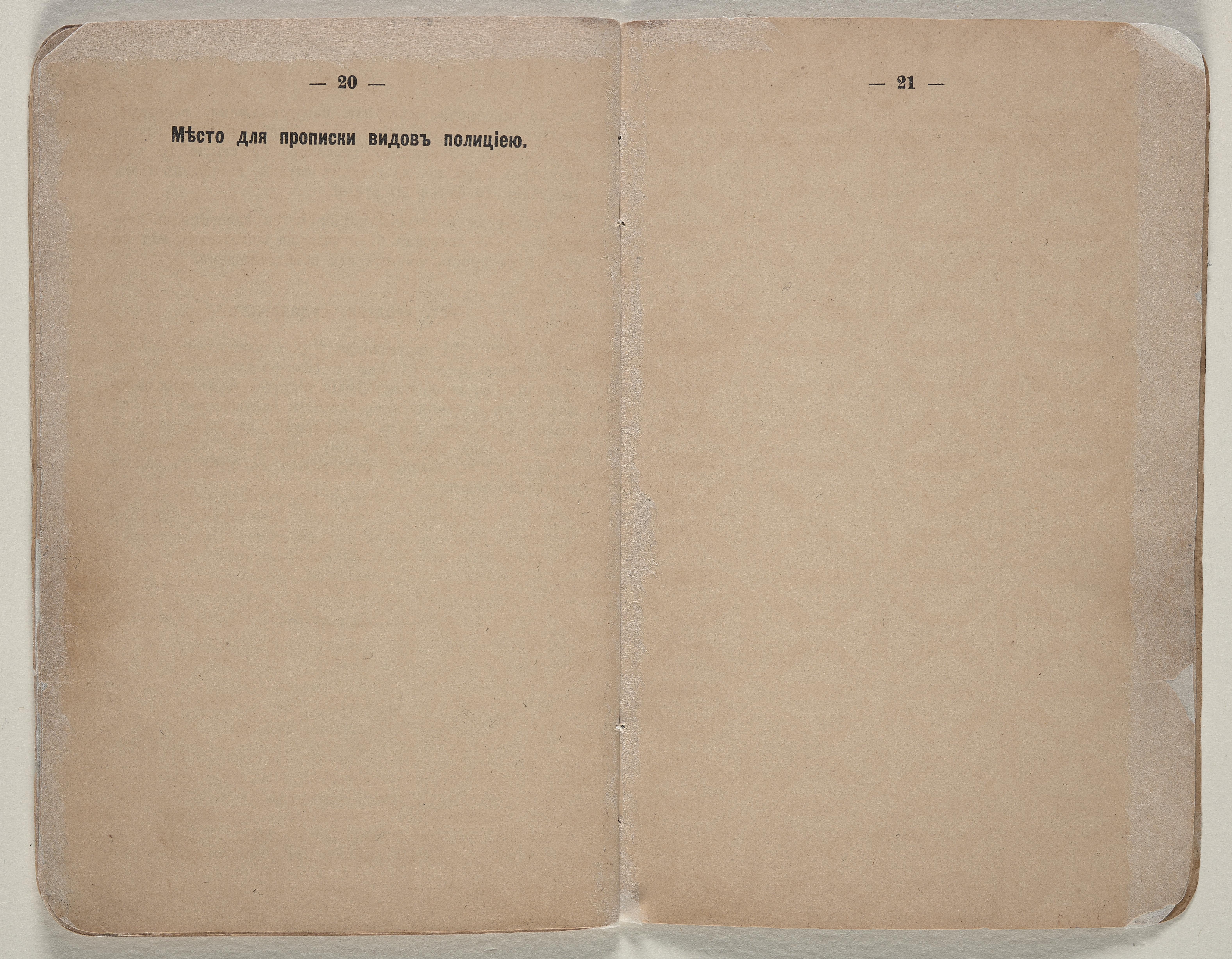
- 20 -
Place for registration by the police.
- 21 -
[no entry on page]
- 22 -
[no entries on page].
- 23 -
[no entries on this page]
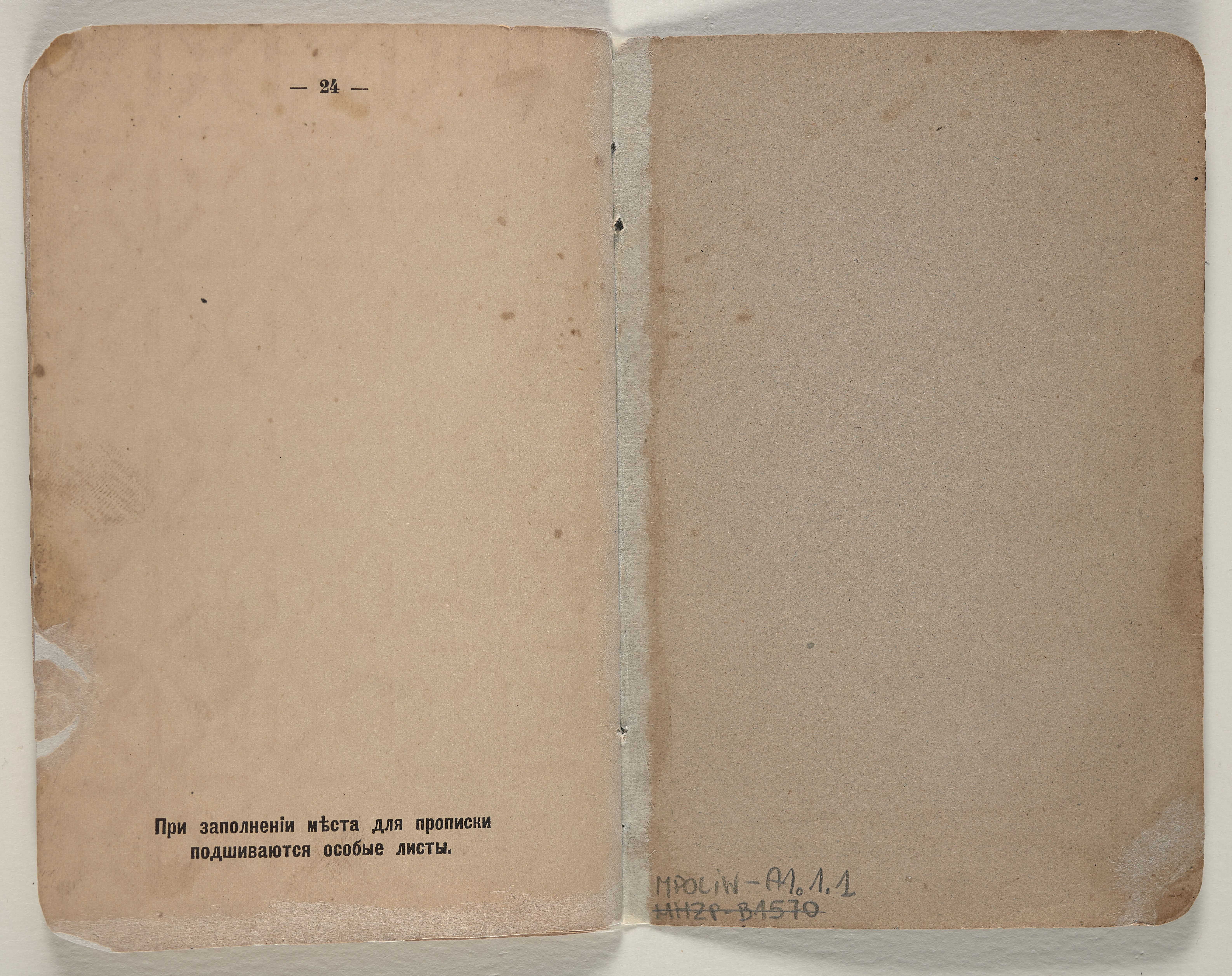
- 24 -
[When filling in the registration space, separate sheets are stitched [sewn, attached].
It was elaborated based on, among others: Wiktor Hausbrandt, Moc obowiązująca zbioru praw cesarstwa w kraju nasze (The Binding Force of the Body of the Laws of the Empire in Our Country), E. Wende i S-ka, Warsaw 1906, https://archive.org/stream/bub_gb_ENAKAAAAYAAJ#page/n0/mode/2up (accessed 19 NNovember 2021). Grzegorz Smyk, , Instrumentalizacja procesu legislacyjnego w carskiej Rosji i jej wpływ na specyfikę rosyjskiego systemu źródeł prawa (Instrumentalisation of the legislative process in tsarist Russia and its impact on the specificity of the Russian system of sources of law), "Czasopismo Prawno-Historyczne", vol. LXV, notebook 2, 2013.