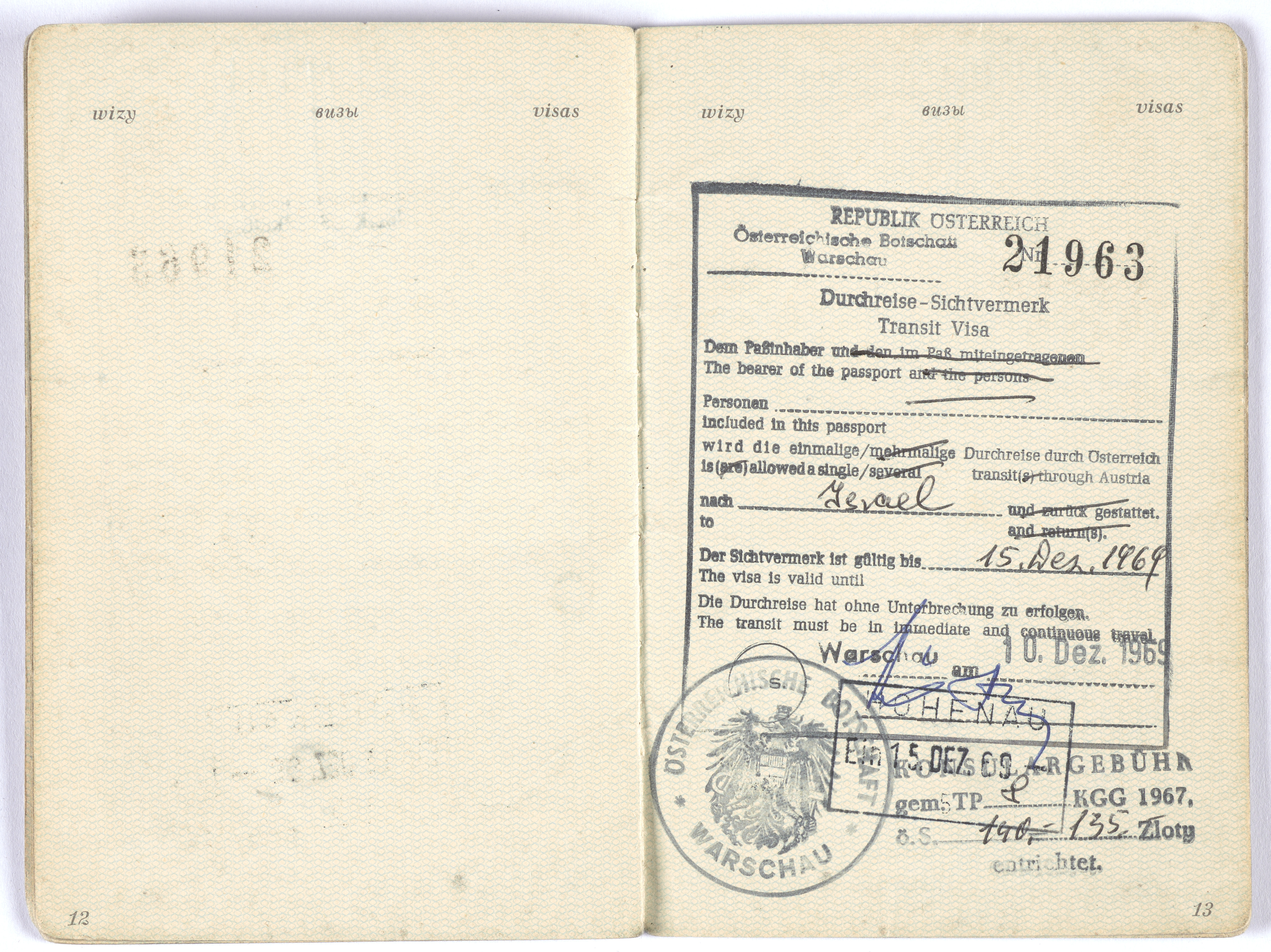
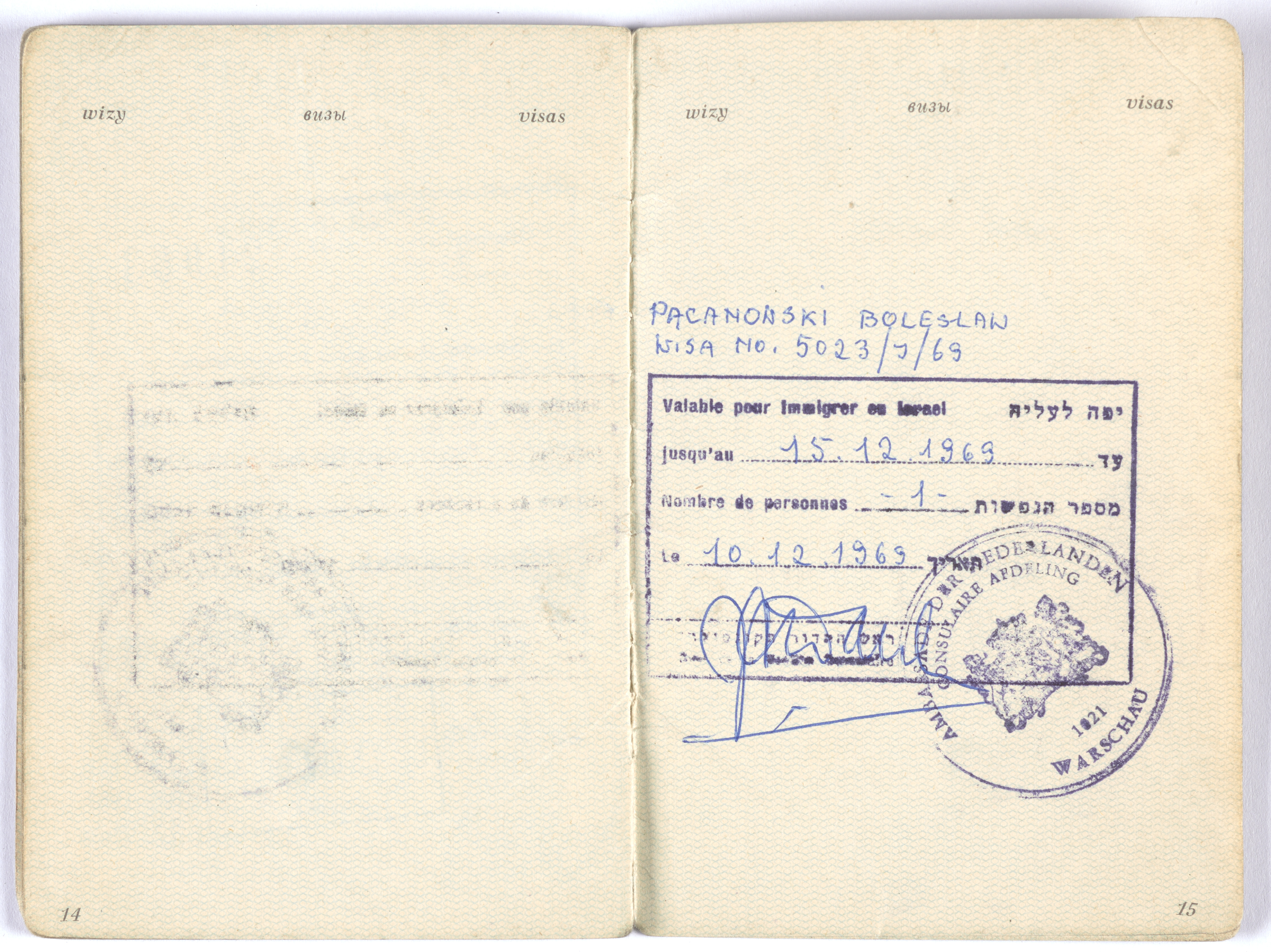
After the events of March '68 and the anti-Jewish campaign unleashed by the communist authorities, Bolesław Pacanowski, who was 68 at the time, decided to leave the country. He wanted to go to Paris. His friends were there – Tomasz Gleb, Izaak Celnikier, Izaak Rajzman, Szmul (Aleksander) Wajnsztok, Leon Lewkowicz. In addition, the Association des Artistes Juifs de France [Association of Jewish Artists in France] was active in Paris, and the art market was extensive. Pacanowski's son, Anatol, who was then studying at the École national supérieure des Arts Décoratifs, was also there.
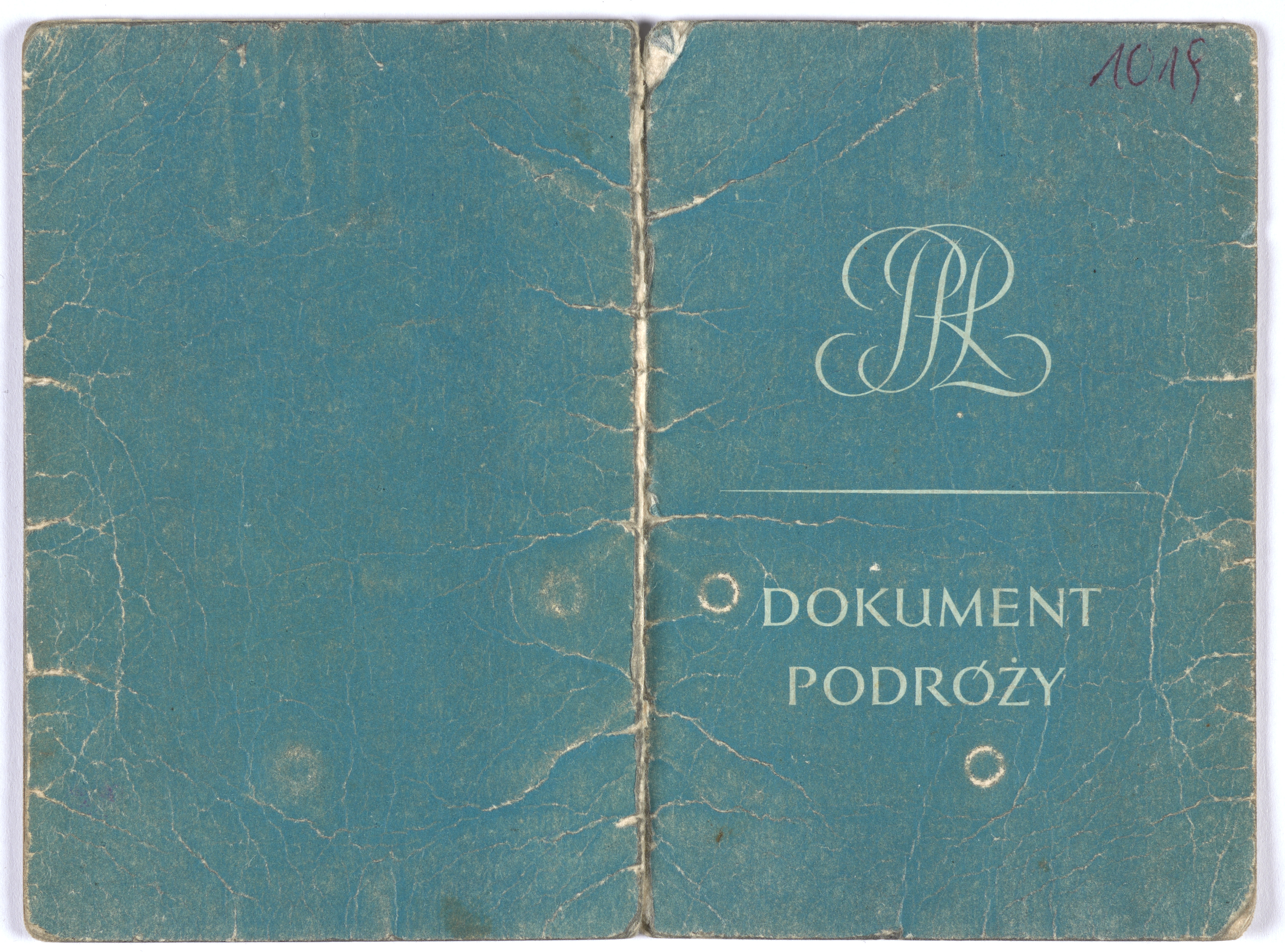
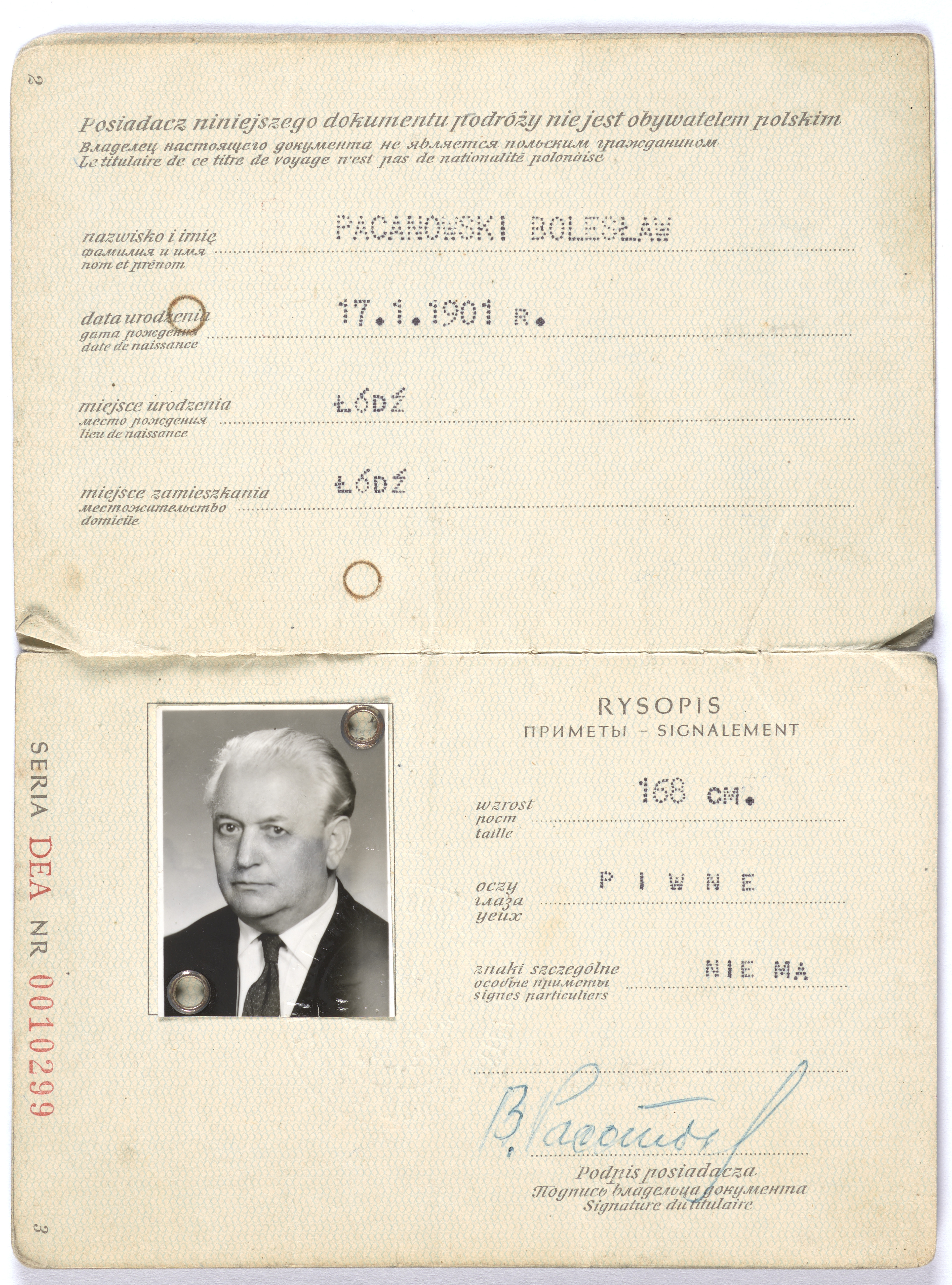
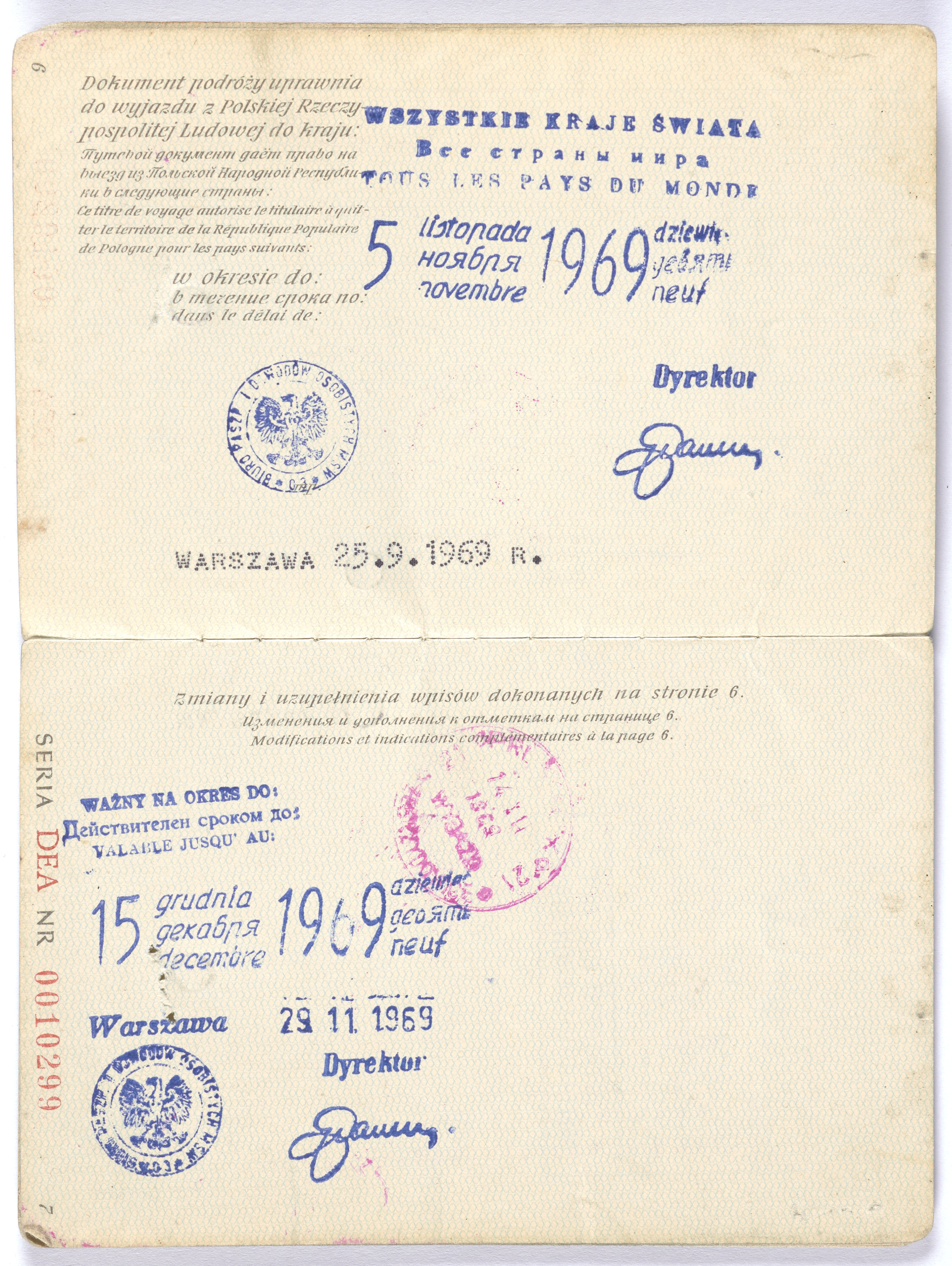
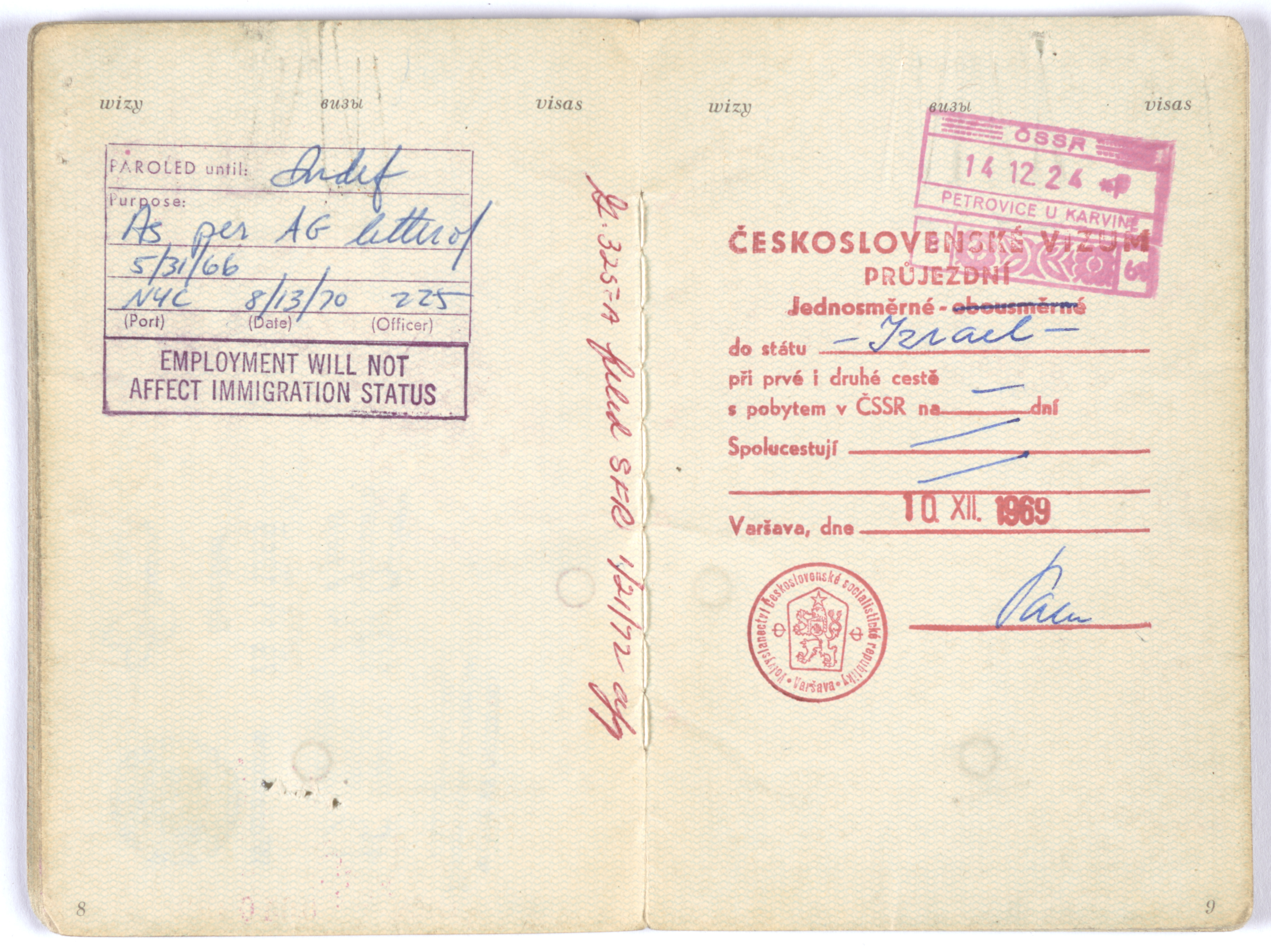
The decision to leave was taken quickly. The Pacanowskis had not considered going to Israel; Bolesław Pacanowski's second wife Wiera (Wenera) was Russian (Wywiad z Anatolem Pacanowskim [The Interview with Anatol Pacanowski], 2018). In December 1969, with so-called "travel documents authorising departure from the People's Republic of Poland", they set off for Vienna. They no longer had the right to return to the country; the inscription on the document stated: "The holder of this travel document is not a Polish citizen" (see also MPOLIN-A18.1.10). In December 1969, Anatol Pacanowski was granted asylum in France, the so-called travel document of the Geneva Convention; he wanted to arrange an entry visa for his parents, but they were refused it. The young Pacanowski then travelled to Vienna, where he requested a visa to the United States. He received it after three months, probably because he was 25 years old, had completed his studies and was not burdened with a family. His parents waited longer; they did not receive conditional entry visas until August 1970. "My parents did not want to leave Poland, said Anatol Pacanowski. My parents did not want to leave Poland", he said, "but they wanted to be with me" (it seems that, apart from anti-Semitism, the future of their son was an important reason for their decision to leave). Later, already in the United States, the father thanked his son that they had left. "He felt relieved, calm; he didn't want to talk about it, but in Poland even before March there were various problems, anxieties, unpleasantness" (Interview with Anatol Pacanowski, 2018).
Renata Piątkowska