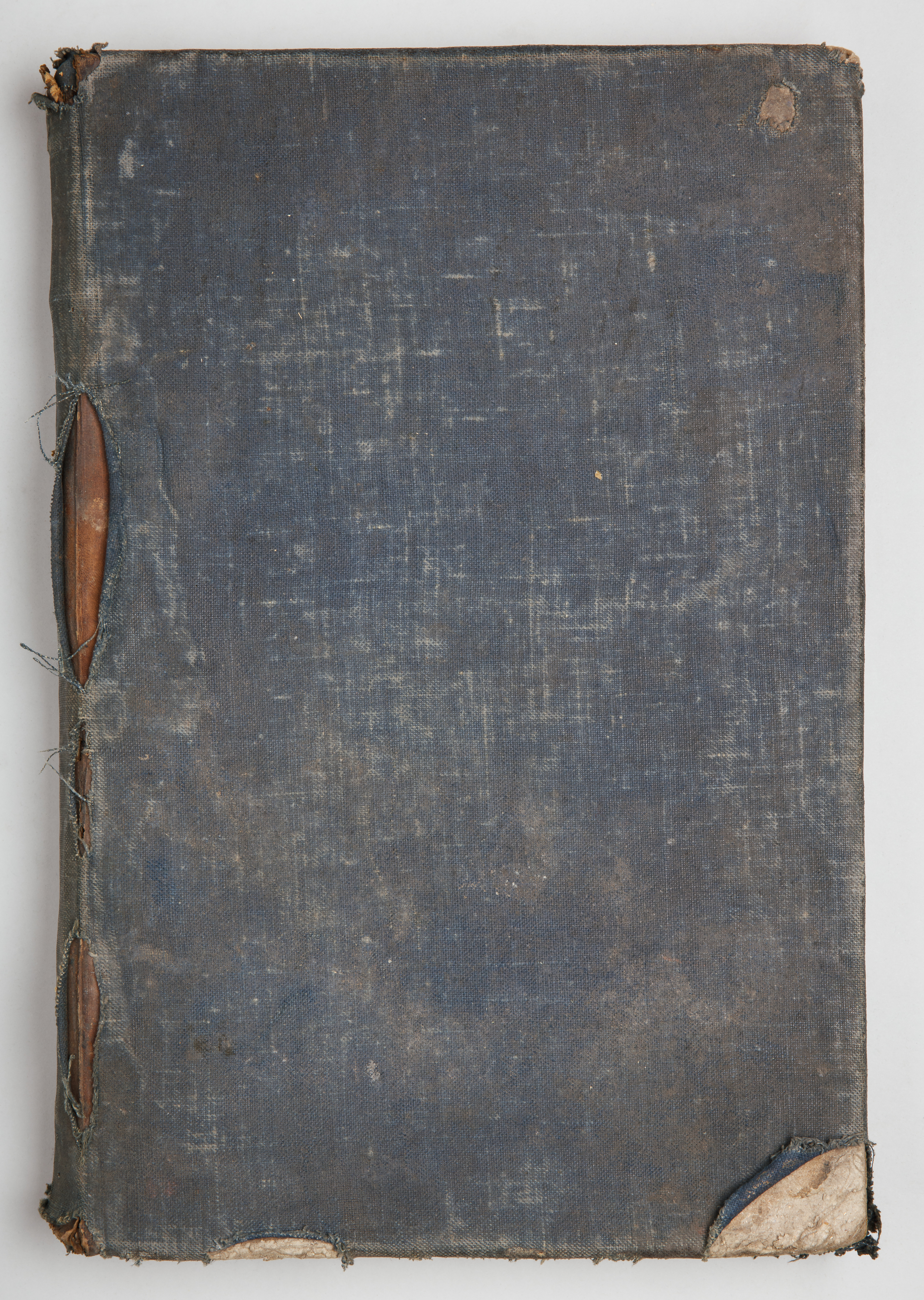
Book from the collection of the Przypkowski Museum in Jędrzejów. Hebrew print, ed. Wdowa i Bracia Romm Printing House, Vilnius 1891, 592 pages. The copy was purchased in 1968 from Jadwiga Szartowska of Kielce.
Original title:
מםכת כתובות מן תלמוד בבלי
[Masechet Ketubot min Talmud Bavli].
Tractate Ketubot of the Babylonian Talmud.
Publisher's imprint in Russian: ТАЛМУДЪ ВАВИЛОНСКІЙ. Tрактатъ Кесуботъ. О брачныхъ записахъ. Част XI. Съ Виленскаго изданія 1887 г. безъ измѣненій. 1891.
The presence of a stamps on the title page: "BUCHHANDLUNG M. M. WALDEN, KIELC” and "JOSEF BEKERMAN”.
Ketubot (Wedding Contracts) is the second tractate of Nashim (Women), the third order of the Mishnah. The tractate contains thirteen chapters discussing the issue of marriage contracts, how to write them and related legal issues.
The Talmud is a collection of religious, doctrinal, and legal teachings of Judaism. It includes commentaries on the Bible, rabbinic discussions, moral guidance, parables, and folklore. It is the second most important book in Judaism after the Hebrew Bible, and its study remains an obligation for every Orthodox Jew. The Talmud consists of two main parts: the Mishnah and the Gemara. The Mishnah is the primary and oldest part, containing the legal norms of Judaism (Hebr.: halacha) finally edited in the 2nd century CE in Hebrew by Yehuda ha-Nasi. The Mishnah consists of six major sections called "Orders": 1. Zeraim (Seeds), 2. Moed (Festival), 3. Nashim (Women), 4. Nezikin (Damages), 5. Kodashim (Holy things), 6. Tohorot (Purities). The Orders are divided into 63 tractates, which are further divided into chapters and paragraphs. The teachings of subsequent generations of rabbis, which expand and explain the content of the Mishnah, make up the second part known as the Gemara, written in Aramaic.
The Gemara was developed in two Jewish centers, in Palestine and Babylon, resulting in two Talmuds. The Palestinian version, known as the Jerusalem Talmud (or Palestinian Talmud), was edited in the 4th century CE The Babylonian version, known as the Babylonian Talmud, was completed around 500 CE The Jerusalem Talmud consists of 39 tractates, while the much larger Babylonian Talmud contains 37 tractates. The first complete printed edition of the Babylonian Talmud was published in Venice in 1520-1523. Since then, both works, along with additional commentaries, have been repeatedly published, reissued, edited, and translated.