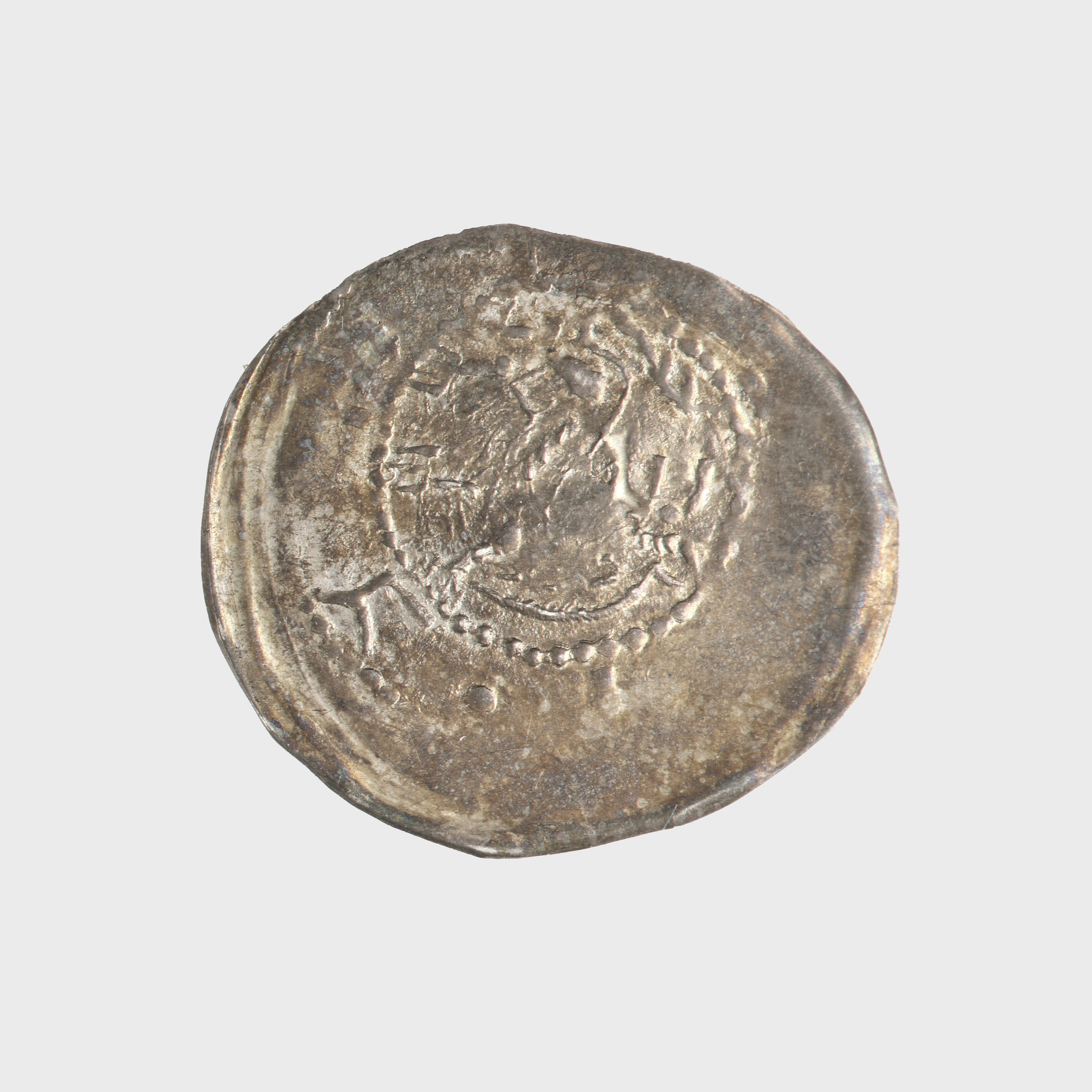
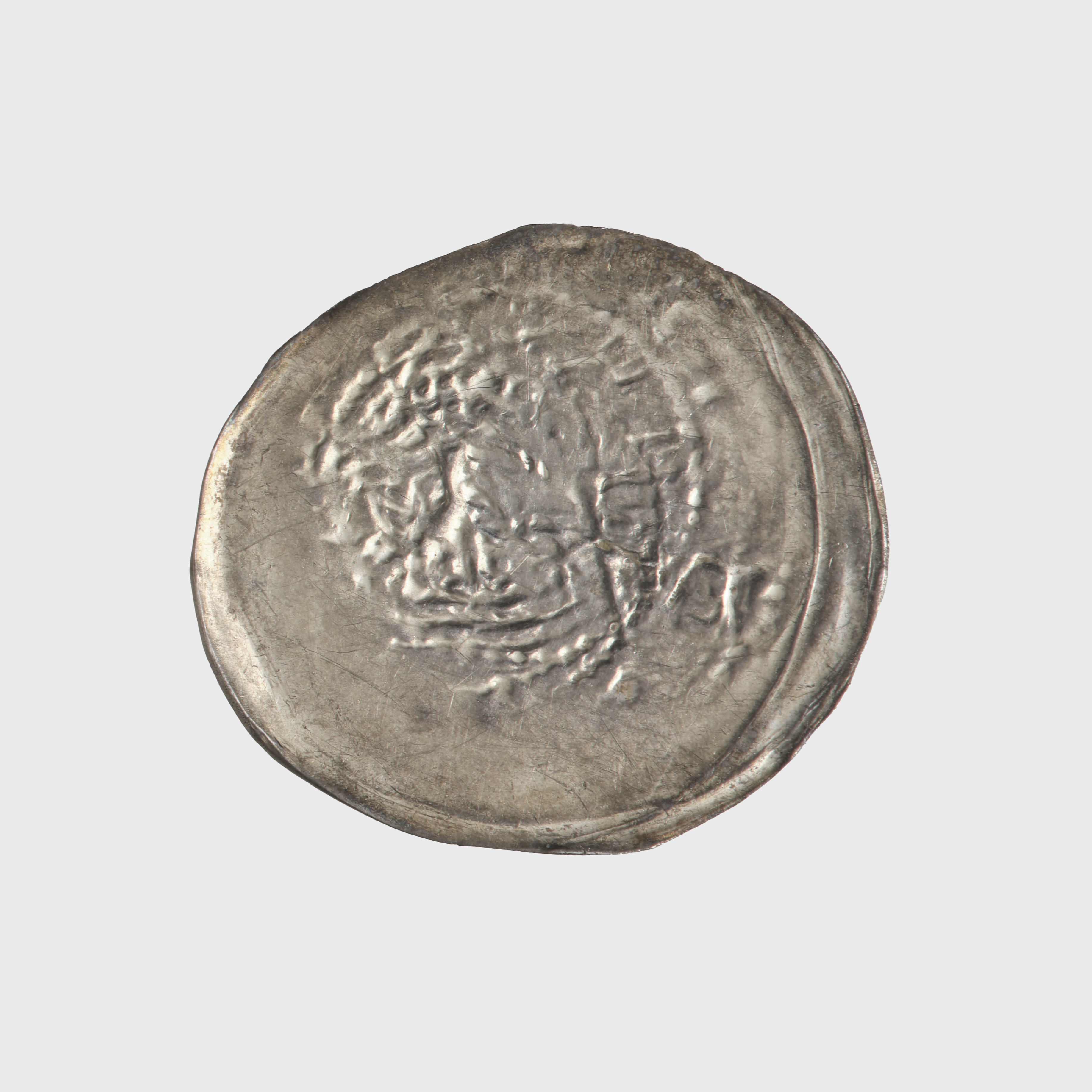
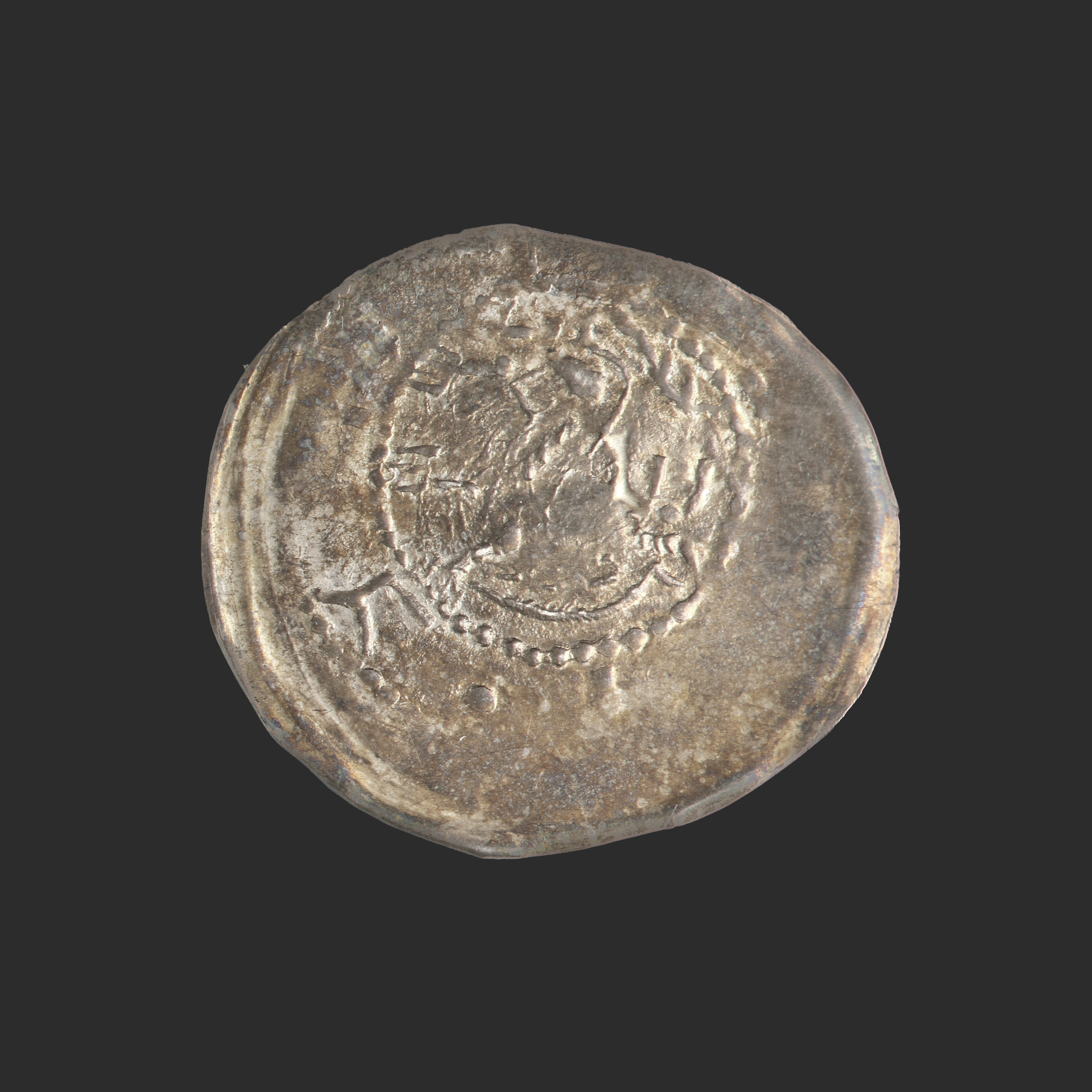
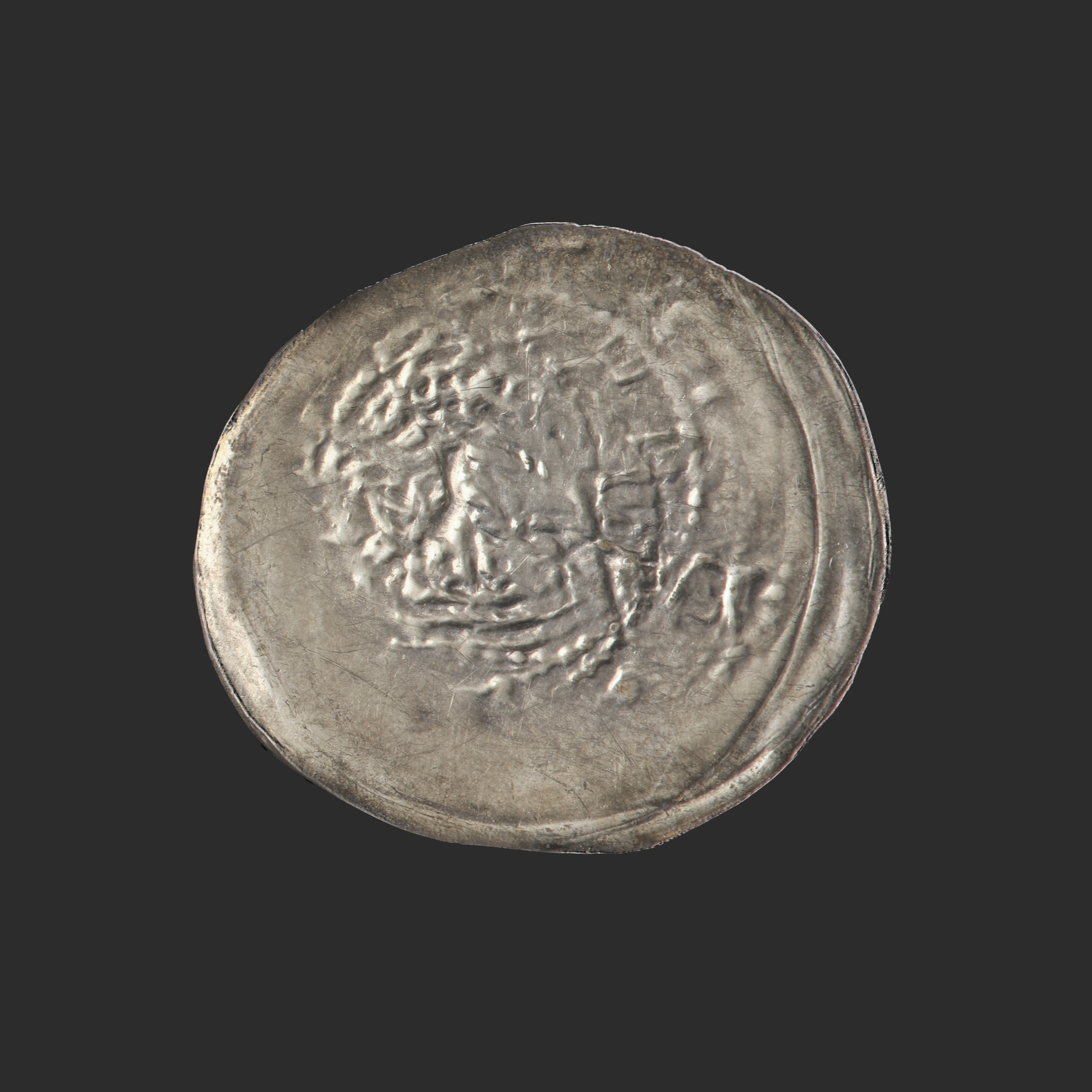
A silver Hebrew denarius from the Middle Ages, described in the literature as a denarius of the S.178 type. Until today very little is known about the coin because of its extreme rarity. Only two or three copies of the denarius are known. The first one belonged to the Zamoyski family collection (most probably destroyed in 1944), and was described by Kazimierz Stronczyński (1809-1896), numismatist, the founder of Polish medieval numismatics. The second one was described in 1905 by Zygmunt Zakrzewski (1867-1951), professor of early medieval numismatics and collector of Piast coins. At that time the coin belonged to his own collection, which in 1960 was transferred to the National Museum in Kraków. However, as the denarius was no longer a part of his collection - it does not appear to have made it into the National Museum's collection - Zakrzewski must have sold or lost it much earlier. It is possible that the coin from the numismatist's collection and the denarius in the POLIN Museum's collection are one and the same. It was acquired by the Museum of the History of Polish Jews in 2012 and comes from De Wit's famous collection of medieval coins (see one of the catalogues of the three-part auction of this collection: https://play.google.com/store/books/details?id=O5xn6T-TZIcC, accessed on 05 November 2021). | Initially, Głogów, located in Lower Silesia, or a mint in Greater Poland were considered to be the place of the coin's production. At present researchers tend to date this type of denarius to the years before 1239 (this is how Borys Paszkiewicz dates the treasure from the above mentioned Zamoyski collection, see B. Paszkiewicz, Z badań nad mennictwem wielkopolskim i śląskim XIII wieku (From the Research on Wielkopolska and Silesian Coinage in the 13th Century), in: Pieniądze i banki w Wielkopolsce (Money and Banks in Wielkopolska), ed. by W. Garbaczewski, R. Macyr, Poznań 2009, footnote 53), associating it with minting probably in Gniezno of the ruler from the Piast dynasty, Władysław II Odonic (died in 1239). | Unfortunately, it is not possible to read all the letters on the denarius, Dobrochna Gorlińska (Żydzi w administracji skarbowej polskich władców czasu rozbicia dzielnicowego (Jews in the Tax Administration of Polish Rulers of the Time of the Division Breakdown), Kraków 2016, pp. 168-169) indicates only three as relatively unquestionable: cadi, het and he; a more complete reading will be possible only if another, more clear copy of the coin is found. | The denarius is, as an example of 13th-century Hebrew minting in medieval Poland, the first original object to be seen by visitors to the permanent exhibition at the POLIN Musuem. | JO