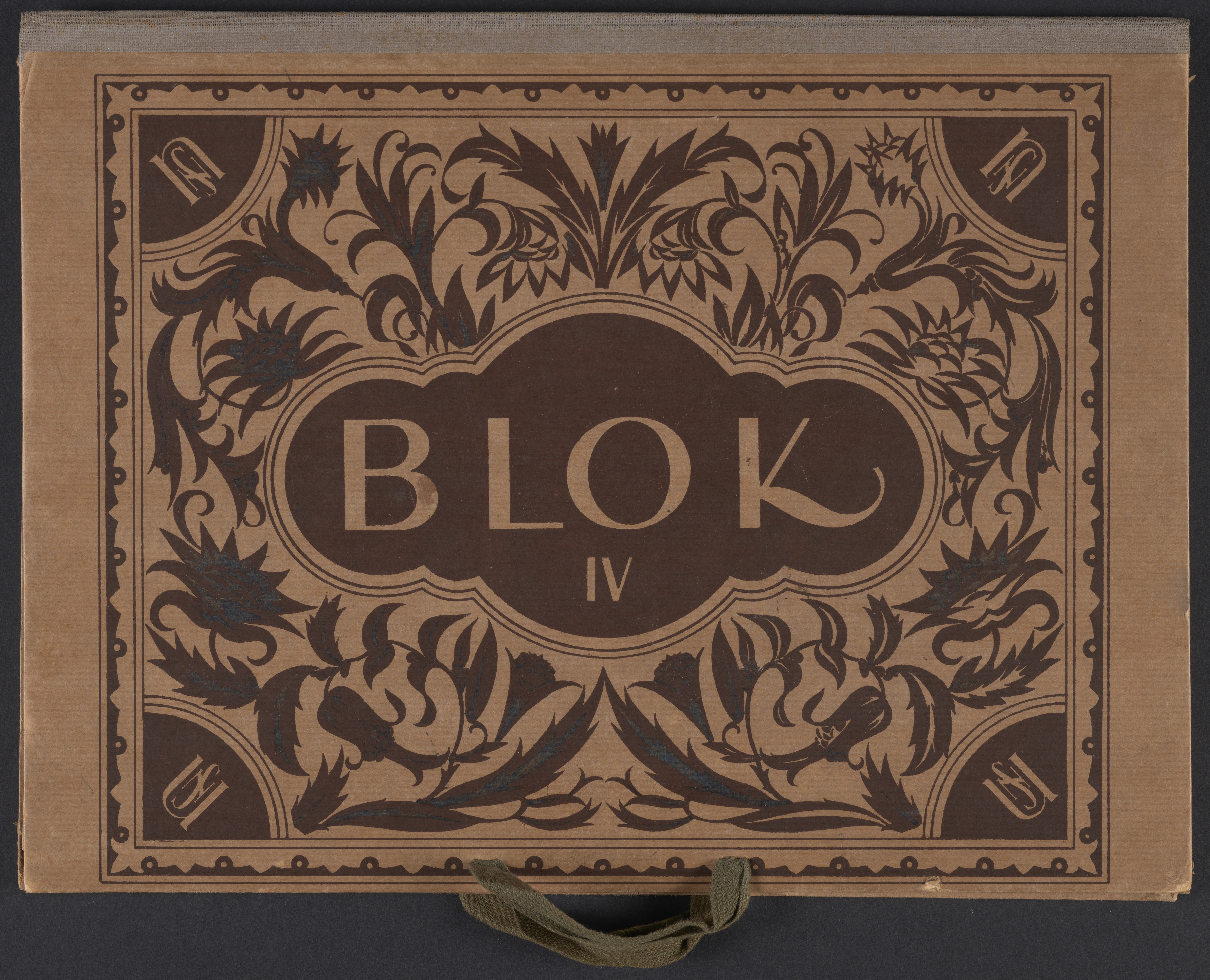
Stanisław Gustaw Kramsztyk was born in 1923 in an assimilated Jewish family. His father, Stefan Kramsztyk (1877–1943) - a doctor, sociologist and sympathizer of the peasant movement - in addition to working as an internal medicine specialist and a pediatrician, also worked as a clerk at the Ministry of Health and Social Welfare. Although the progenitor of the family, Izaak Kramsztyk, was a Jewish scholar and clergyman, along with the progressive assimilation, the family gradually departed from the Mosaic faith. Stefan Kramsztyk was baptized in 1903 in the Roman Catholic parish of the Transfiguration of Jesus in Warsaw. Staś Kramsztyk did not manage to fully develop his passions and talents. Although he managed to save himself from the immediate threat caused by hostilities (the war found him in a sanatorium in Otwock), in 1941 he died of tuberculosis. He was buried at the local Catholic cemetery, where his grave is still to this day. We know that his parents (Stefan Kramsztyk and Jadwiga née Reychman - the widow of Feliks Gross), who were also hiding in Otwock, also did not manage to survive the occupation. In 1943, two years after their son's death, they were exposed and arrested. Due to the lack of sources, the exact circumstances and the date of their waste are unknown. Their track breaks off at the time of their arrest. The personal mementoes that survive from Stas Kramsztyk show him as a typical representative of pre-war Polish youth, passionate about drawing, history (genealogy, heraldry), old writing (Gothic, Egyptian and cuneiform) and a young patriot. The patriotic attitude is demonstrated, among others, by The Air and Gas Defense League ID card, and numerous sketches, drawings and painting exercises remind us of the unused artistic talent. Perhaps, had it not been for his premature death, he would have developed a painting career similar to his uncle, Roman Kramsztyk? A drawing folder made of cardboard, which contains two watercolors for children by Stas Kramsztyk (1923-1941). In the central part of the cover (against a black background) there is the inscription "Block IV". The inscription is surrounded by a print in the form of a floral ornament. To facilitate the transport of pictures, a handle made of a webbing ribbon has been attached to one of the longer edges. The entire cover is in two colors: natural cardboard and black (the color of the inscription and ornaments printed on it).
The folder with drawings was donated to the POLIN Museum by Krzysztof Prochaska (son of Joanna from Kramsztyk) who received it from Maria Gross - Staś's half-sister (daughter of Jadwiga Kramsztyk, from her first marriage). Maria survived the war hiding on the Aryan side, most likely in the countryside. It was thanks to the fact that she took with her the drawings of her younger brother and other objects important to her outside the borders of the Warsaw ghetto and protected them throughout the German occupation that the mementoes of her family survived. Krzysztof Prochaska recalls that when he helped Maria Gros in the move years ago, she "parted with tears in her eyes from her mother's nightdress". The items she kept were the only things she had left of her closest family members who had been taken away from her by the war.
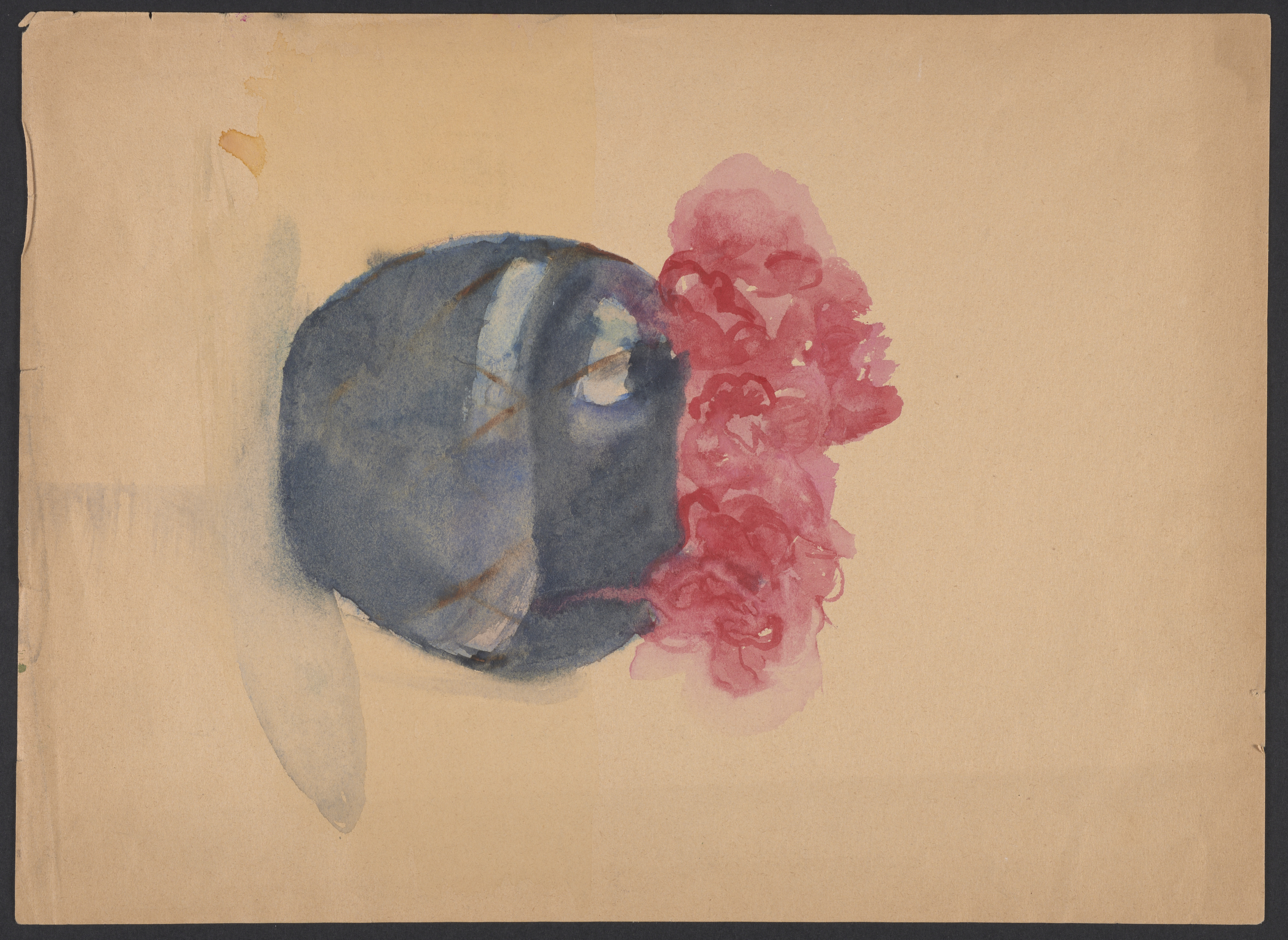
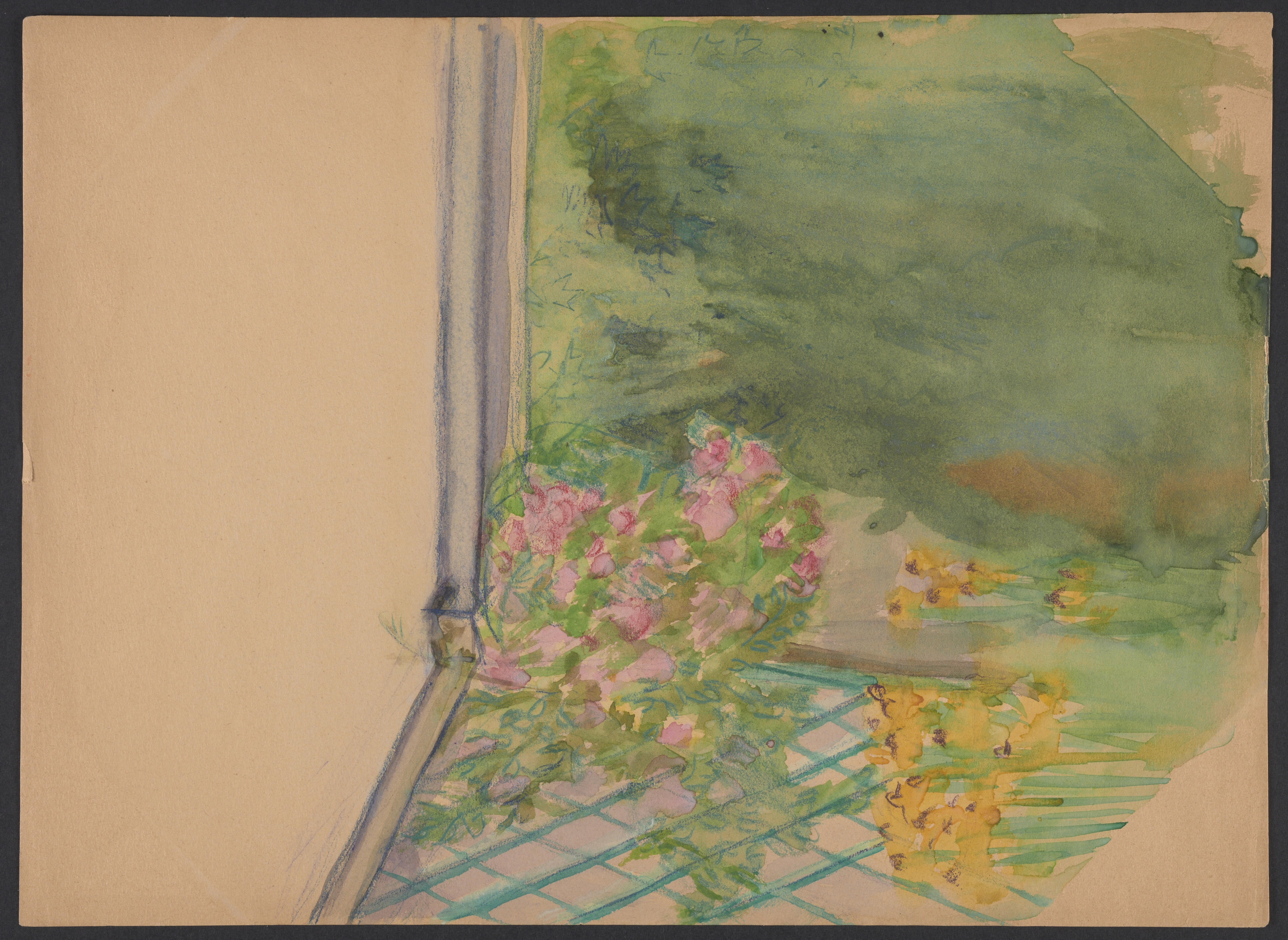
The first watercolor by Stas Kramsztyk (1923-1941) depicting a still life. The picture painted on a page of a drawing block is a classic study of a vase filled with flowers (pink in this case). Although the watercolor was made in childhood, it shows signs of a boy's painterly talent, whose development was interrupted by premature death. The second of the watercolors is also a representation of a still life. This is most likely a picture of what was the everyday life of the adolescent author. A dark green and lush hedge meets a fragment of a gazebo, under which a bunch of pink flowers grows, and above it hangs a "cloud" of yellow daffodils.
Marta Frączkiewicz