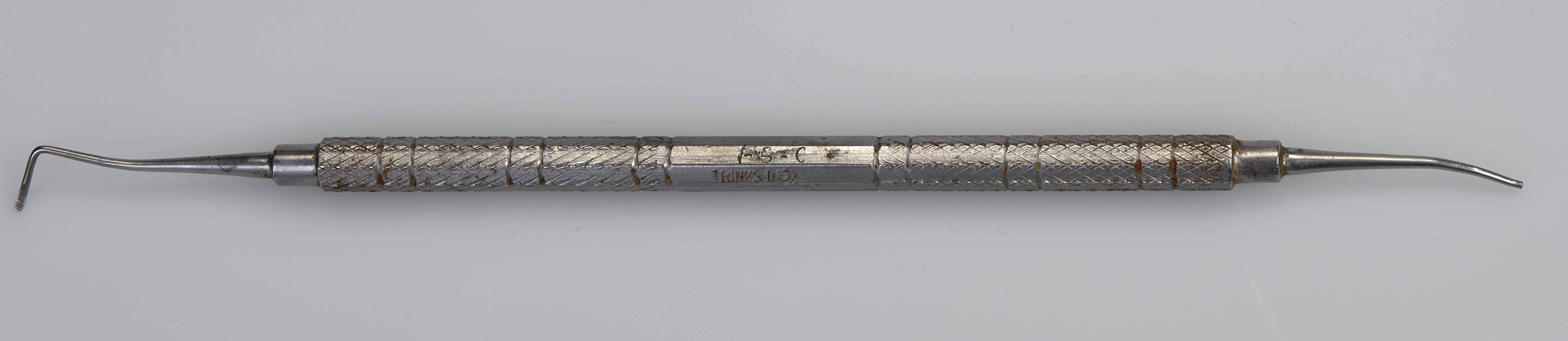
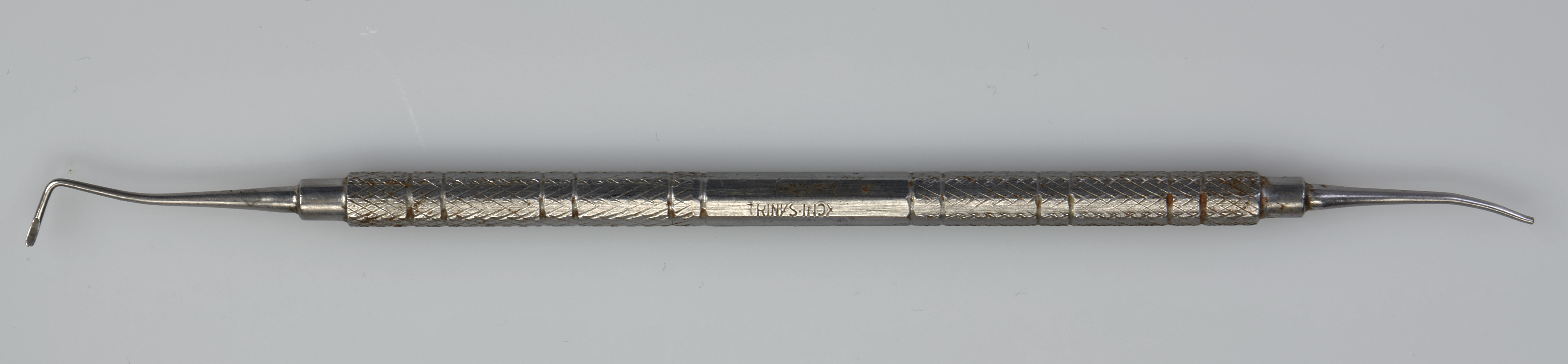
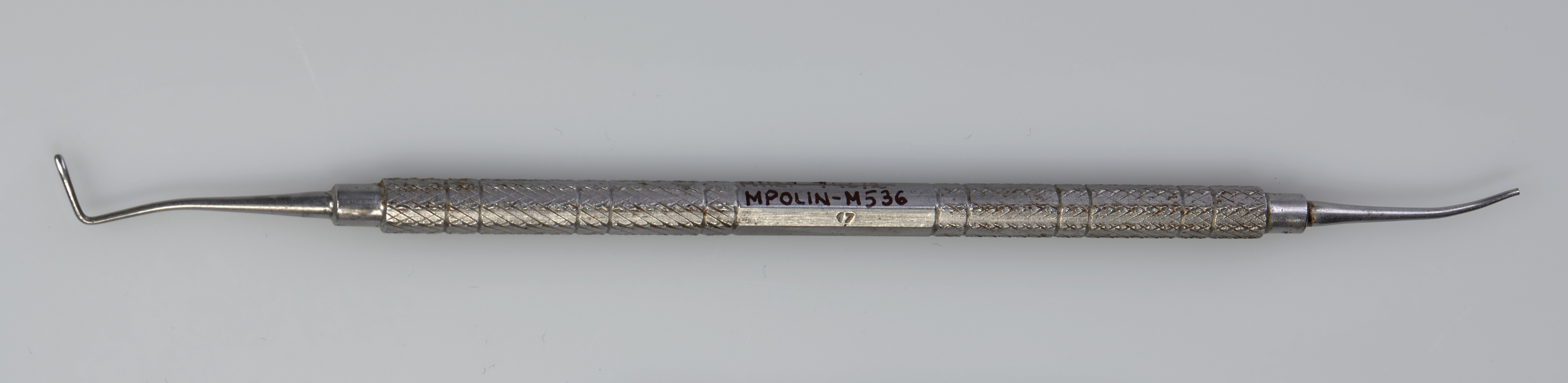
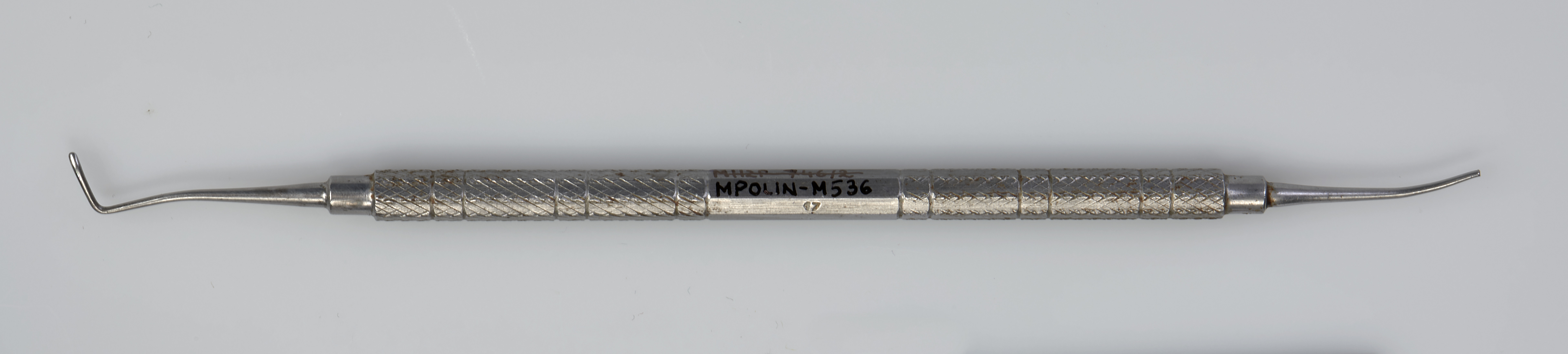
That dental instrument is a reminder left after Alfred Binensztok who was a dentist in Pinsk (https://sztetl.org.pl/pl/miejscowosci/p/1214-pinsk). In September 1939 he was arrested by the functionaries of the NKVD. He died in Charkow [Ros. Kharkiv] in 1940. After Alfred Biensztok was arrested, the functionaries came also for his wife and daughters (Liliana and Janina). They were deported to Syberia. Coming from intelligentsia the women were not adapted to agricultural labour, which was especially hard in the kolkhoz. The hardship was even bigger due to the harsh weather conditions. The temperature in winter would drop as low as -45 Celsius degrees while the short summers where unbearably hot. The basic fuel among the migrants was the cow manure dried in the sun and cut into small blocks. Wood was also transported from the woods situated some kliometers away from the village – which, because of the cold and snow, was a big effort. Years later Liliana will say that the deportation saved their lives: „in Pinsk all the Jews were murdered. Maybe three of them survived. So it was a miracle for us to be able to go to Sybir where – though hungry and freezing – we survived”. The women came back to Poland in 1946. When Alfred’s wife found out about his death, and later also about the Kielce pogrom (https://sztetl.org.pl/pl/slownik/pogrom-kielecki) she decided to leave the country together with her daughters. She was counting on the help of her uncle who worked in an institution handling Polish emigration in Brazil, where he lived. Their first destination, however, was Sweden. There they received material support and help finding work from the charitable organisations. They managed to reach Brazil about a year later (in 1948). They traveled by the sea, third class, under the deck, which was common for the Polish emigrants. They settled in Rio de Janeiro. Liliania managed to find work as a seamstress assistant in an elegant fashion boutique led by a Polish woman from Lodz. Soon she married her son. In time Liliana opened her own fashion boutique which soon became one of the most famous in Brazil. The instrument was donated by Liliana Syrkis (nee Binensztok; born 1923), the daughter of Alfred Biensztok. It was used for applying and forming of the filling in the patients' teeth. Liliana took this peculiar keepsake to Brazil and kept it for many years. More information about the fascinating life of Liliany Syrkis can be found in her biography entitled Lila (2009).
Marta Frączkiewicz