Ghetto Frieze

Oberländer, Marek (1922-1978)

Marek Oberländer, a Holocaust survivor, painter, and co-creator of the groundbreaking Polish National Exhibition of Young Visual Arts “Against War, Against Fascism” in the Arsenal in 1955, wrote: “I belong to a generation which–saved from death almost miraculously–stands on the threshold of a new life: terrified, helpless, stunned, morally and physically scarred, naked, stripped of all the dreams and ideals of youth” (Marek Oberländer. Malarstwo, grafika, rysunek, exhibition catalogue, ed. M. Hermansdorfer, National Museum in Wrocław, Wrocław 1980, p. 10).

The experience of loss, the open wounds of memory, and the struggle with personal despair, guilt, and loneliness shaped Oberländer’s entire life and artistic practice. The painter believed in the power of art, confessing: “I had no other reason to paint than to cast out the nightmare that destroys my nature, that makes me die every day (with those I have lost)” (M. Oberländer, Notes from the Hospital, in: Marek Oberländer, wystawa malarstwa, Galeria - in spe -, Warsaw 1997, p. 19).

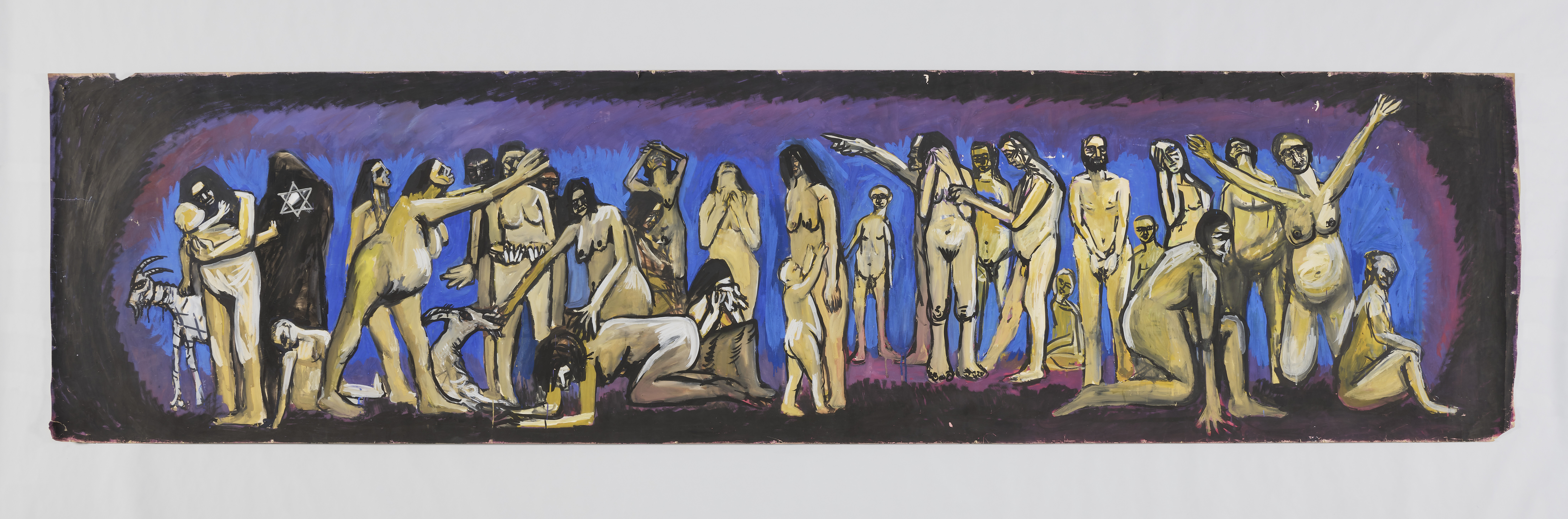
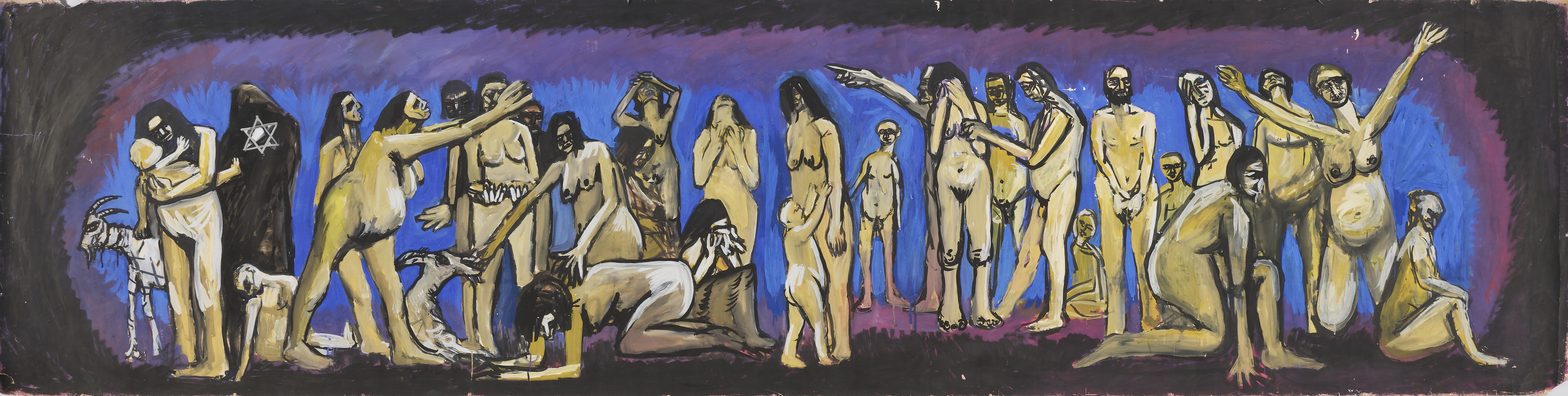
“Ghetto Frieze” is a study for a large-scale figurative composition devoted to the Holocaust of the Jews (unrealized; repr. in Fołks-Sztyme, 1957, 12 Oct.). Its strong, expressive form, sharp colour palette, and direct depiction of women, men, children, and the elderly–as if captured by a camera just before death–imbue the work with intense expression and emotional tension.

Throughout his life, the artist sought his own means of representing the Holocaust. In his works we find fissures and “splinters” of memory that shaped Oberländer as both a human being and an artist.

Renata Piątkowska

czytaj więcej
Information about the object
Author/creator
Oberländer, Marek (1922-1978)
Object type
painting
Time of creation/dating
2nd half of the 20th century
Place of creation
Poland (Europe)
Technique
painting
Material
paper
gouache
Keywords
Copyrights status
contact the Museum
Identification number
MPOLIN-D9
Localization
The object is on display in the museum