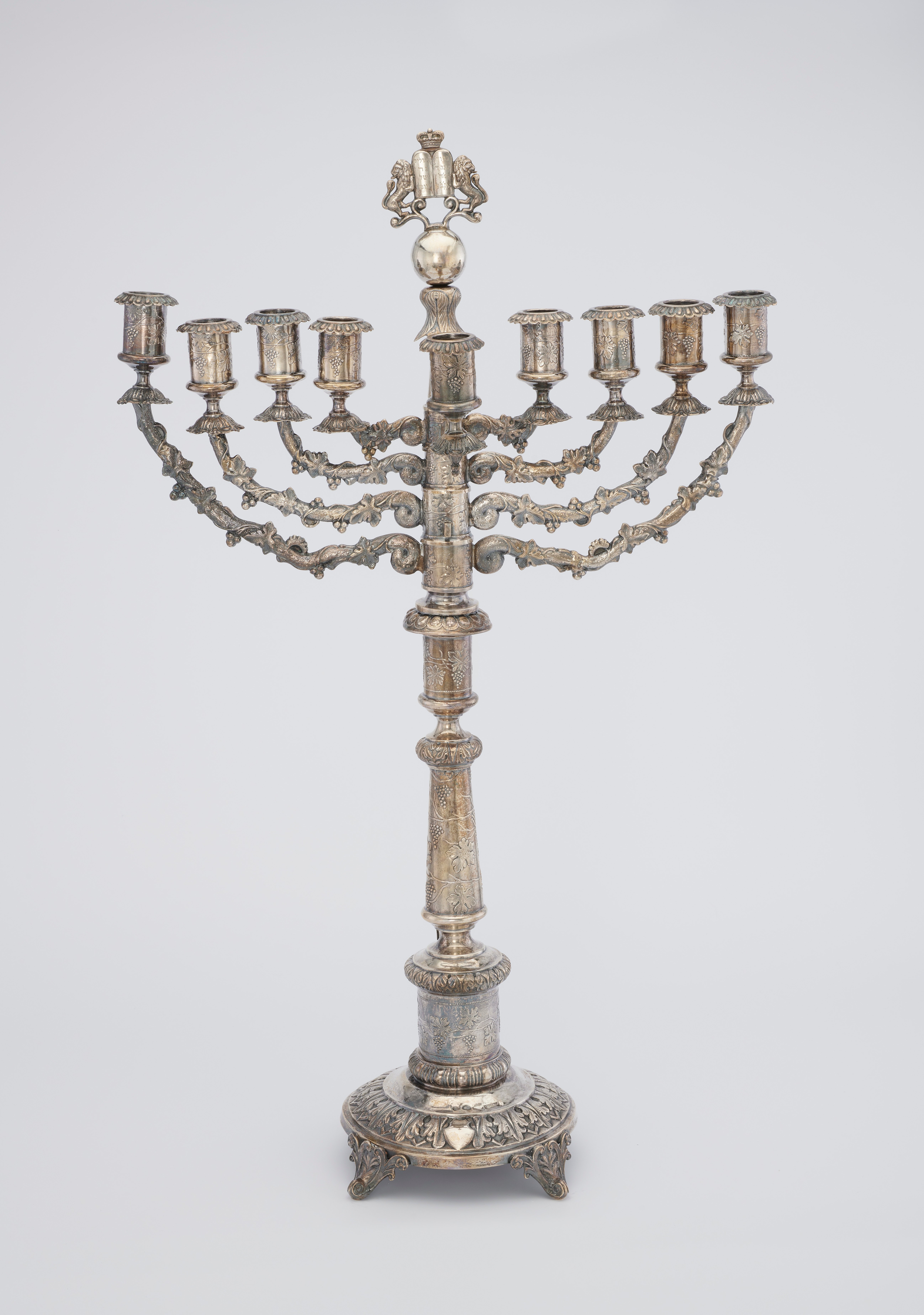
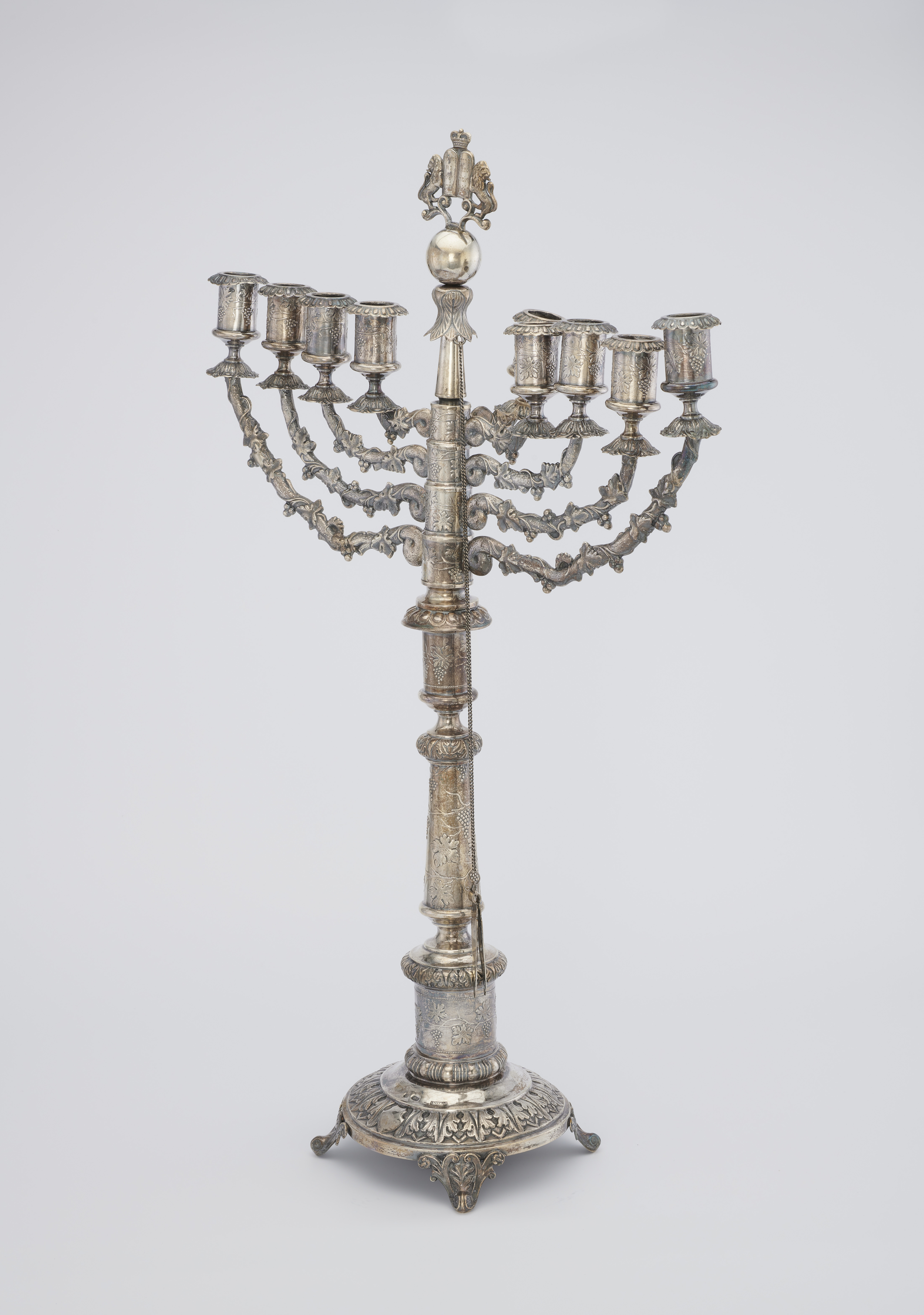
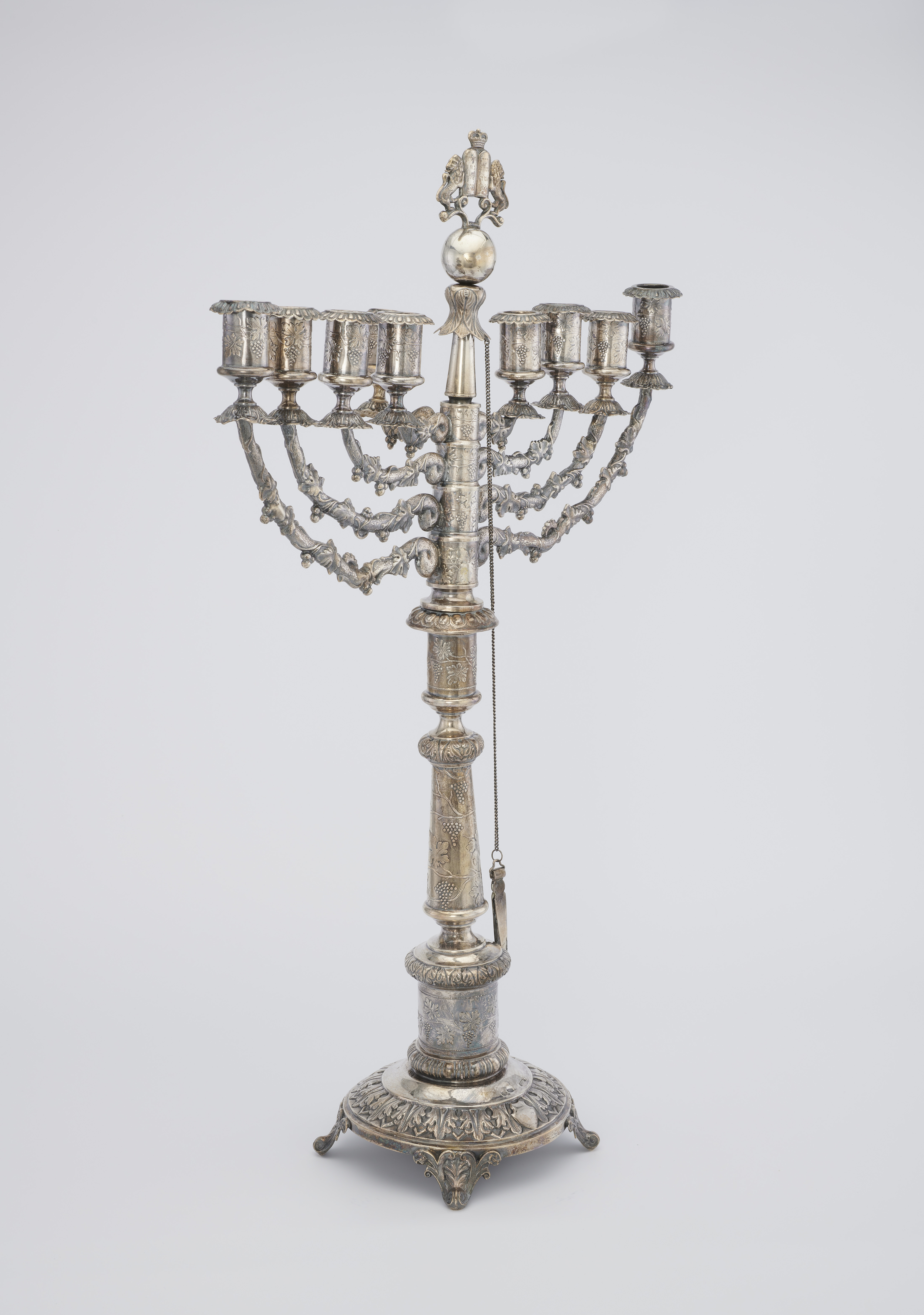
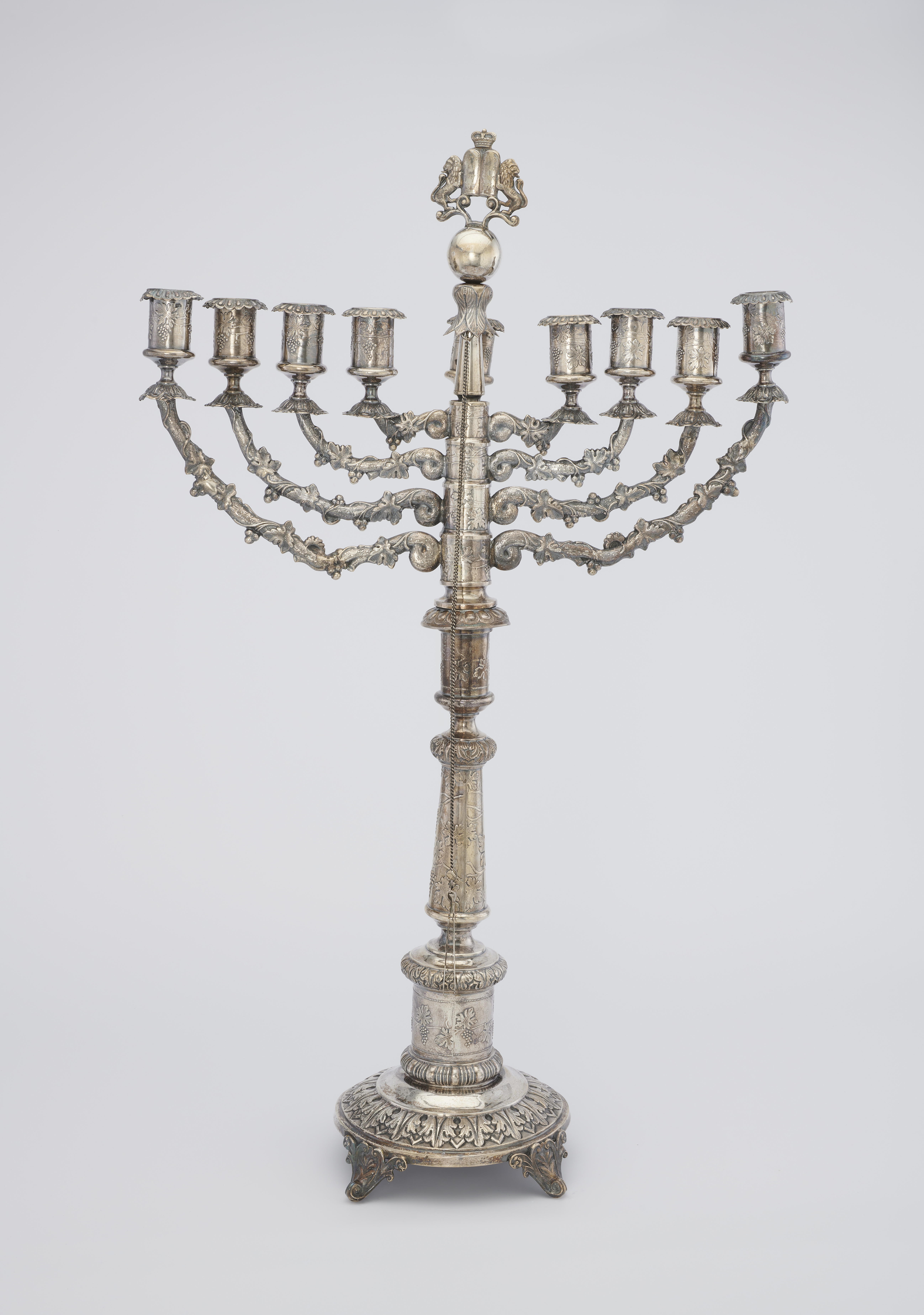
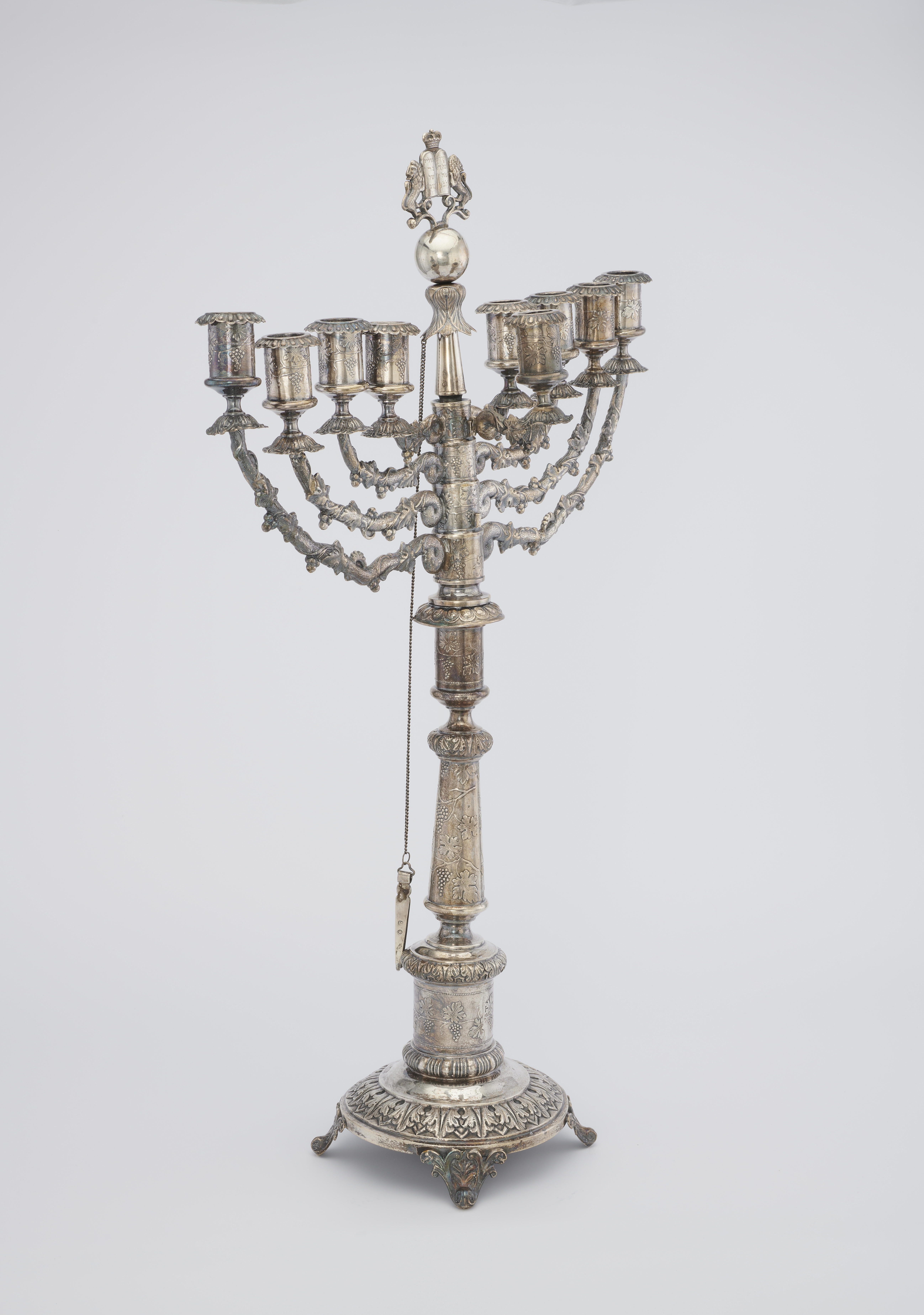
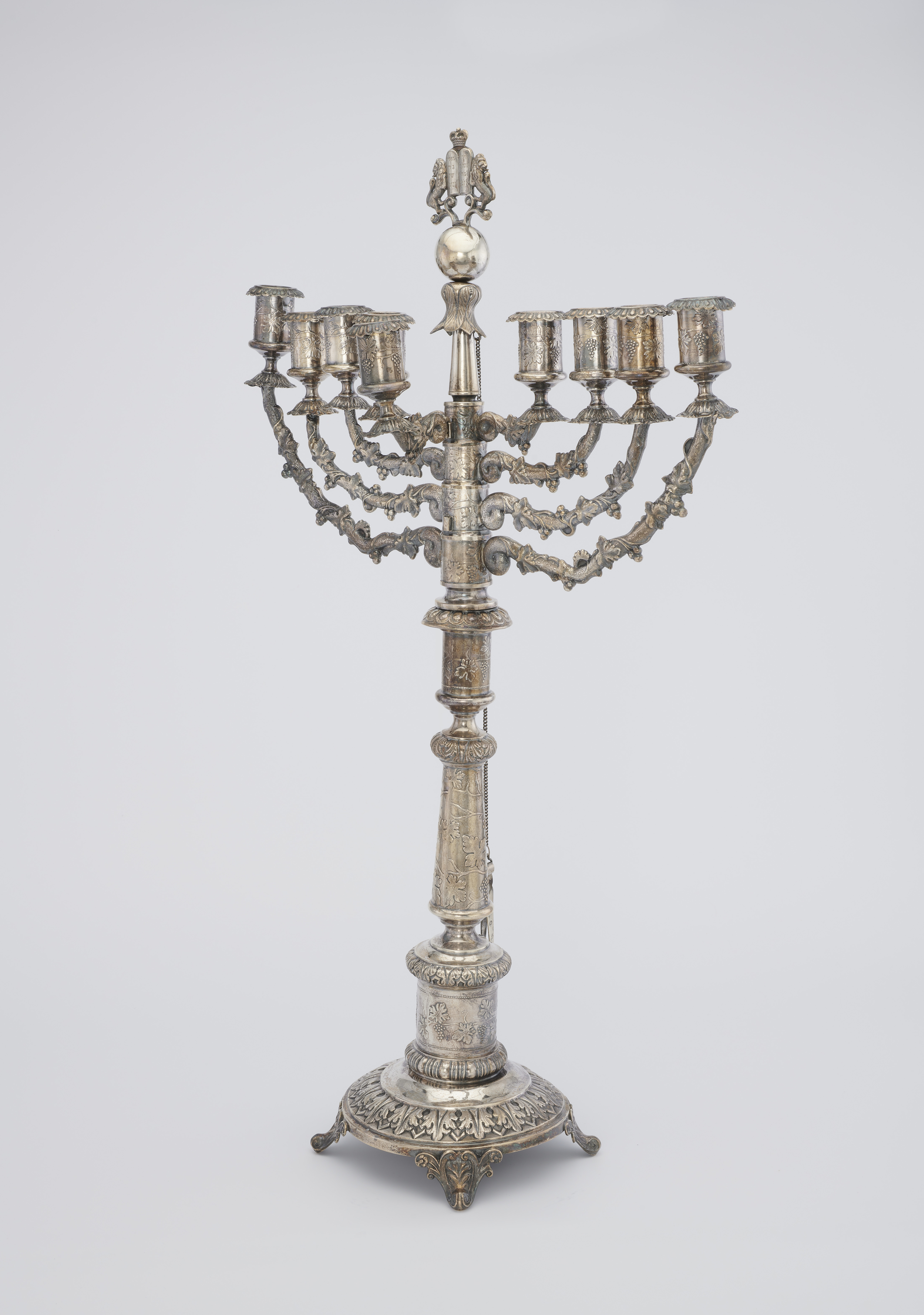
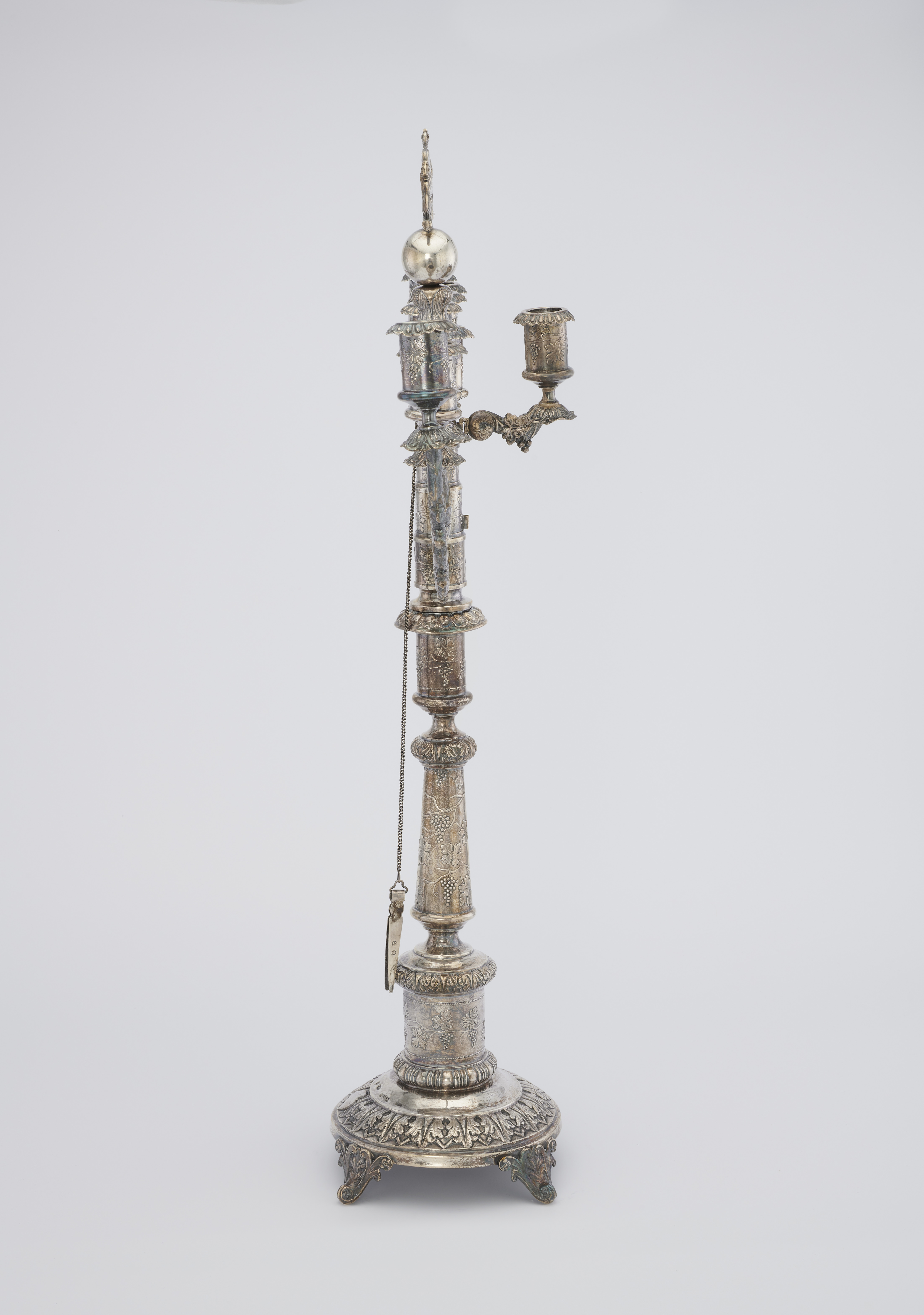
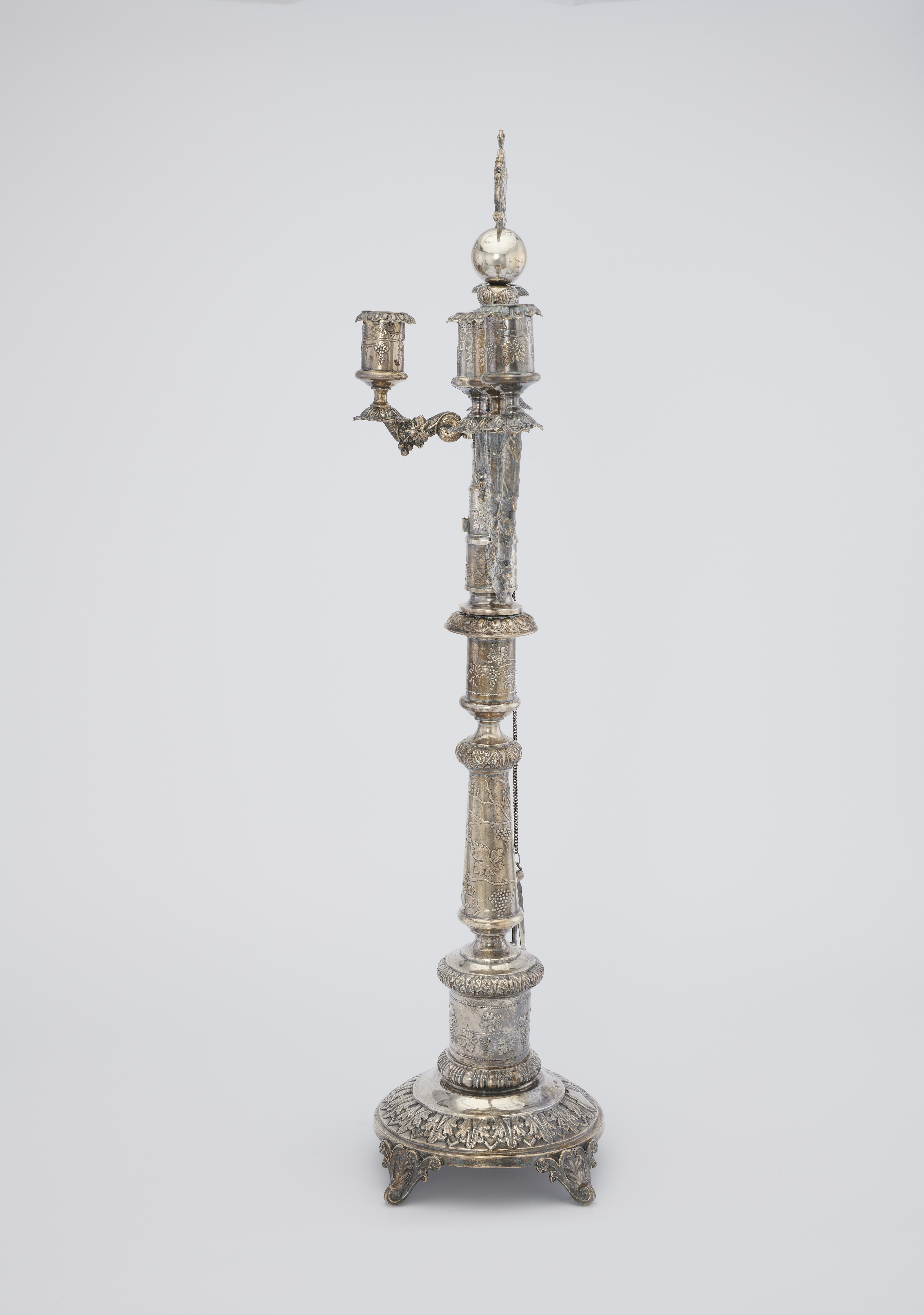
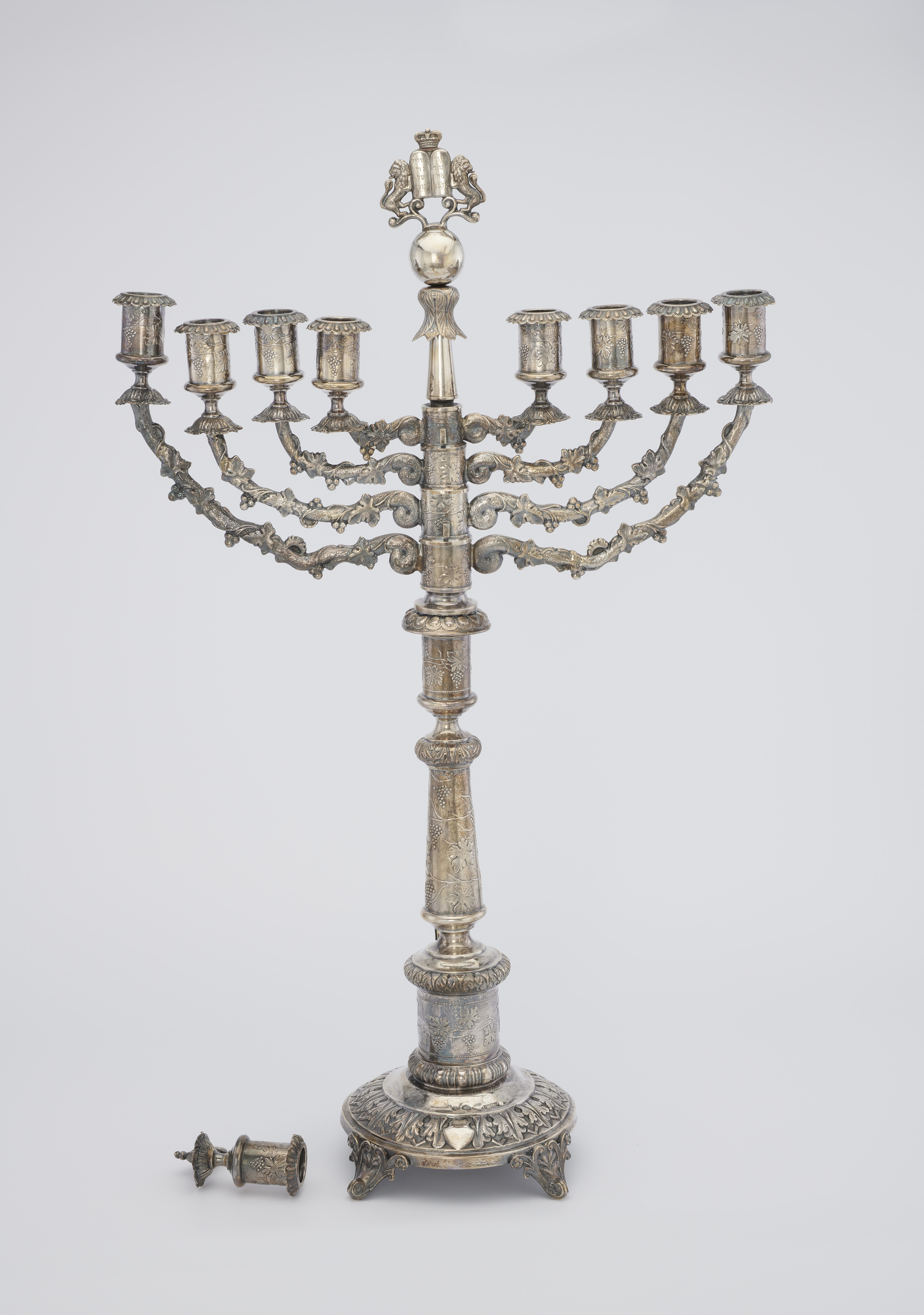
Candelabrum, folding, with eight arms extending from the shaft to the sides, in four pairs one below the other: the arms bend upwards so that the eight sleeves are supposed to form a straight line (this, however, probably due to the state of preservation, is not possible, especially on the left side). The ninth sleeve is on an arm extending from the front, attached to one of two tabs protruding from the shaft. The second tab, the lower one, is used (presumably) to attach a small oblong candle extinguishing device, in the shape of simple tongs (it is on a chain).
The shaft is surmounted by a sphere on which are visible the two Tablets of the Covenant with Hebrew inscriptions, two antithetic lions on the sides of the tablets and a closed crown above the tablets. The shape of the element placed under the sphere (to which the chain of the candle extinguishing instrument is attached) is shaped to form a lampshade - reminiscent of leaves falling and tapering downwards, expanding again at the very bottom. Element decoration: outline of leaves.
Hebrew inscriptions - on the right side of the front plaque:
ברוך
' אתה ד' א' מ' ה'
א' ק' ב' ר' ו
On the left:
להדליק
נר
של
שבת
Inscriptions on the back are the same except that the last word on the left panel is חנוכה (Hanukkah) instead of שבת (Sabbath). Apostrophes ' after specific letters indicate abbreviations for particular words in the blessing, which reads:
ברוך אתה יהוה אלוקינו מלך העולם אשר קדשנו במצותיו וצונו להדליק נר של שבת - in transliteration: Baruch Ata Adonai Eloheinu melech haolam asher kiddushanu bemicwotaw weciwanu lehadlik ner sheel Shabbat/Hanukkah.
In translation:
Blessed are You, Hashem, our God, King of the World, who has sanctified us with His commandments and commanded us to light a candle on Shabbat/Hanukkah.
The inscription gives in place of God's name the abbreviation 'ד, which is one way of designating an unpronounceable name (another is: יהוה or Adonai).
The object was acquired by surviving Jews just after the war in Warsaw, so it probably came from looting or was found in the rubble of the ghetto. Taken by a family emigrating from Poland when they left for Canada, it was used there, as Iza Laponce, the donor, emphasised when she sent it to the POLIN Museum at the end of her life.
Przemysław Kaniecki, Natalia Różańska