The Kidnapping of Europe

Nacht-Samborski, Artur (1898-1974)

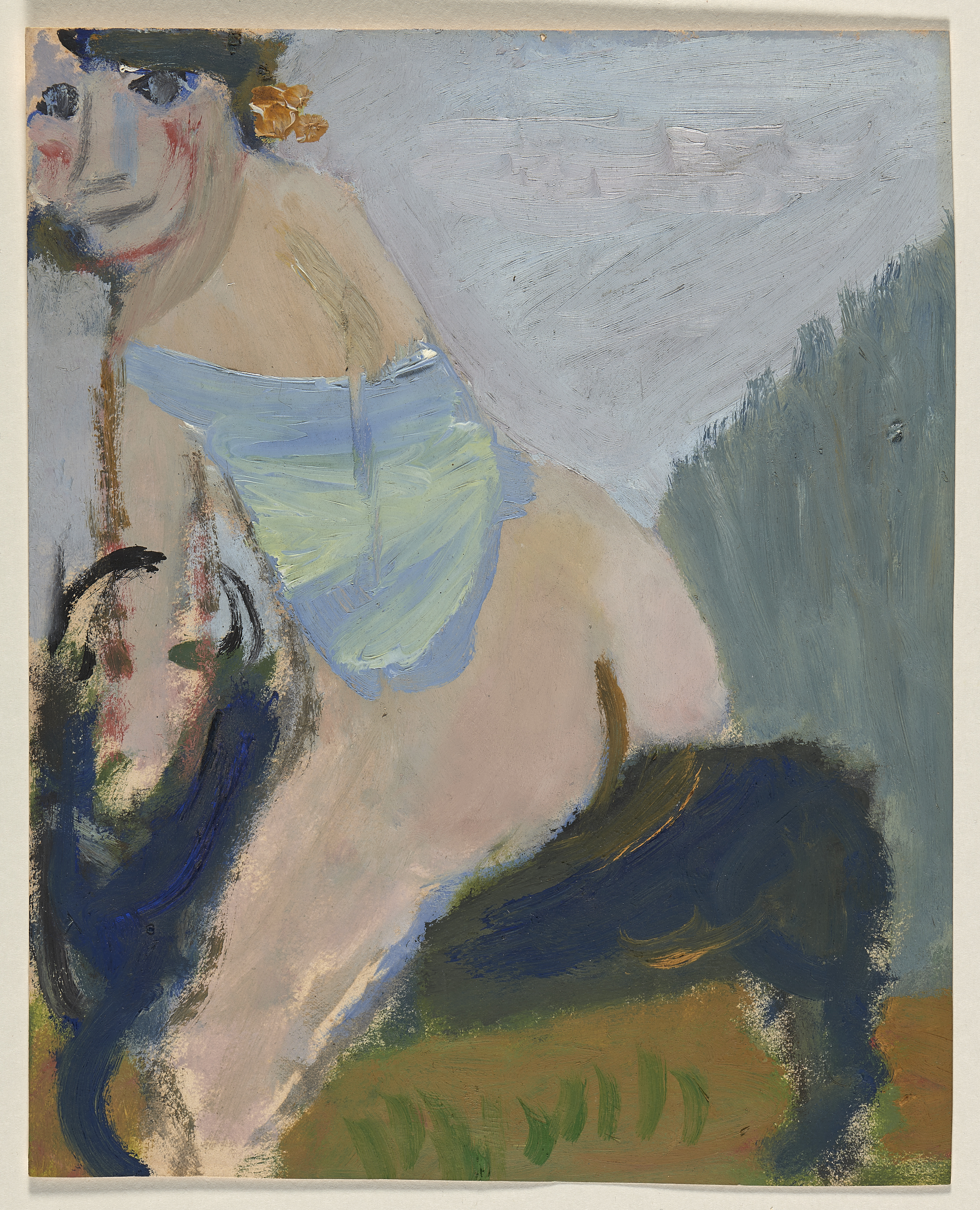
Before World War II, Artur Nacht-Samborski had lived in France for many years. There’s a a visible fascination with art of the previous generations in his 1930s paintings, not so much with the form itself but rather with the old masters’ perspective. Created around this time (probably in 1935) the sensual, even audacious Porwanie Europy [The Kidnapping of Europe] explores one of the oldest themes in European art inspired by Greek mythology – the kidnapping of the Tyrian princess, Europe, by the king of the gods, Zeus. Nacht’s work presents rather an ironic take on the story of the abduction of Europe – the daughter of Phoenician king, Agenor, known for her outstanding beauty. Once Zeus fell in love with the princess, he took the shape of a snow-white bull to appear on a meadow, where Europe and her friends would play. Deceived by the bull’s calmness and grace the girl sat on its back. Zeus seized the opportunity and ran. He did not stop until he had swam across the sea and finally gotten to a wonderful cave on the island of Crete. Europe gave birth to Zeus’s two sons: Minos and Rhadamanthys.

Nacht-Samborski’s painting, though rooted in the French style, is also very unique in itself. He draws upon German Expressionism as well as from French post-Impressionism, Fauvism and the artist of École de Paris. The wide range of saturated colours in Porwanie Europy [The Kidnapping of Europe] is intensified by its expressive form as well as its humour.

Donated by the artist’s family

Renata Piątkowska

czytaj więcej
Information about the object
Author/creator
Nacht-Samborski, Artur (1898-1974)
Object type
painting
Time of creation/dating
1935
Place of creation
unknown
Technique
painter’s
Material
cardboard
oil-based paint
Keywords
Copyrights status
contact the Museum
Owner
POLIN Museum of the History of Polish Jews
Identification number
MPOLIN-M207
Localization
The object is not currently on display