Seder (Hebrew: order) is a ceremonial dinner that Jews partake in on the first evening of the Passover holiday (two evenings in the diaspora). During this meal, special dishes and symbolic beverages are served on a festive table setting. These include, among others, four cups of wine representing the four expressions of redemption mentioned in the Book of Exodus (6:6-7), a decorative wine cup for the prophet Elijah, and kosher, dry vodka known as "Passover Slivovitz," typically made from plums (see A. Unterman, Żydzi. Wiara i życie, Lodz 1989, pp. 228–232; Judaica in the collections of the National Museum in Warsaw, edited by E. Martyna, Warsaw 1993, p. 302–303). During the holiday feast, vodka is consumed from silver or glass shot glasses, sometimes shaped like mugs, with the engraved or embossed word "Pesach."
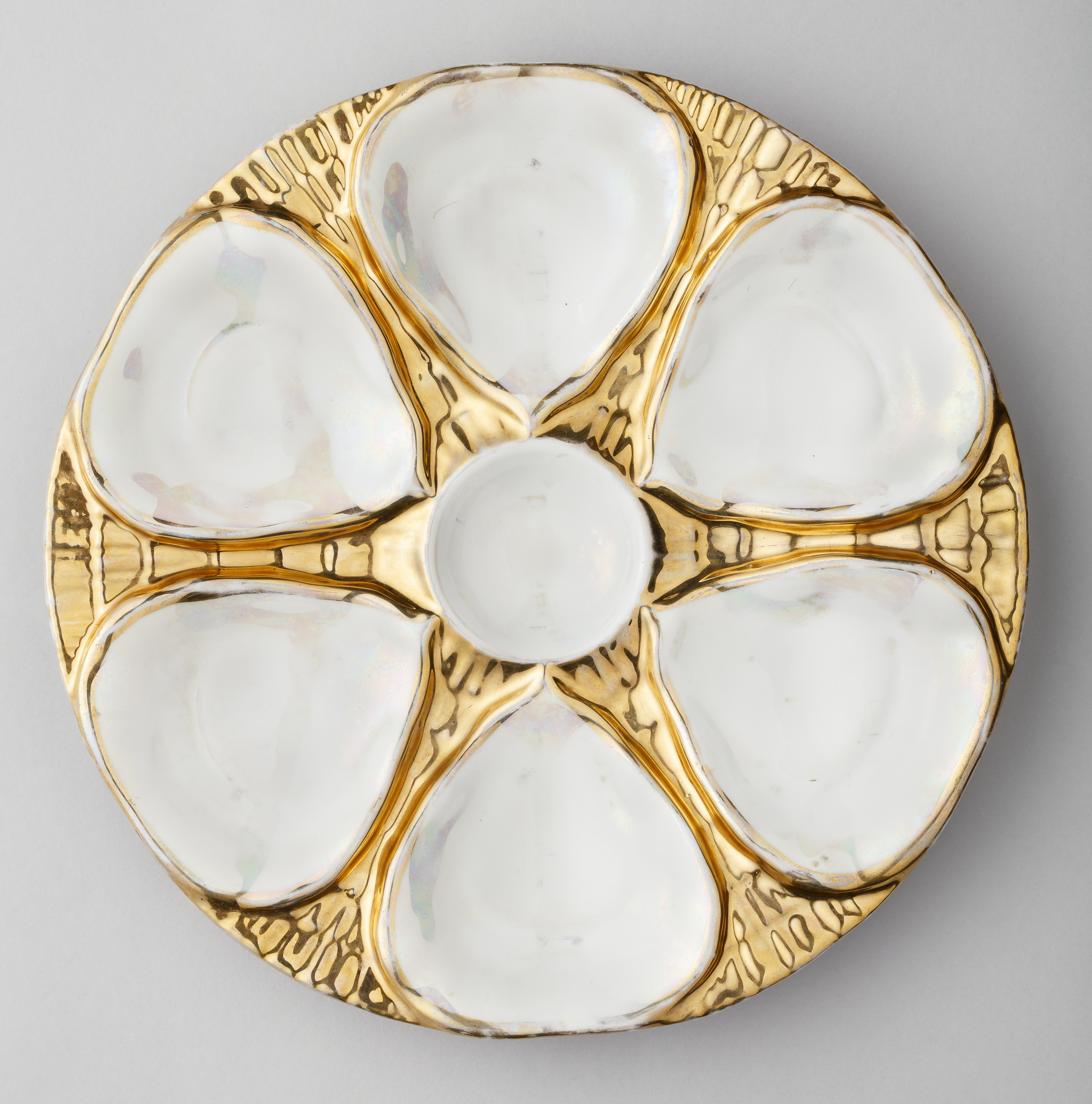
The porcelain Passover Seder plate from the collection of the Education and Museum Centre "Świętokrzyski Sztetl" consists of six small heart-shaped shallow bowls (length: 8.4 cm, width: 5.5 cm) arranged concentrically around a round bowl (diameter: 5.5 cm). The background is gilded, and the recesses contain silver Hebrew inscriptions: zeroa (shankbone), charoset (a paste made of nuts, almonds, apples, etc.), chazaret (horseradish), karpas (parsley or celery), beitza (egg), and maror (bitter herbs), indicating the placement of the food items. On the underside, there is a visible signature mark: a crown, and below it, "TK/Thuny/Czechoslovakia." Conservation status is good. Silver inscriptions in the recesses are illegible, the central bowl is scratched, and the gold on the edges is worn out.