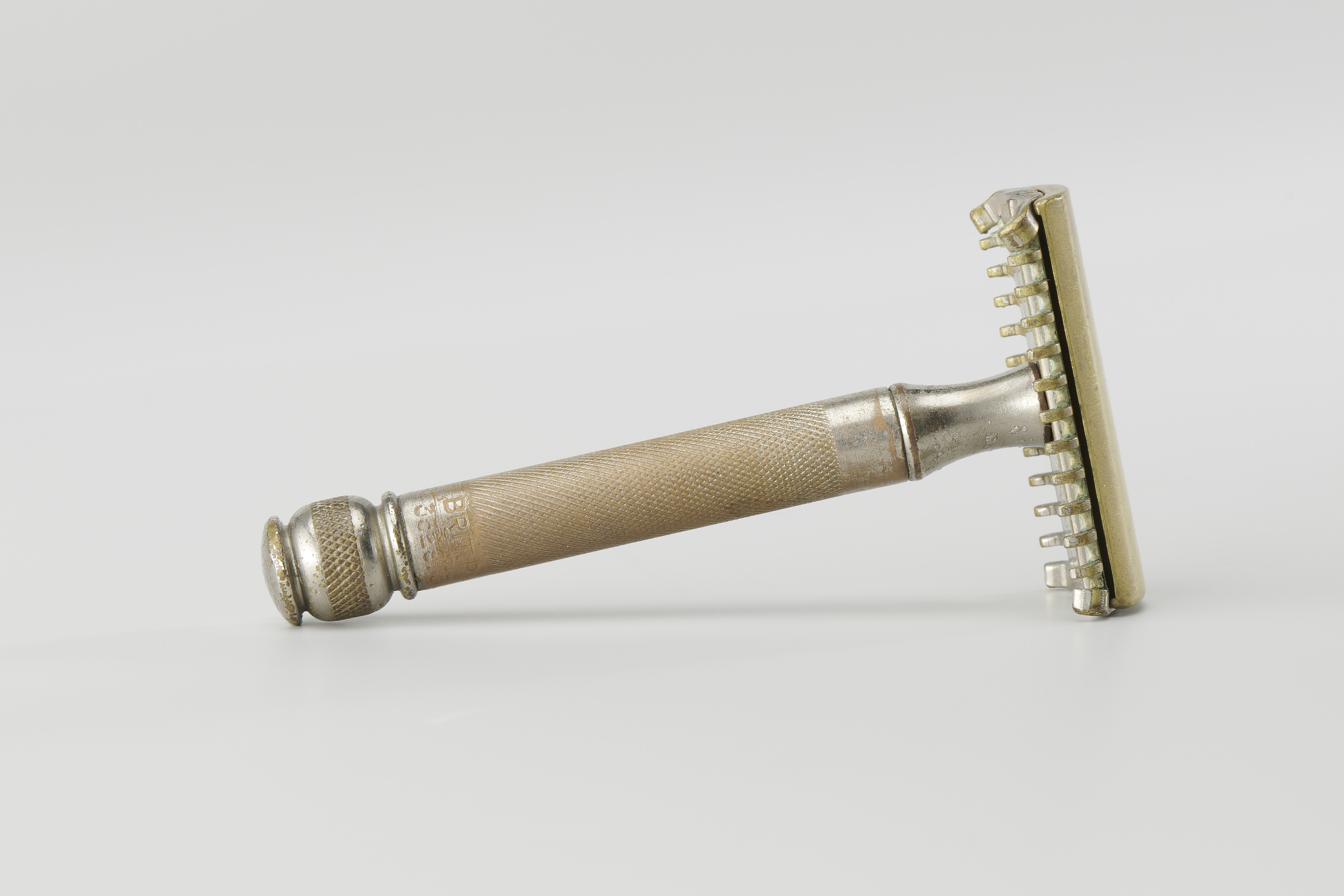
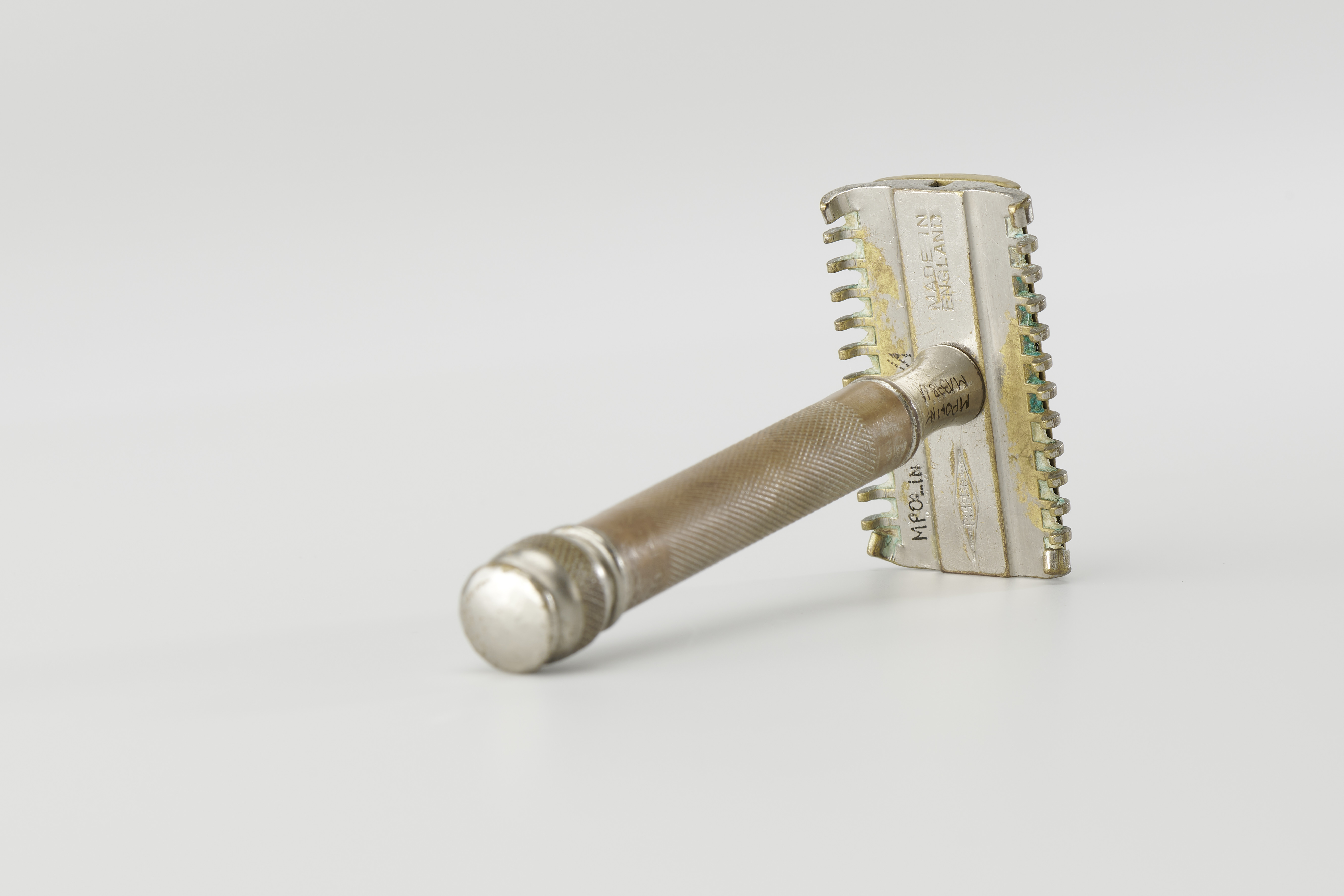
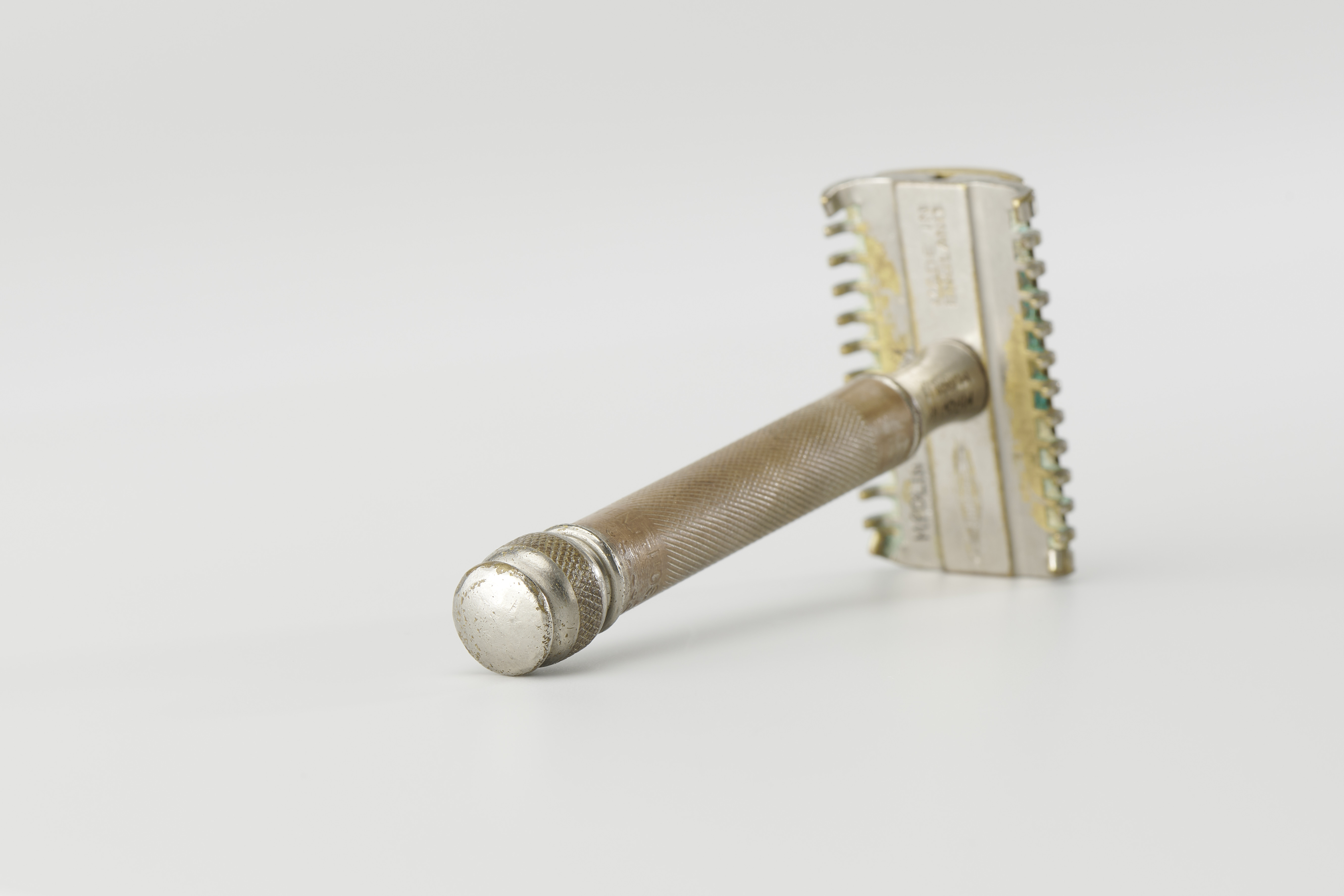
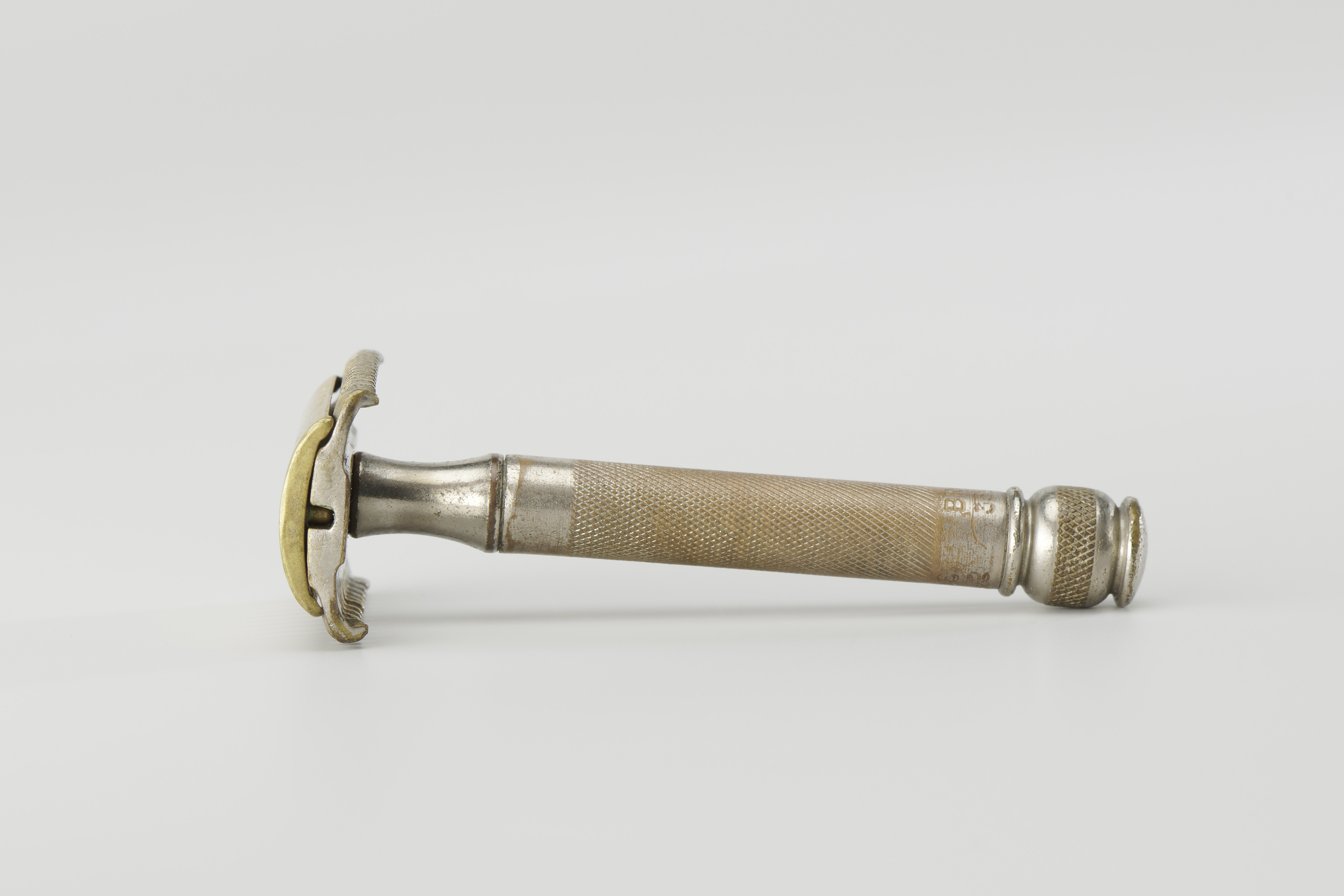
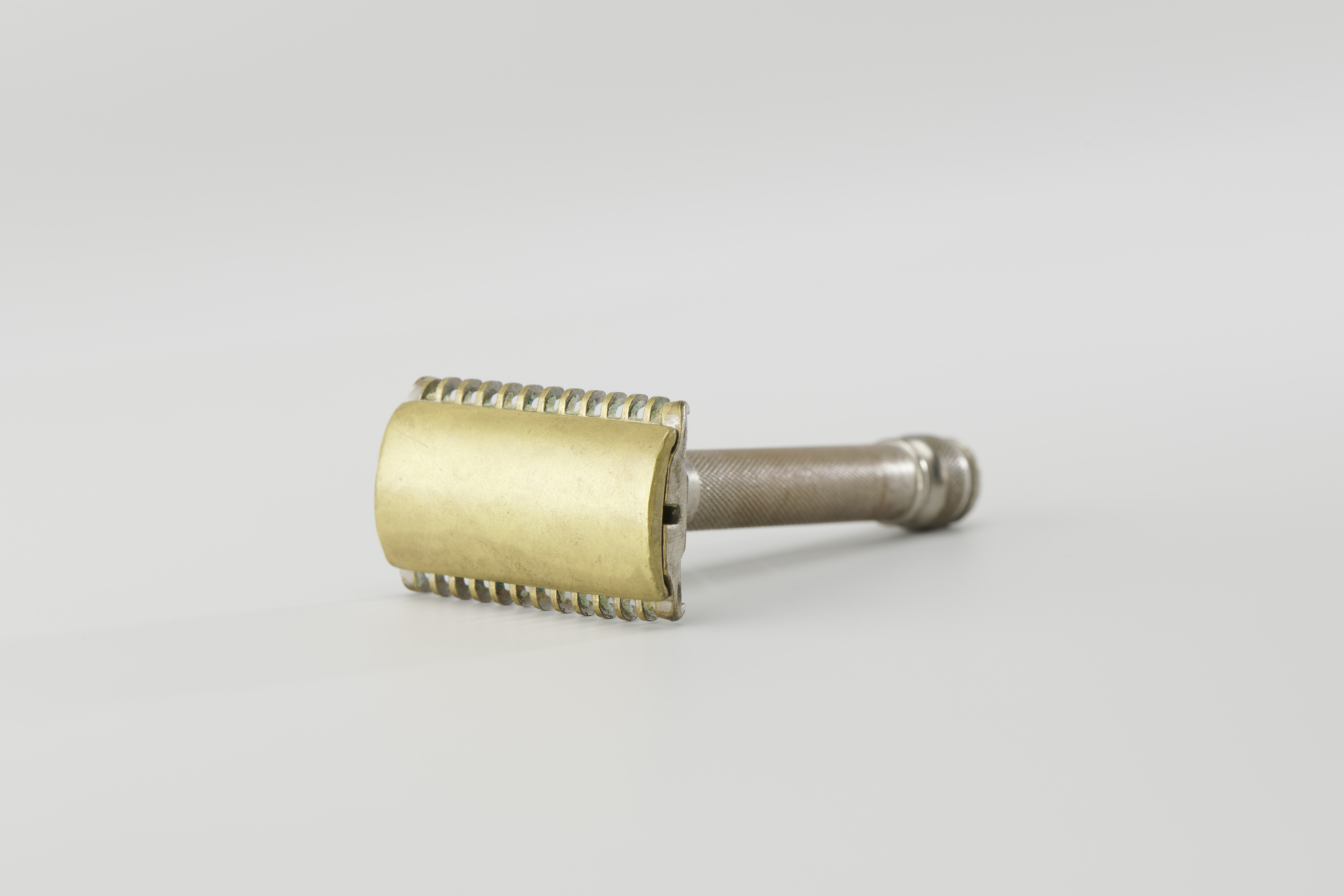
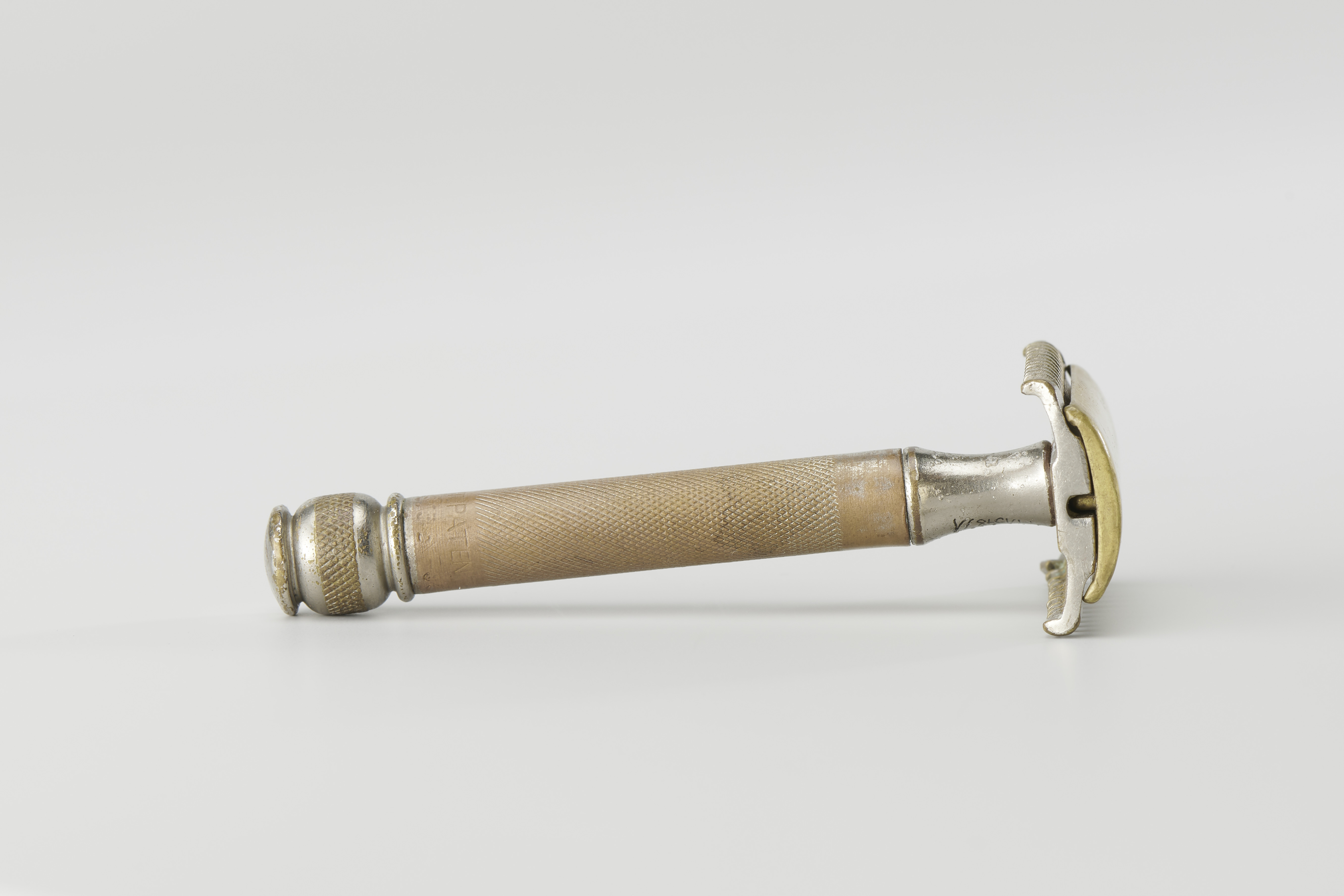
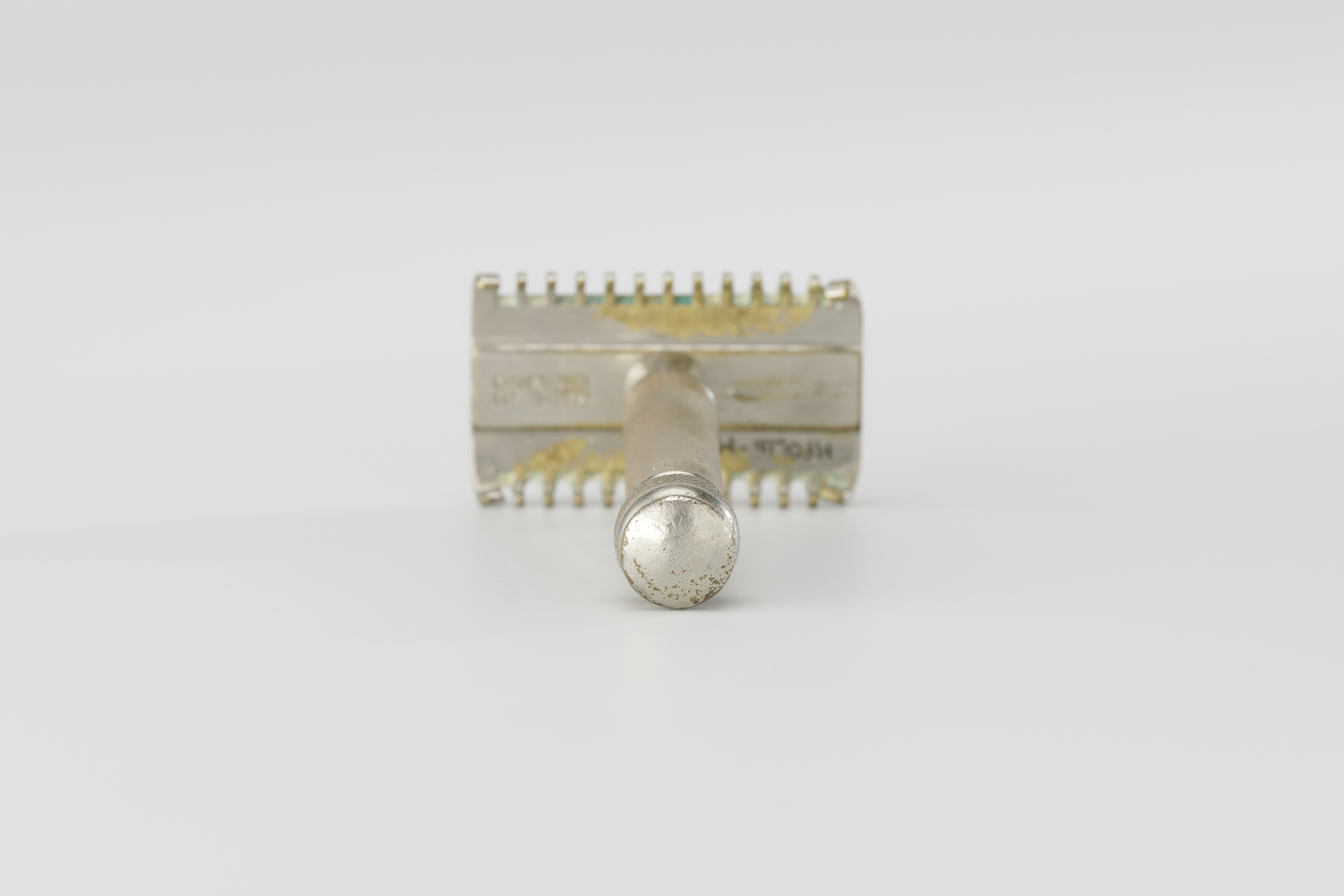
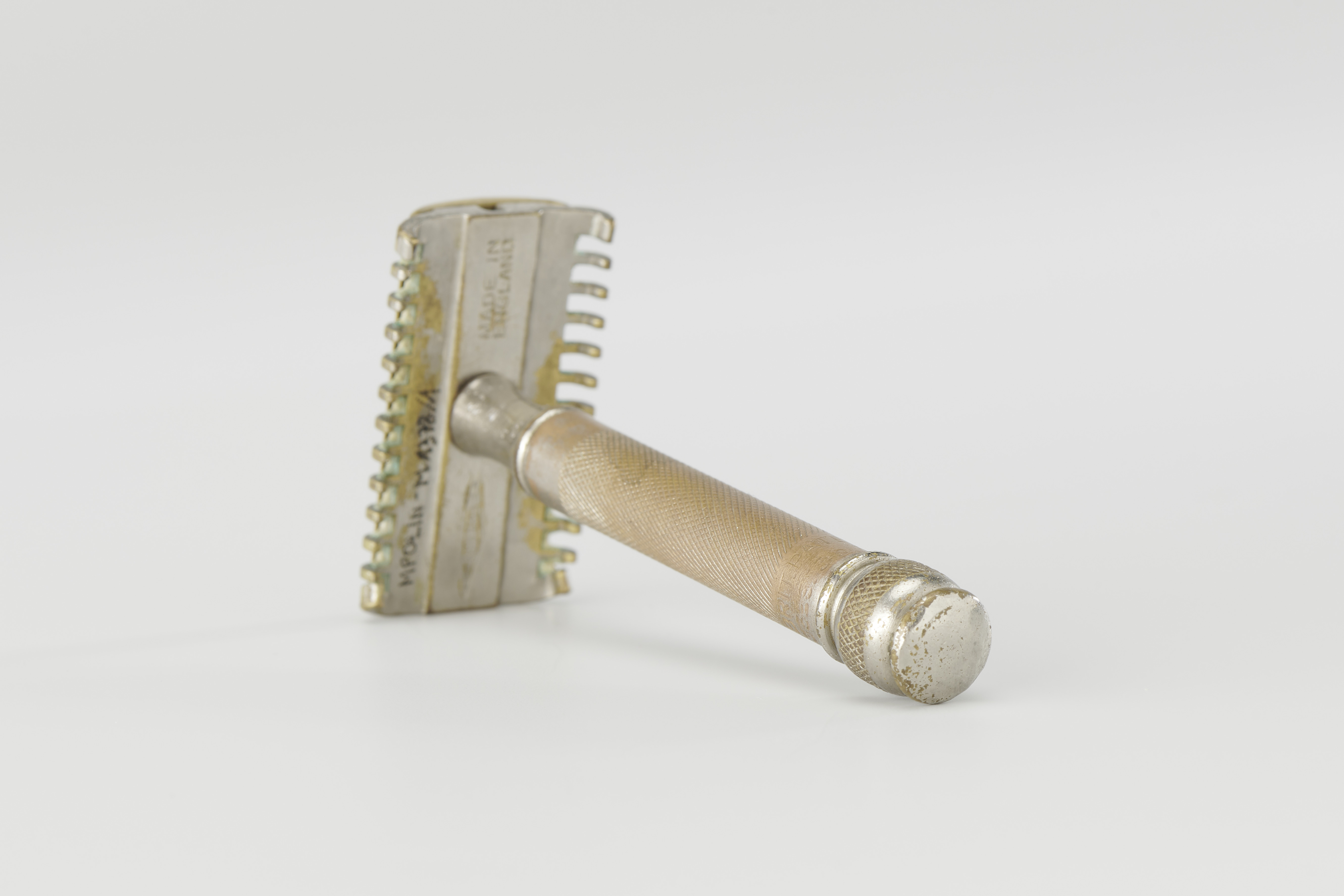
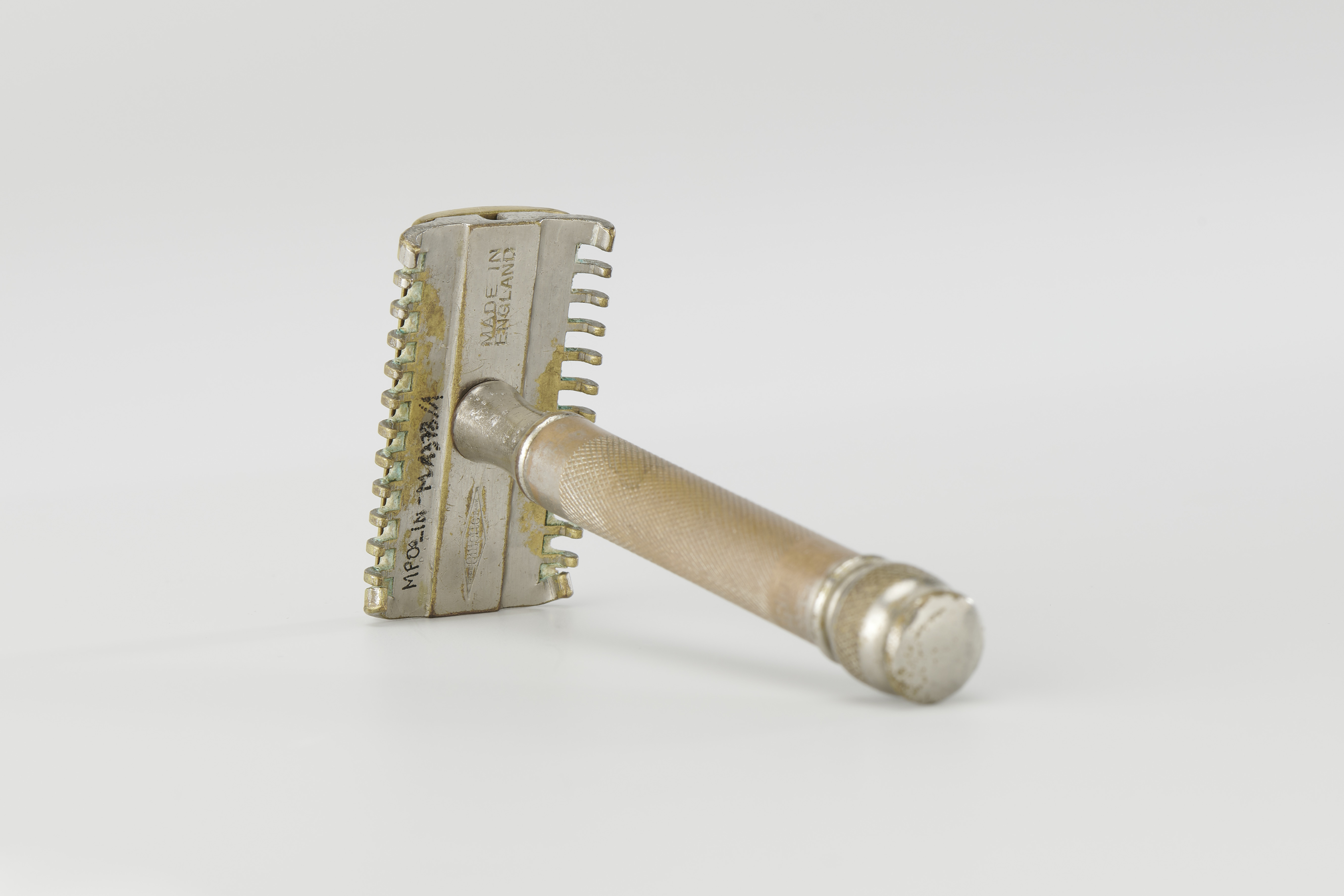
After the defeat in September 1939, escape to the east, to the areas of the Second Polish Republic occupied by the Soviet Union, was the hope of salvation for many Jews. Jakub Kirszbraun, sixteen years old at the time, decided to move beyond the Bug River; his eldest brother, Dawid (b. 1907), and his wife Leonia also set off. Jakub (b. 1923) had not yet shaved, but his brother Beniek (Abraham Dow, b. 1910) gave him his razor. Jakub had it with him during his exile in Siberia, as well as in 1944 when he joined the Polish army, and later after the war, in Poland. Jakub and Dawid, with Leonia, returned in 1946. On 28 October 1946, they registered with the Central Committee of the Polish Jews (AŻIH, registration card no 8956). In 1948, Jakub took the razor to Paris, where he went with Dawid and Leonia, and then to Israel, where he settled permanently.
The family that remained in Poland – her mother, Rebeka, née Bukszpan, brother Beniek, and married sister Dwora died in the Holocaust. Sister Rutka (Rachel) was killed in September 1939 during the bombing of Warsaw. Brother Aleksander died in 1942 in Palestine, to which he had travelled in 1933.
The razor is the only memento left to Jakub from his family home, about which he said: "My father, Eliasz Kirszbraun, died when I was seven [in 1931], but he became engraved in my memory... I remember him as a serious man, handsome, good-looking, and very intelligent. He was scarcely at home, being not only president of the Jewish community and a two-term member of parliament. He was also the president of Agudat Isroel in Poland [see https://sztetl.org.pl/pl/slownik/aguda], and he was one of the founders of Agudat Isroel worldwide at their conference in Katowice, I think it was in 1912. But for me, he was not an MP, he was not the president, but a father, a daddy" (https://www.dwutygodnik.com/artykul/3558-z-opowiesci-polskich-zydow-12.html).
The razor was preserved along with an elegant leather case with fabric lining. Inside, there was space for a contoured handle with grooves, the razor itself, and a cover. Made of stainless steel, resistant to water, moisture, and scratches, it is quite heavy, but this made shaving more comfortable. A sturdy case protected it from damage. Probably thanks to this, the razor was durable for life. One could still shave with it.
Renata Piątkowska