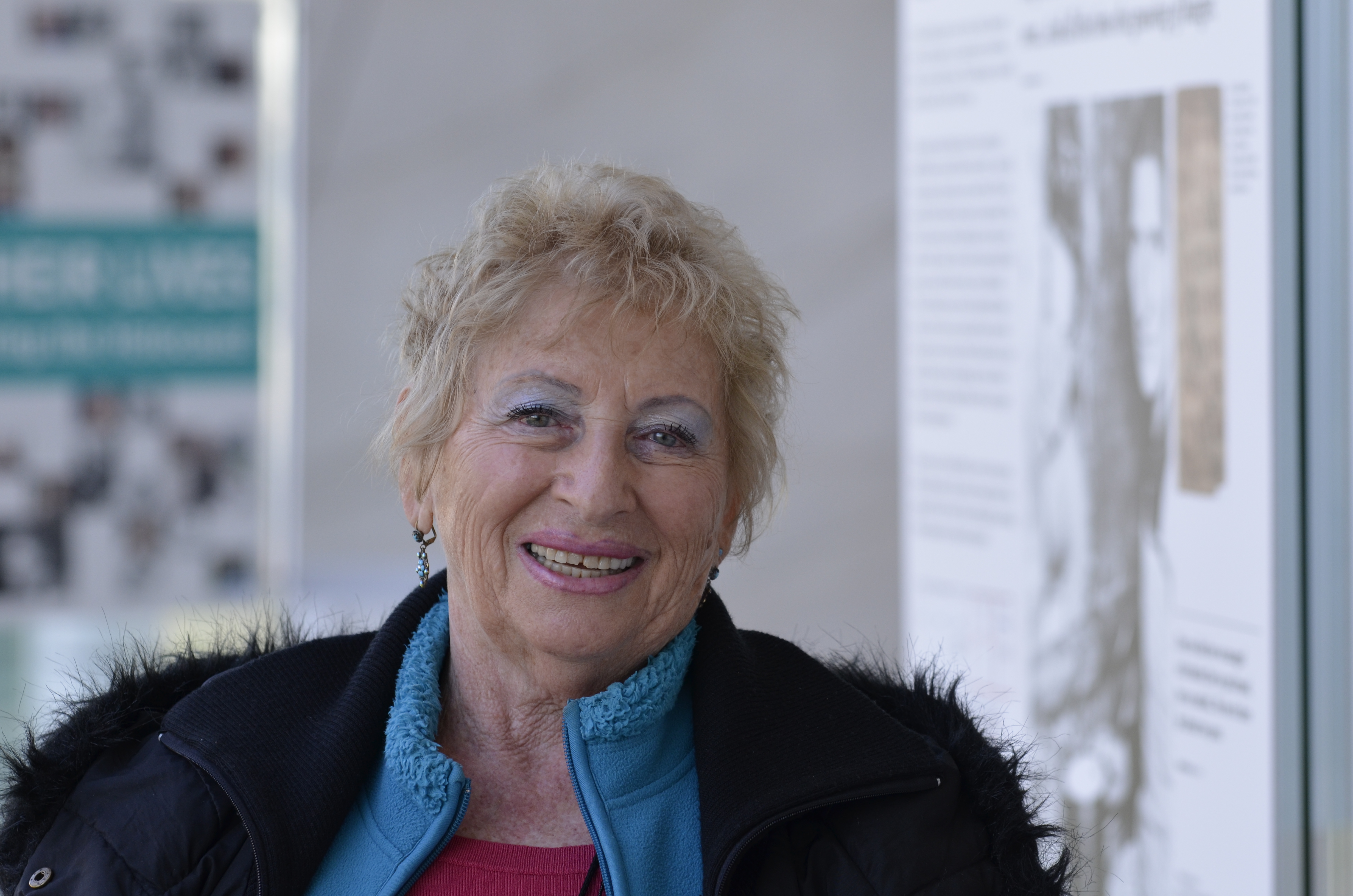
Pnina Segal was born in 1938 in Łódź as Lusia Kałuszyner. Her father, Maksymilian, was the owner of a textile factory. Her mother, Maria nee Landau, studied at a university and spoke French. The only brother of Pnina Segal died of scarlet fever before she was born.
After World War II broke out and the Germans invaded Łódź, Pnina Segal’s parents decided to send their daughter to grandparents living in Piotrków Trybunalski. Sometime later, Maksymilian and Maria moved to Piotrków as well. Once deportations from Piotrków commenced, her mother’s parents and brother were taken to Treblinka, where her father died, probably of typhus. When Pnina Segal’s mother was taken from the Piotrków ghetto to forced labour in an ammunition factory in Skarżysko, the girl was left with her aunt Sala.
For some time, Pnina Segal, her aunt and her daughter, Janka, managed to hide to avoid being deported. However, they were ultimately taken to the camp in Bliżyn and from there, in July 1944 – to Auschwitz-Birkenau. Despite being very young, probably due to an oversight, Pnina Segal passed the selection on the camp ramp. Soon after the arrival in Birkenau, Sala and Janka died. The women from the block took care of Pnina Segal until the liberation by the Russians. She was one of the youngest female prisoners who survived the camp.
For six weeks, until reuniting with her mother who survived the camps in Skarżysko and Częstochowa, Pnina Segal stayed in the town of Oświęcim with the Nowak family. Soon afterwards, Pnina Segal and her mother left Poland. They went to Eretz Israel through Germany in 1947. Pnina Segal often visited Poland, both privately and within meetings with young people regarding education about the Shoah. She passed away in 2016.