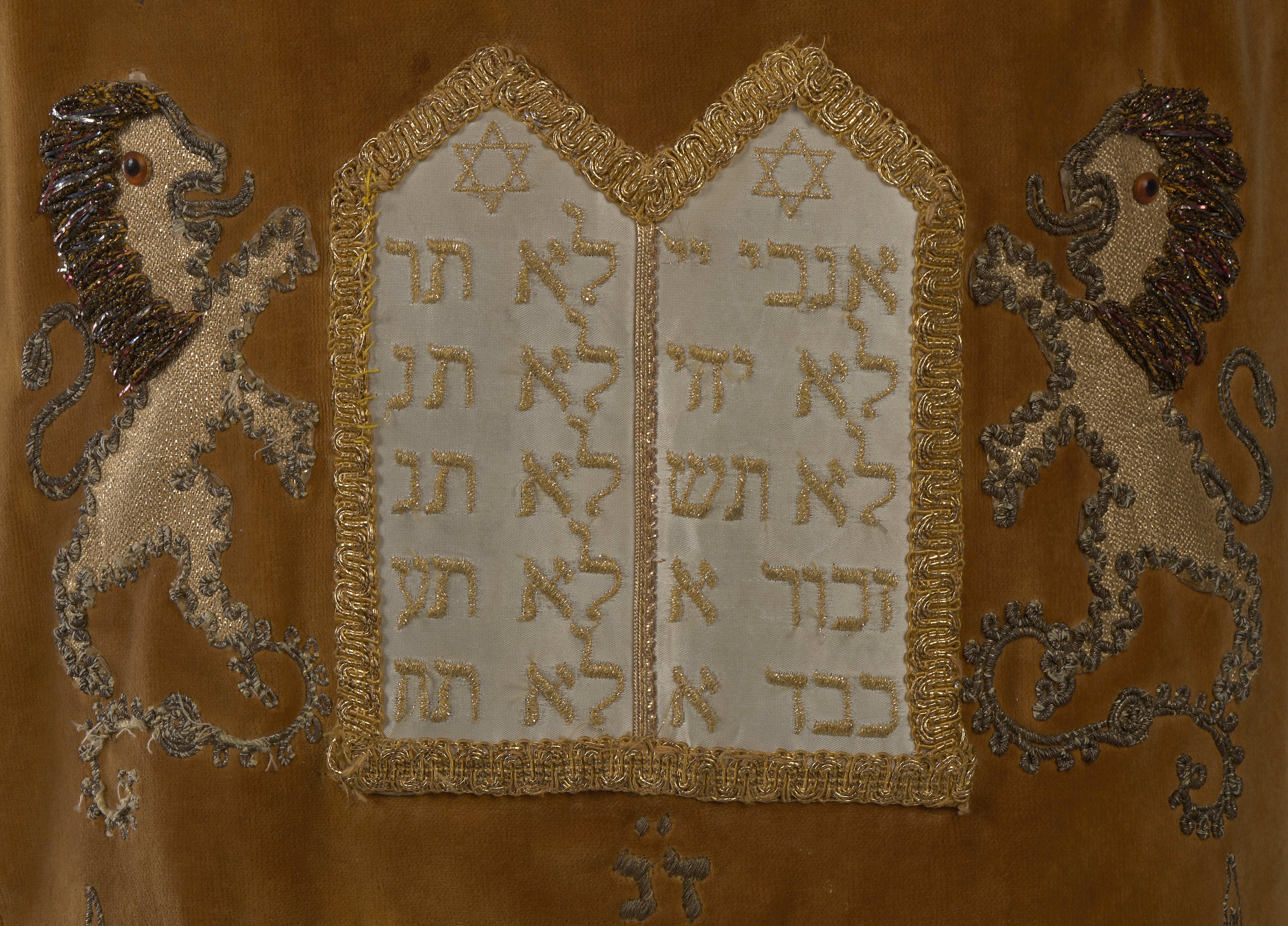
A Torah mantle (Hebrew: me'il) is a type of decorative cover placed over the Torah scroll and stored in the holy ark (aron ha-kodesh) of a synagogue. Originally, these covers were meant to protect the Torah from damage, but over time they became decorative elements. It is believed that the tradition of embellishing Torah scrolls has its roots in mystical traditions, according to which the Torah is treated by Jews as a person – a living organism. The most common motifs found on Torah mantles are the Tablets of the Ten Commandments and a crown held by lions. There are also known examples with scenes of the binding of Isaac or depictions of items from the Jerusalem Temple, as well as dresses devoid of symbolic representations and entirely filled with plant or geometric ornaments (Judaica ze zbiorów Muzeum Narodowego w Warszawie, ed. E. Martyna, Warsaw 1993, p. 49).
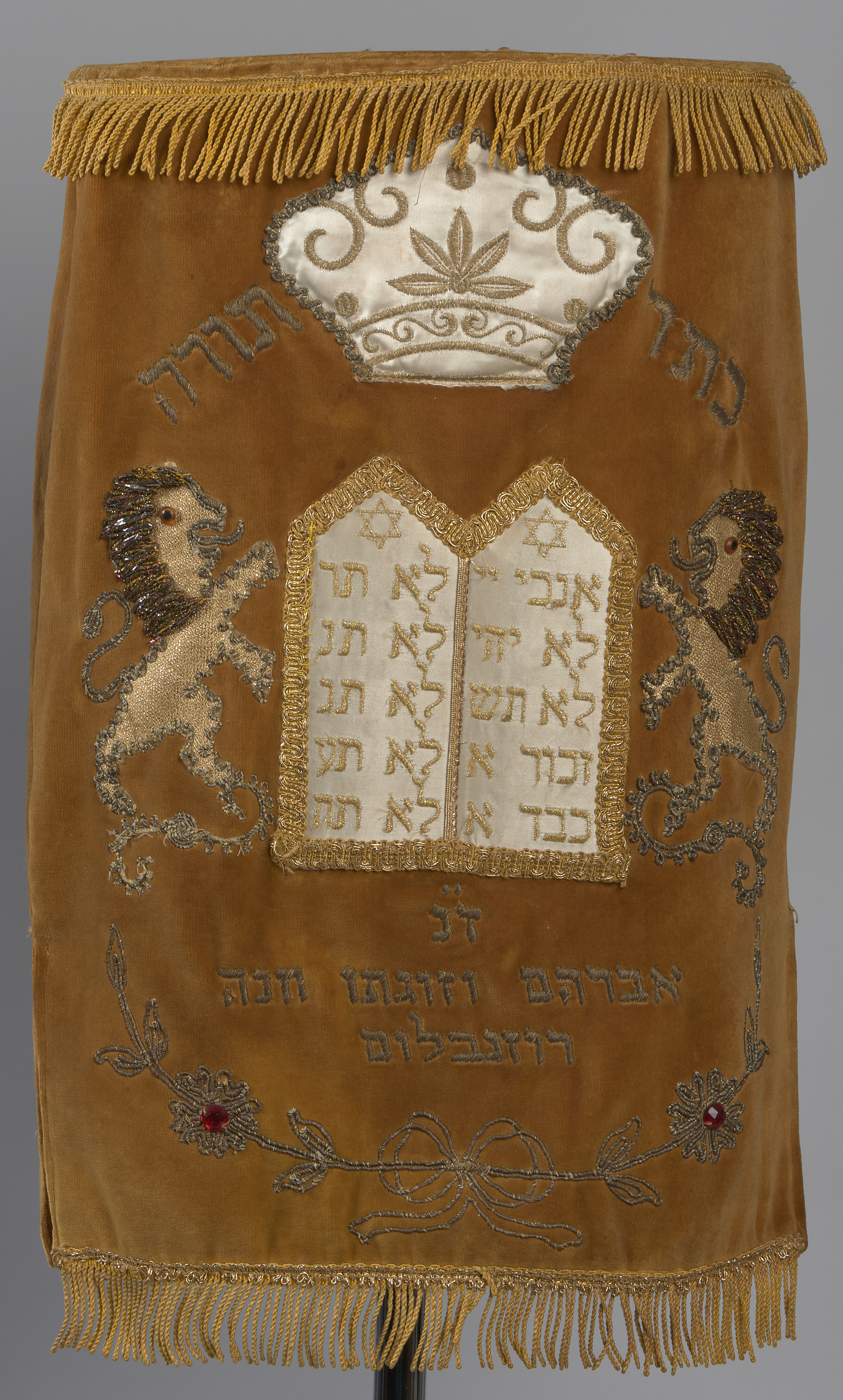
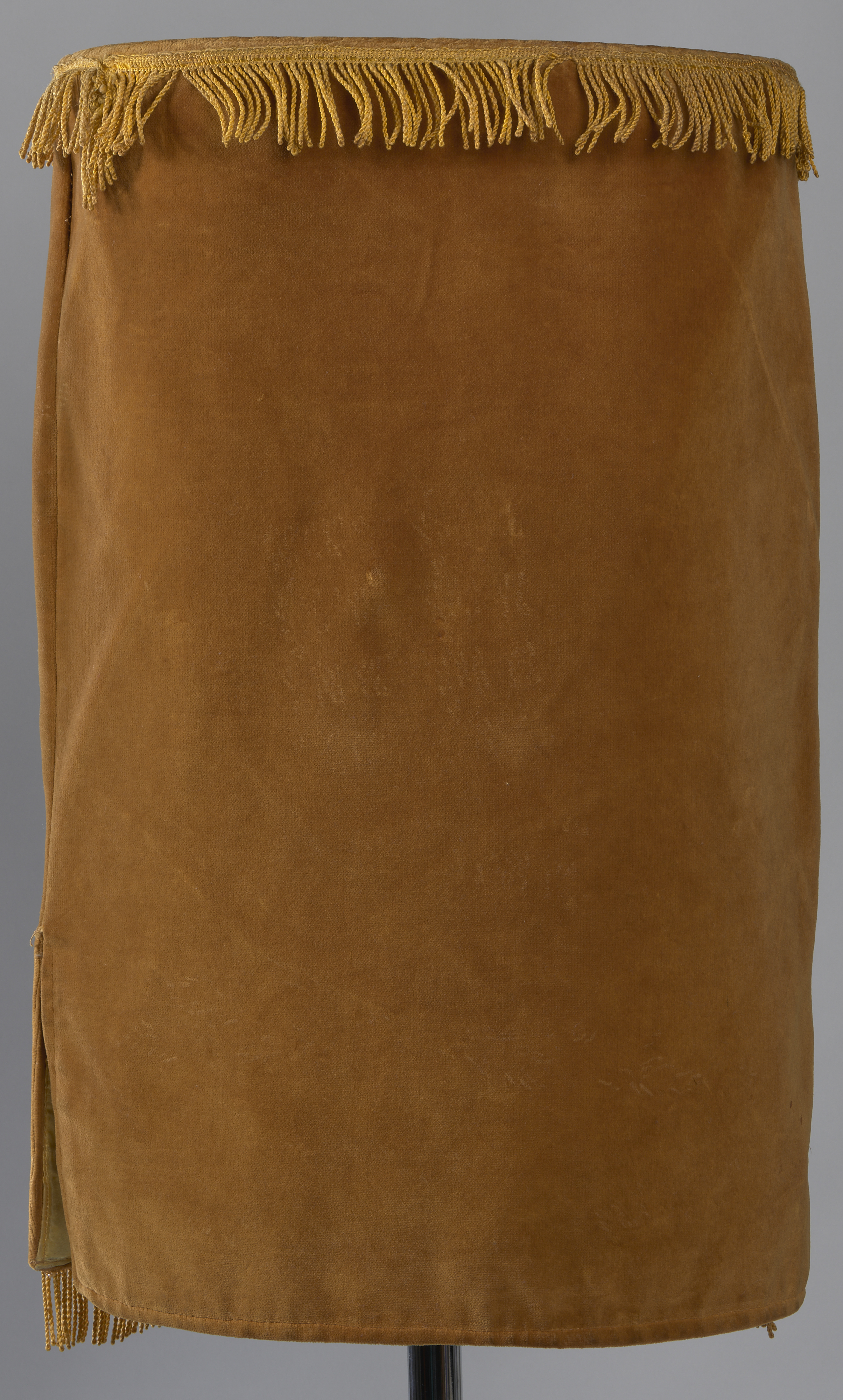
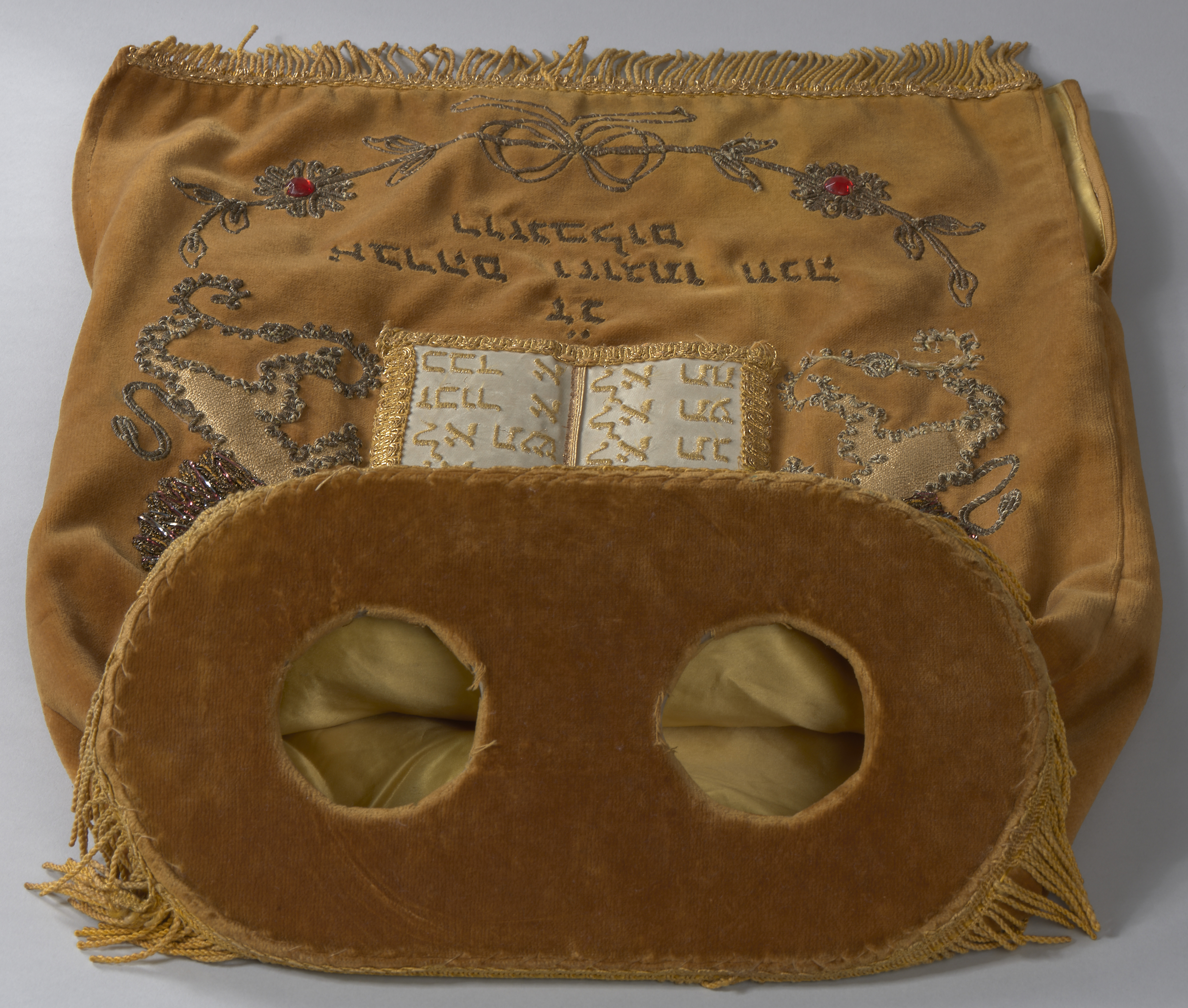
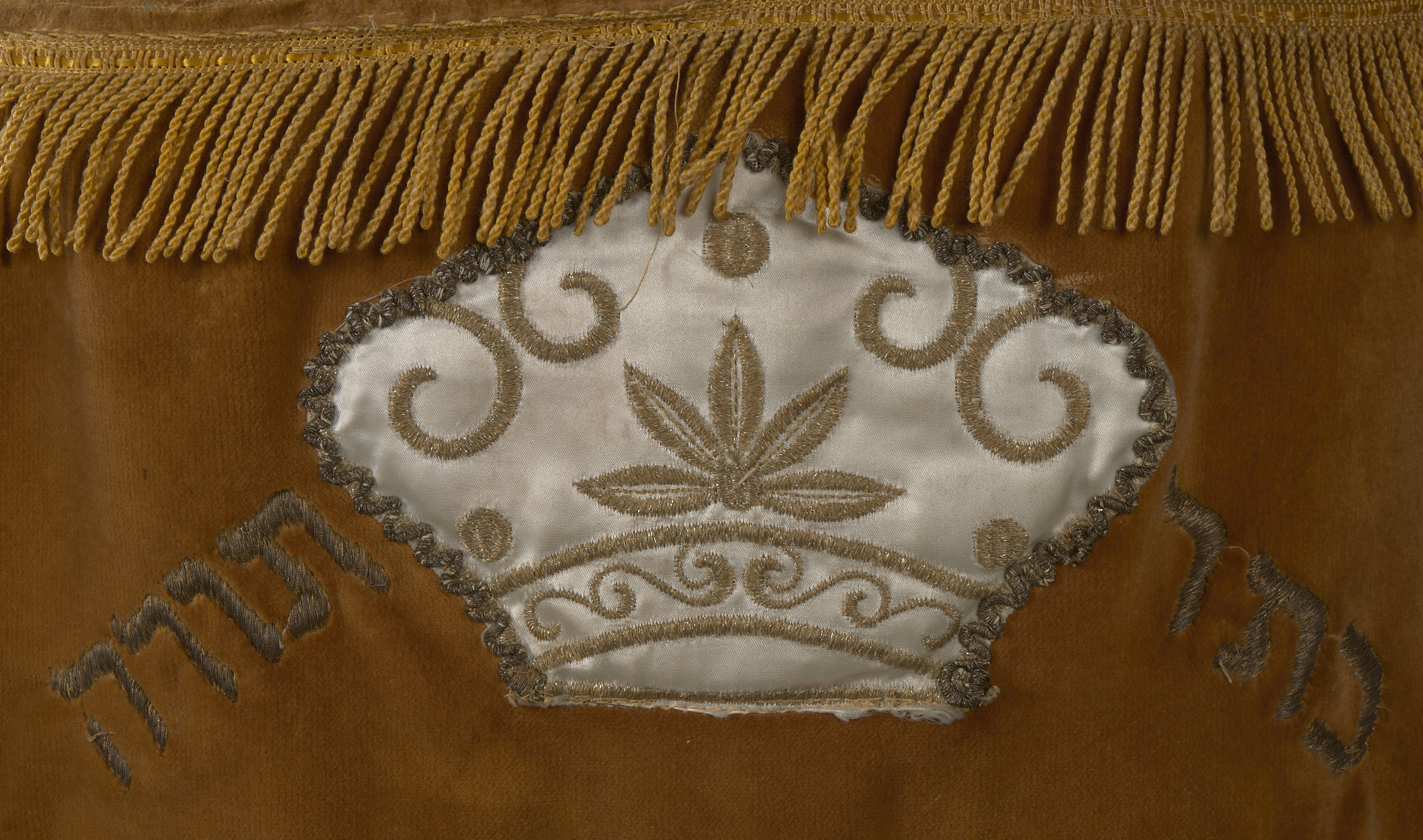
The me'il from the collection of the District Museum in Leszno comes from the vicinity of Łódź. It is made of velvet in a honey colour and has the shape of an elongated rectangle. The oval top is stiffened with a thick insert with cut-out holes, which allow the mantle to be placed on the Torah rollers (called acei chayim in Hebrew – the tree of life). The entire piece is adorned with a golden edging and fringes. Similar finish can be found at the bottom of the front part of the mantle. In the centre, the me'il is decorated with two Tablets of the Ten Commandments, embroidered with golden thread and the initial words of the Ten Commandments. The tablets are flanked by two lions standing on their hind legs, above which there is a closed crown and the Hebrew inscription "Crown of the Torah". The embroidered foundation inscription below the tablets contains the names of the donors: "Donated by Abraham and his wife Chana Rosenbaum". The text is surrounded by two branches tied with a ribbon and adorned with synthetic rubies.
The Torah mantle was purchased for the collection in 2008 from pr. Szczepan Jan Szymander from Pruśce near Rogoźno Wielkopolskie. The previous owner acquired it through an online auction from a resident of Pabianice.
Dariusz Czwojdrak