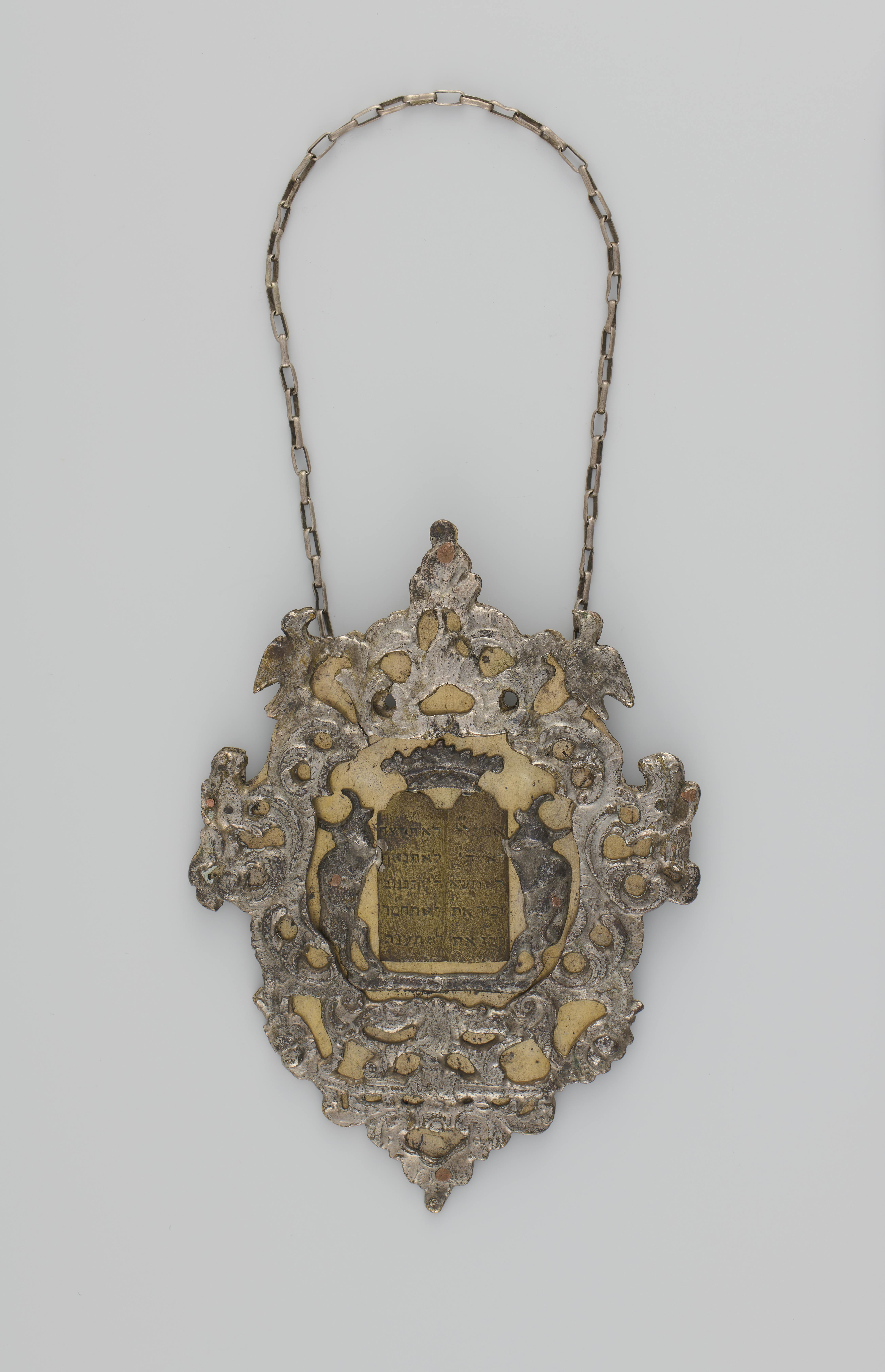
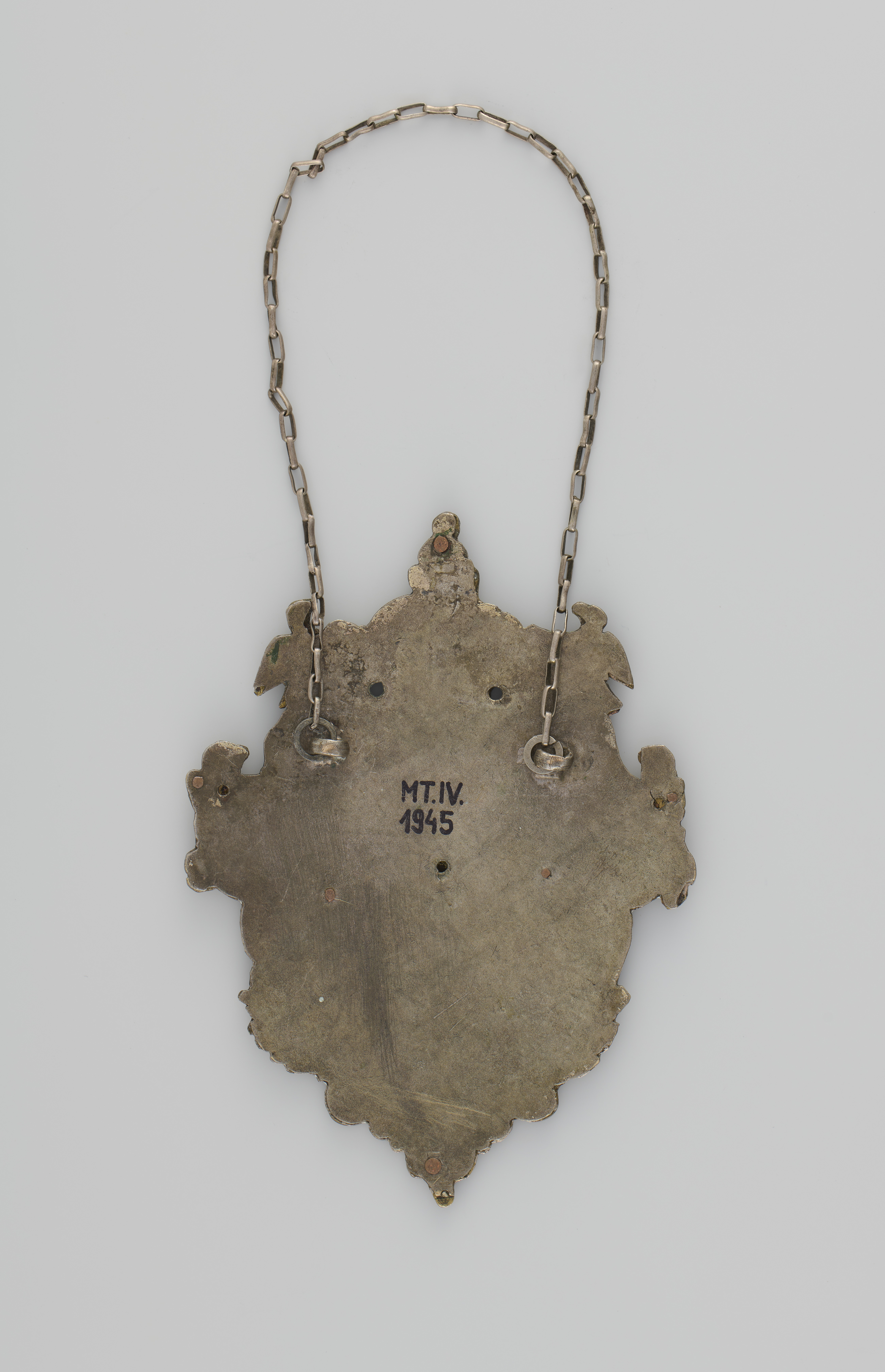
The Torah shield (Hebrew: tas) is one of the decorations placed on the Torah scroll, clothed in the so-called mantle (Hebrew: meil). The shield from the collections of the District Museum in Tarnów has the form of a cartouche similar in shape to a vertical oval, with a secondary alpaca chain on the back for hanging. A cast, openwork, bleached with silver metal (silver?) symmetrical animal and plant composition was placed on a base made of surface-gilded alpaca sheet (on the obverse). The rich openwork decoration, consisting of birds and two lions and Neo-Rococo plant ornaments, was attached to the surface with copper rivets. With the exception of the Decalogue tablets, all elements of the shield were originally fire-gilded.
The two brass tablets of the Decalogue located in the centre of the shield are topped with a royal crown and supported on the sides by two antithetical goats (?) standing on their hind legs, rarely seen in Jewish cult art. The first two words of each commandment are carved in Hebrew on the tablets. The ninth and tenth commandments were reversed.
The shield was made in the 19th century, and bears traces of later alterations and restorations, including changes in the mounting, secondary whitewashing of the openwork composition and the addition of a chain of 54 links. Unlike most Torah shields, this one does not have a box for tablets with the names of holidays used to mark the scroll. The ornament is cracked in one place, and the back shows traces of holes from the original mounting.
The item was purchased for the District Museum in Tarnów in 1982. from a private person. The fate of the owner is unknown.
Barbara Bułdys