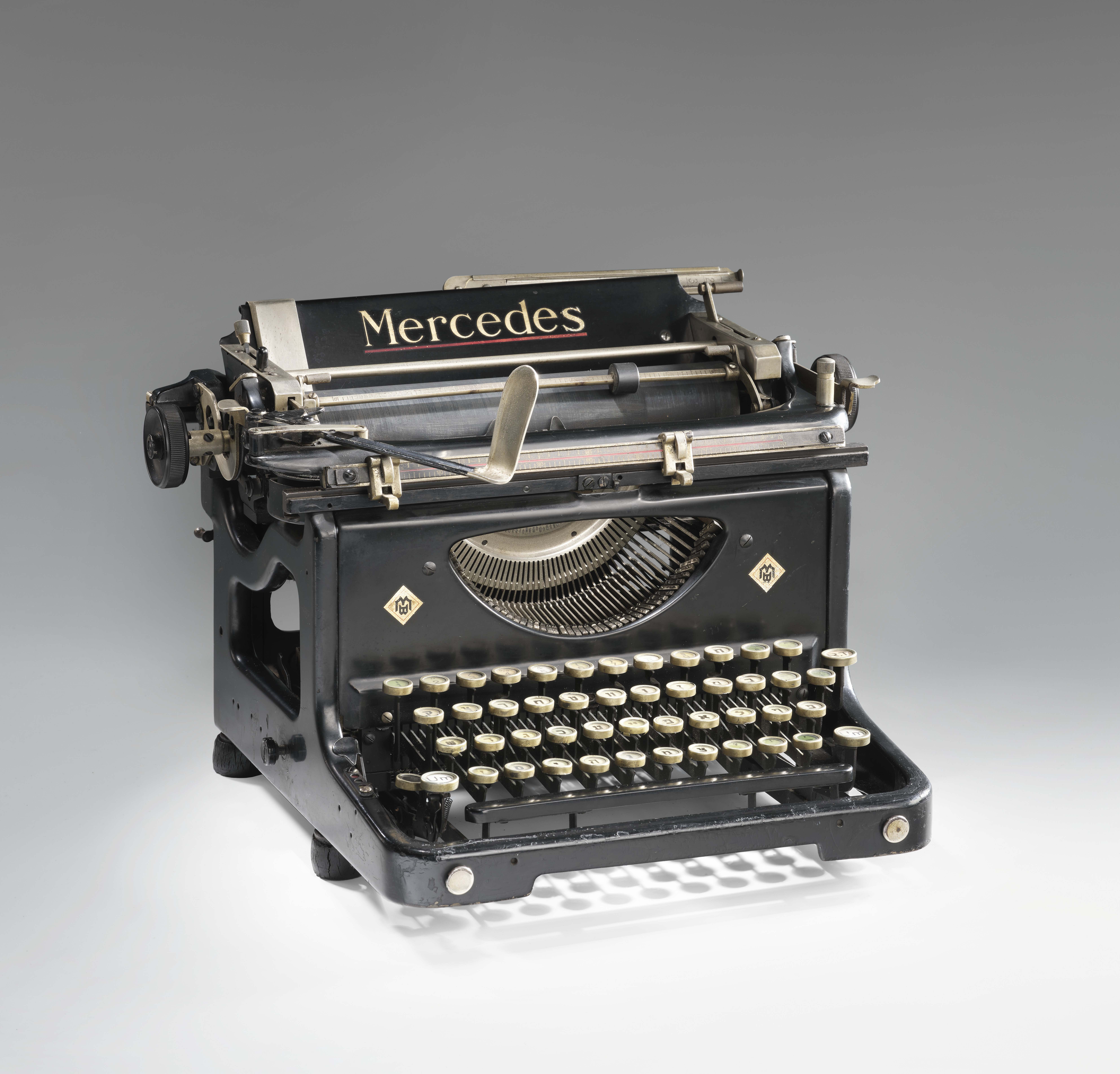

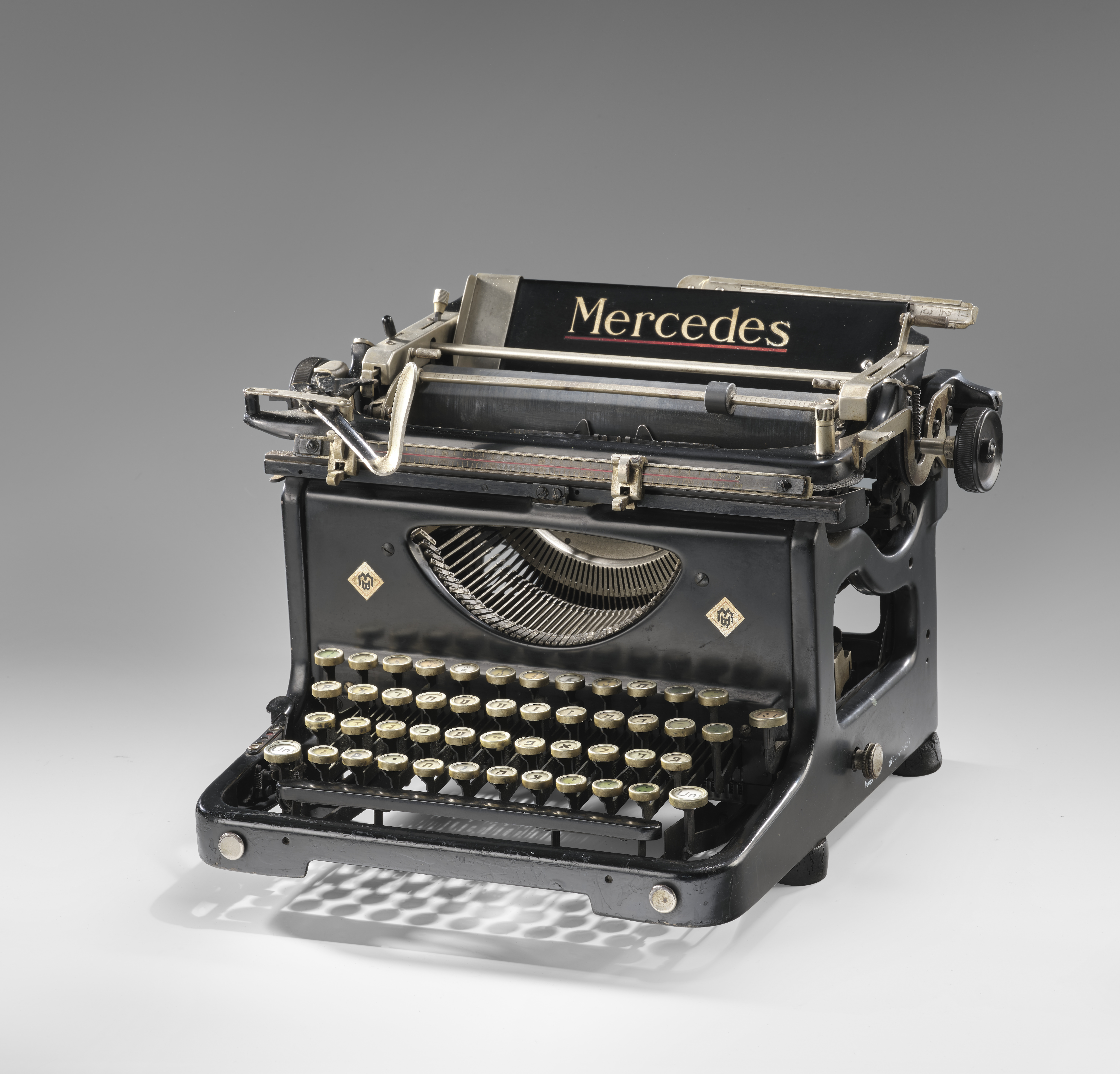
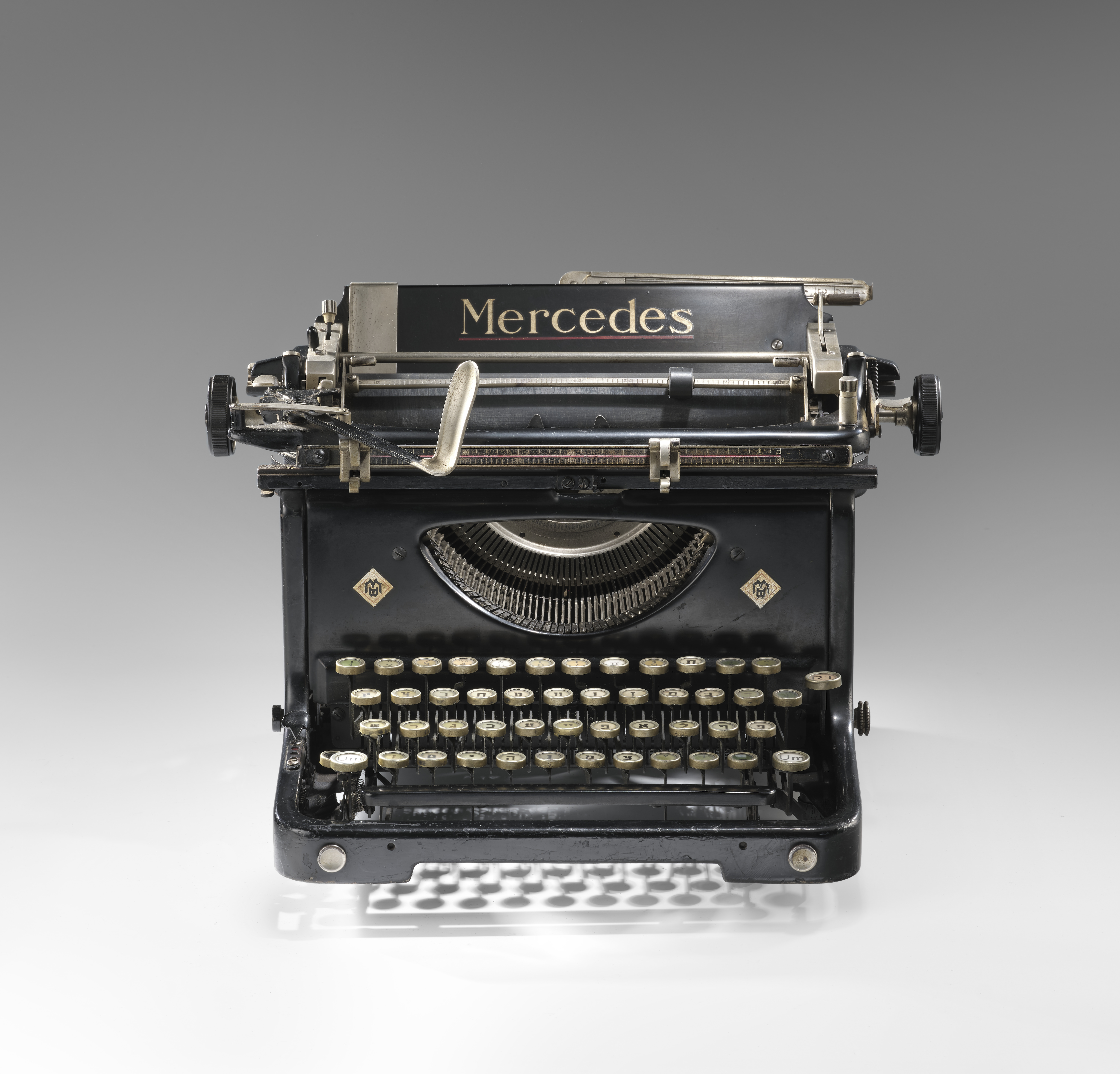

Typewriters with the Hebrew alphabet were produced by various manufacturers before the Second World War. Today, similar copies are extremely rare. The object in POLIN's collection comes from the collection of Lena Zajączkowska (1947-1999), an art historian, curator of the Municipal Museum of Militaria in Wrocław and an activist of the Wrocław branch of the Social and Cultural Association of Jews in Poland. Lena Zajączkowska was also privately interested in historical monuments. So she regularly studied the classifieds sections and went to the monthly second-hand market on Gnieźnieńska Street in Wrocław. It was there that she bought the machine. As the object came from the second-hand market, it is difficult to reconstruct its history. The object was donated to the POLIN Museum by Jerzy Zarawski, whom Zajączkowska asked before her death to take care of her collection.
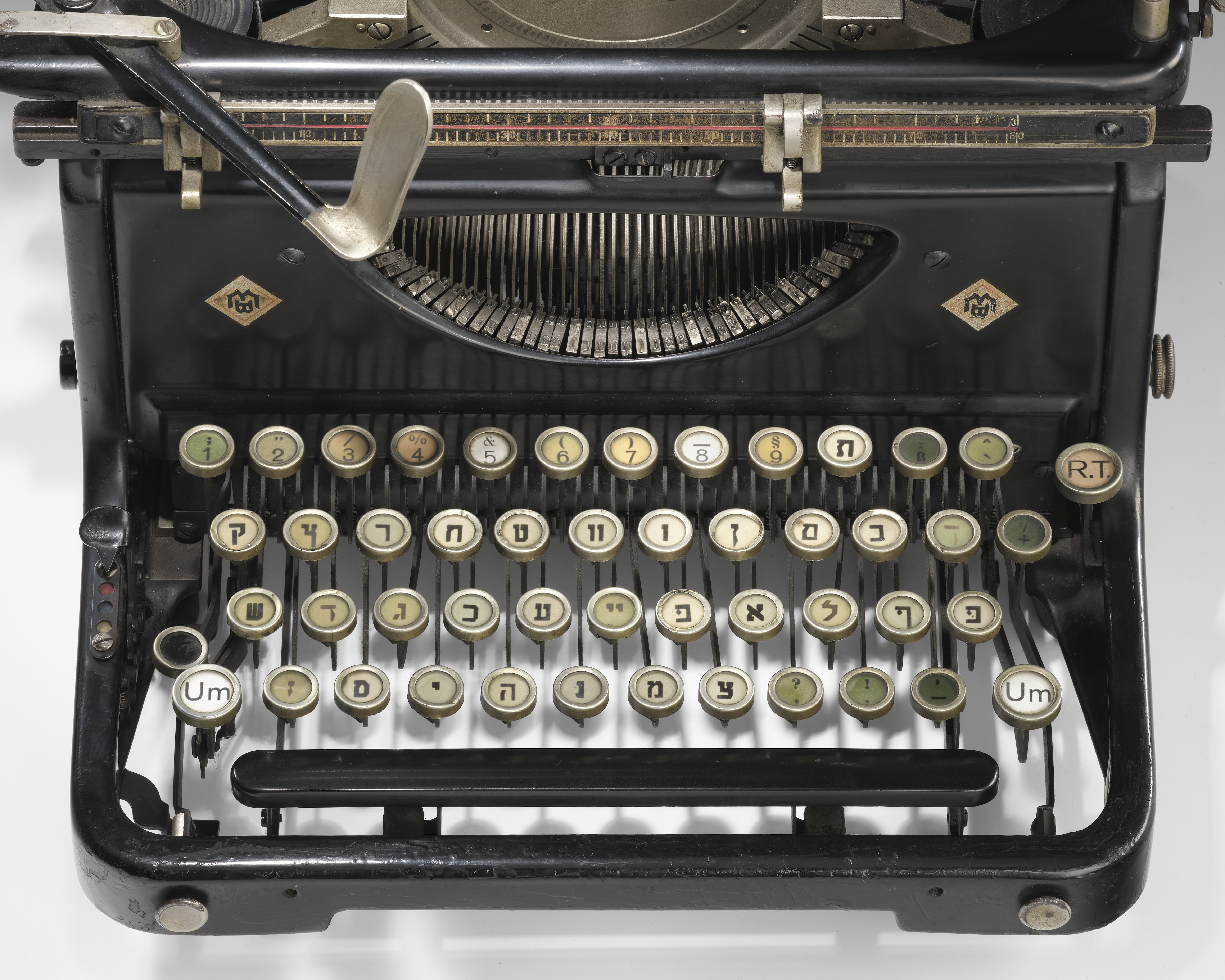
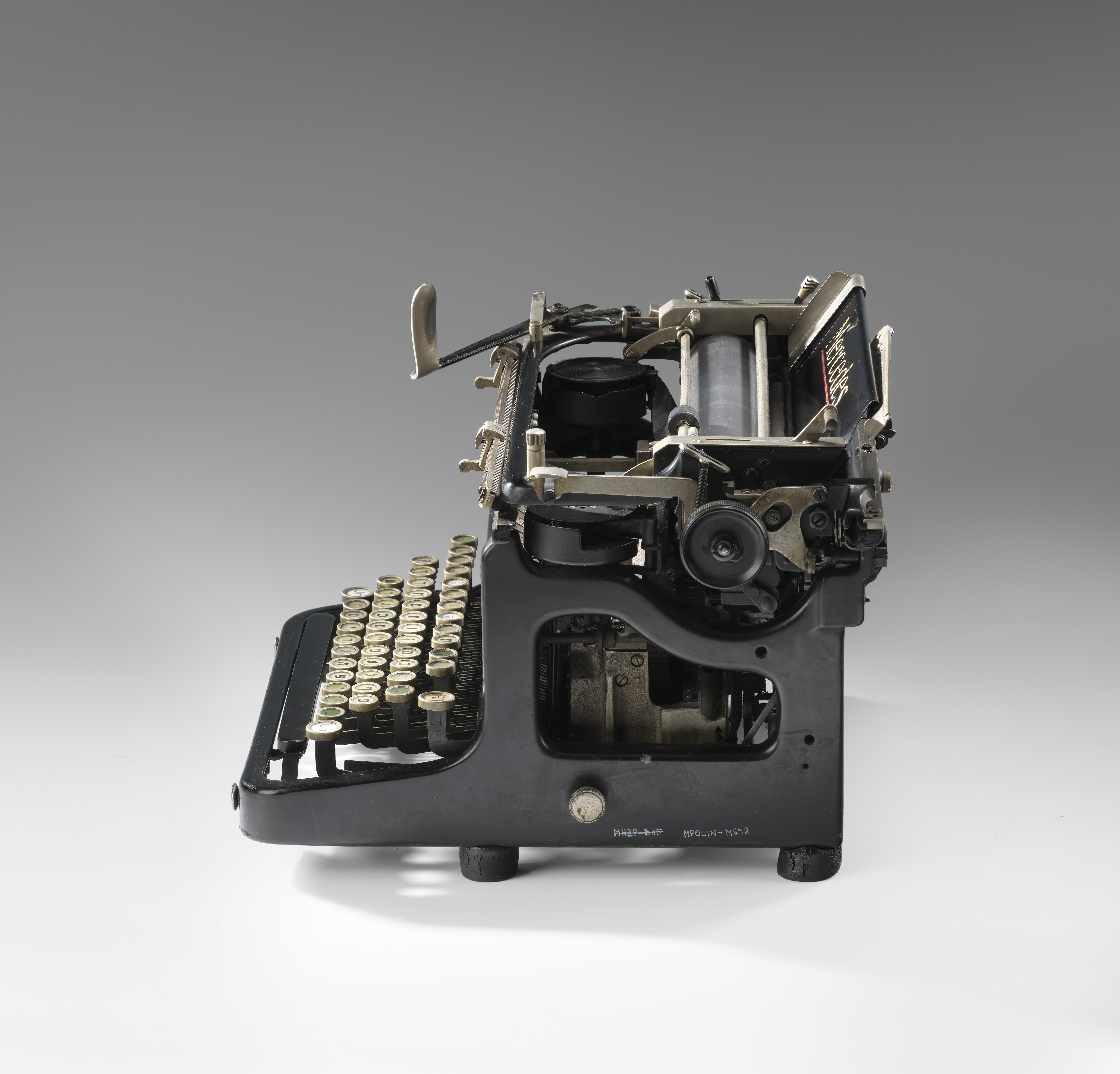
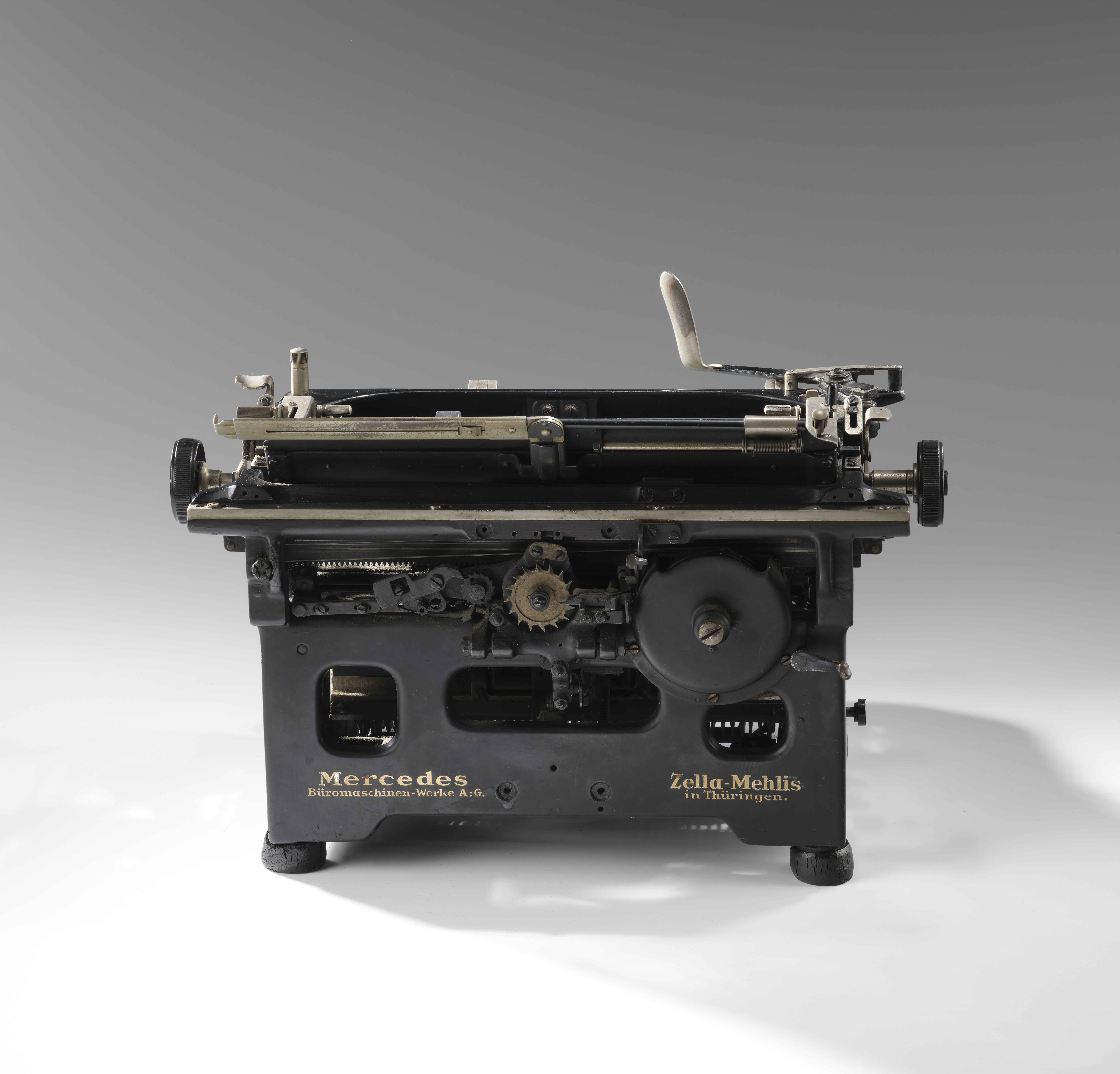
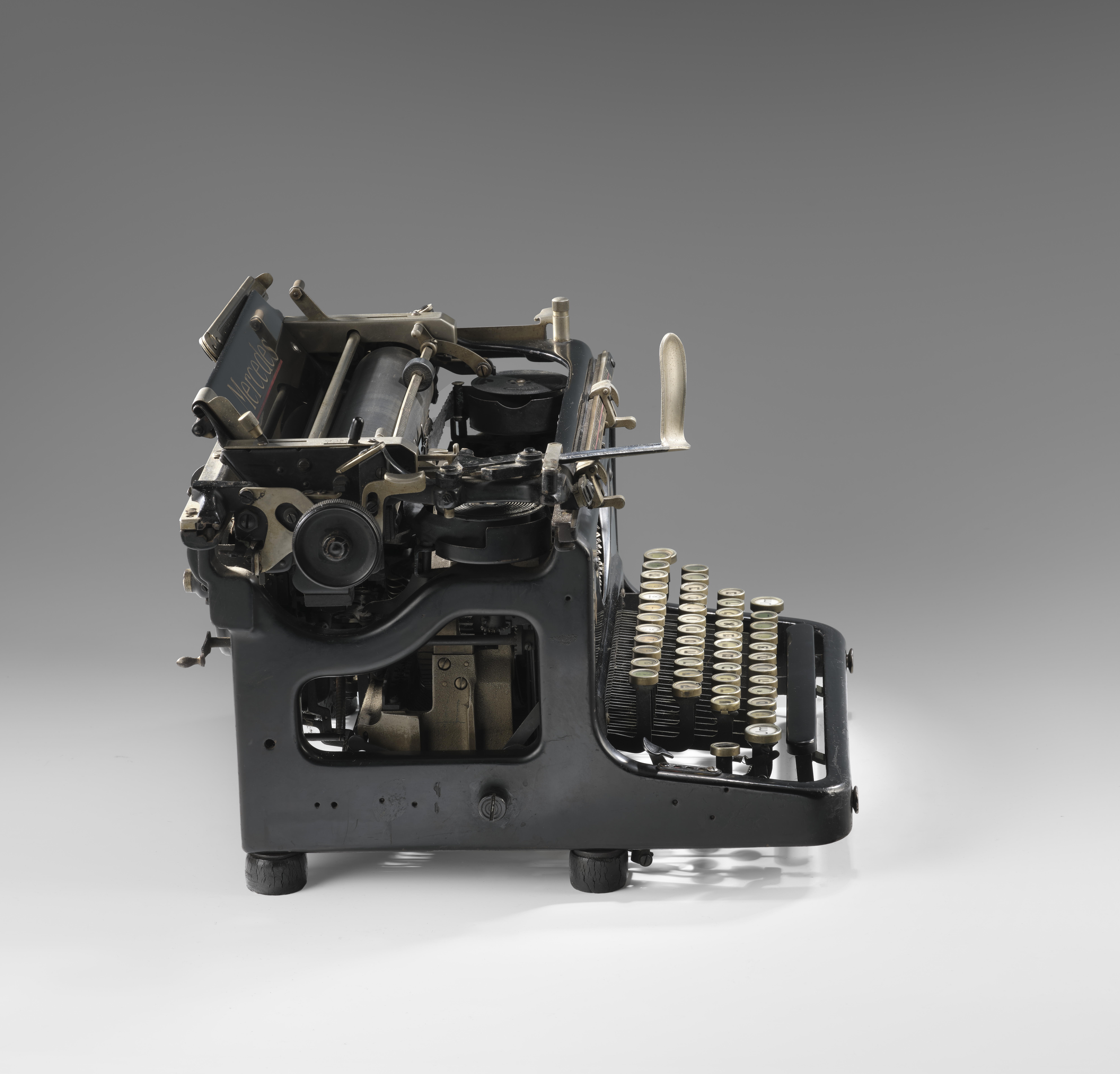
The machine has a cast iron casing painted black. Its body is massive. It is cuboid in shape with slightly rounded edges. The keyboard was placed over a rectangular frame ("a drawer"), which is an extension of the case front in its lower part. The keys consist of a metal base and small fragments of paper on which characters have been applied. These have been protected by glass plates set directly onto them. The Hebrew font was placed on the three lower rows of keys. Arabic numerals were placed on the fourth (upper) row of keys. Below the letter keys there is an elongated horizontal key which makes it possible to separate individual words. On both sides of the key there are special characters (larger than the others) with the inscription "Um" (German: Umschalttaste; a key allowing you to enter a capital letter). In addition, on the right side of the keyboard there is the special character "R.T" (Rücktaste; function to move the page back one character). The central part of the carriage was also painted black, with the manufacturer's name ("Mercedes") in gold paint with a thin red line highlighting the letters. At the back (in the upper part) the mechanisms enabling the machine to function are also visible. At the front (also in the upper part; in front of the trolley) one can also see the roller, which was made of rubber, and the lock, scales and sliders, which are metal. The textile tape used to transfer the letters to the sheet of paper has also been preserved. The machine was also fitted with four rubber feet with a cylindrical shape.
Mercedes Büromaschinen GmbH was founded in 1906 in Berlin by Gustav Meza. Two years later the company built a factory in Zella-Mehlis in Thuringia. Although the name of the office equipment company is associated with a popular car brand, the companies have nothing in common. All they have in common is a lawsuit related to Metz's use of its name. However, the lawsuit ended in a settlement. In 1913, the company was granted the right to use the name Mercedes on its products. From then on, the products operated under the brand name Mercedes Buromaschinen Werke A.G., Zella-Mehlis, Thuringia. The typewriter in the POLIN Museum's collection is based on the design of the extremely popular model 5 from 1901, produced by the American company Underwood. The typewriter was described as the most modern machine of its time, being at the same time the biggest commercial success of the manufacturer. A characteristic feature of the machine was the easy disassembly of the keyboard, which made it easy to change the language version. Mercedes machines were based on the QWERTZ keyboard, a German keyboard standard (as opposed to the Anglo-Saxon QWERTY). In models with Hebrew font the layout of characters on the keyboard was both Hebrew and Yiddish, which included two characters ( וו and יי). The Mercedes machine from the Museum collection has a Hebrew keyboard in the Yiddish version
Marta Frączkiewicz