Shabbats and Annual Holidays
Weekly cycle
The rhythm of life in a traditional Jewish family is structured around a weekly cycle. It consists of six work-days and the seventh day, the sacred Shabbat (Hebrew: "rest"). For those who practise Judaism, the uniqueness and sanctity of the Shabbat are based on its two aspects mentioned in the Torah - “Remember the Sabbath day” and “Observe the Sabbath day”.
The commandment to “remember” (in Hebrew: zachor) encompasses many practices, including the use of special objects - everything which families and communities do intentionally and additionally because of Shabbat. These include ceremonies, three abundant and especially festive meals (in Hebrew: seudah), rest and pleasures (in Hebrew: oneg Shabbat), longer sleep, games, personal and family time, hosting guests, special communal prayers, reading and studying the Torah, as well as festive clothing and a festive atmosphere.
The POLIN Museum’s collection includes many objects which represent or illustrate the concept of "zachor" (“remember”), with Shabbat candlesticks being among the most prominent.

Shabbat candles

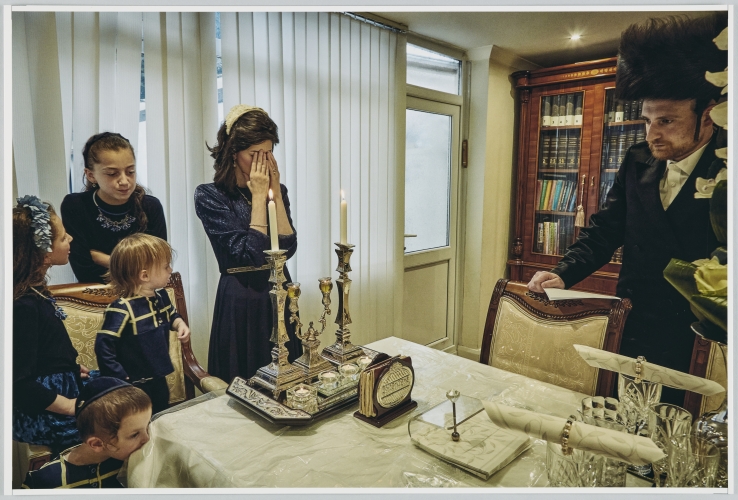
The lighting of Shabbat candles was nostalgically depicted by Natan Gutman in his painting Shabbat, and can be seen today in Agnieszka Traczewska's photograph “Lighting of Shabbat candles in the Horovitz family”.
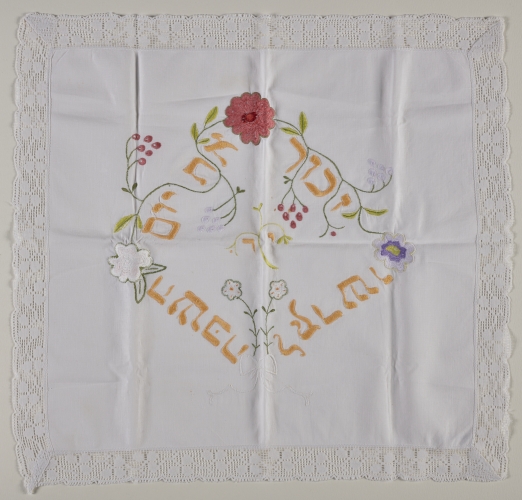
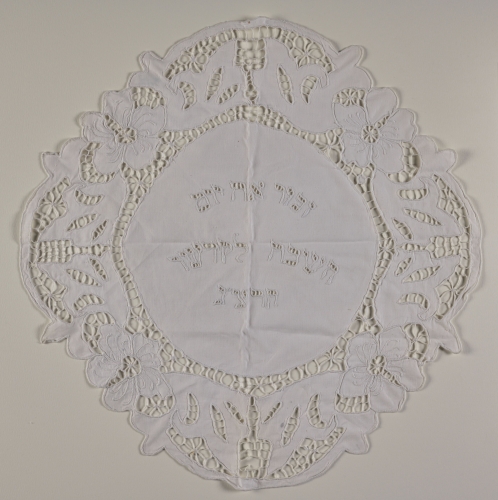
Shabbat cloths, often embroidered by women, also hold a special place - each one being unique. The museum’s collection includes several such cloths, each different from the next.
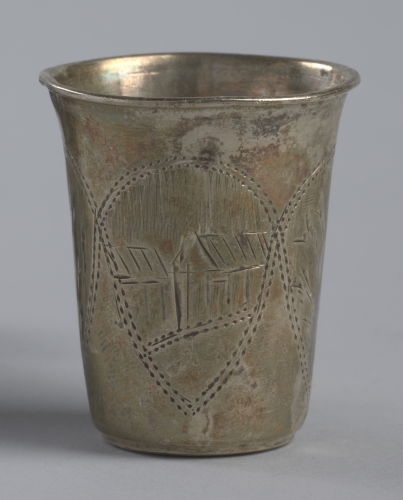
Also found in the collection are kiddush cups and goblets, as well as small glasses for “shabasówka” (a special vodka used on Shabbat). The kiddush (Hebrew: sanctification) is a prayer recited by the head of the household, on Friday evening, over a cup of wine, marking the beginning of the Shabbat (and also before festive meals on other Jewish holidays, after returning from synagogue). On Saturday morning, kiddush is recited again - especially in Polish-Jewish tradition, often over a different kind of alcohol, such as shabasówka.
Havdalah (Hebrew: separation) is the ceremony and accompanying prayer - with blessings - which symbolically marks the end of the Shabbat.

In a theatrical set design project, Bolesław Pacanowski depicted preparations for a Shabbat dinner. The hands of the pendulum clock are set to three o’clock, meaning that there are still a few hours before sunset, which marks the beginning of the Shabbat. On a table covered with a white tablecloth stand two candlesticks with lit candles and, behind them, lies a challah bread.
The term “observe” (in Hebrew: shamor) refers to all the actions that are prohibited on the Shabbat - that is, the thirty-nine halachic categories of work and activities (in Hebrew: melacha) associated with ordinary weekdays. In addition to refraining from work, people who are Shomer Shabbat (“observant of Shabbat”, in Yiddish: shoymer shabes) also avoid physical contact with objects associated with everyday life, such as money or work tools.
The Three Major Pilgrimage Festivals
In addition to celebrating the most important holiday – Shabbat, Jewish families and communities also observe many other annual events in the Jewish calendar. These include festivals (in Hebrew: yom tov), intermediate festival days (chol ha-moed), fasts, and partial fasts (tzom, ta’anit).
Unlike the prayers found in siddurim (Hebrew prayer books used for weekdays and Shabbat), prayers for annual holidays are different, as they are written with the specific character of each holiday. For this reason, they are collected in separate prayer books called machzorim (Hebrew: cycle).
It is in daily, Shabbat and holiday prayers that the differences between Ashkenazi (Hebrew: nusach Ashkenaz, the tradition of Jews from Central and Eastern Europe) and Sephardi (Hebrew: nusach Sfard, the tradition of Jews from the Mediterranean region) customs are most clearly visible.
The major holidays, which originate from the Torah, include the three Pilgrimage Festivals (in Hebrew: Shalosh Regalim): Passover (Pesach), Weeks (Shavuot), Tabernacles (Sukkot).
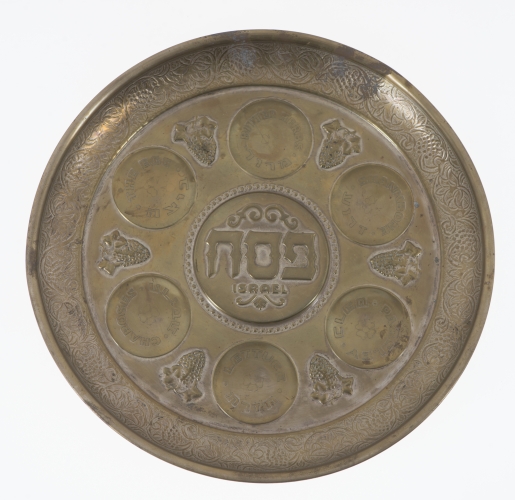
Due to its specific requirements - such as the removal of chametz (anything related to grains and leavened products), religious households prepare meticulously and celebrate Passover (Pesach) with great ceremony, especially during the opening seder dinner. During this meal, special tableware is often used, such as a seder plate or a Pesach cup. A distinctly Ashkenazi tradition is the exclusion of certain foods known as kitniyot (Hebrew: legumes) from the Passover menu.
The Passover seder follows a ritual outlined in the Haggadah (Hebrew: "story"). The Haggadah is part of rabbinic literature, which does not deal with legal matters. For more on halacha - the section of rabbinic literature related to Jewish law -see the note titled “What It Means to Be a Pious Jew” (found under the Stories tab).
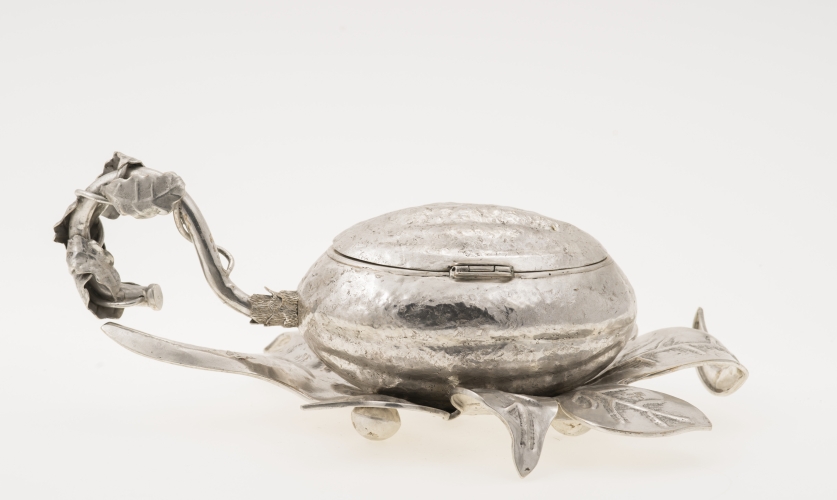
Sukkot is a holiday celebrated outside the home, due to the commandment to dwell for seven days -at least for meals - in specially-constructed sukkahs (temporary huts or booths). A practising family, who have space next to their house or a balcony or terrace, will construct a sukkah there and celebrate in it. Before the war, for example, this is how the family of Nuta Ajzenberg, a tannery owner from Szydłowiec, observed Sukkot - in their sukkah, which also served as an elegant garden porch. Those, who do not have the ability to construct their own sukkah, will visit friends or use community sukkahs erected near synagogues or other communal areas. Each person is expected to acquire (or at least borrow) a set of the Four Species (Arba Minim): the etrog (citron fruit), lulav (palm frond), hadas (myrtle branches), and arava (willow branches), to fulfill the Torah commandment of ritual waving during the festival.
Shavuot is the holiday commemorating the giving of the Torah on Mount Sinai. In the synagogue, a special Torah portion, containing the Ten Commandments, is solemnly read. A praiseworthy custom is to spend the entire night of the holiday in study and discussion of religious texts (Tikkun Leil Shavuot).
Shemini Atzeret and Simchat Torah
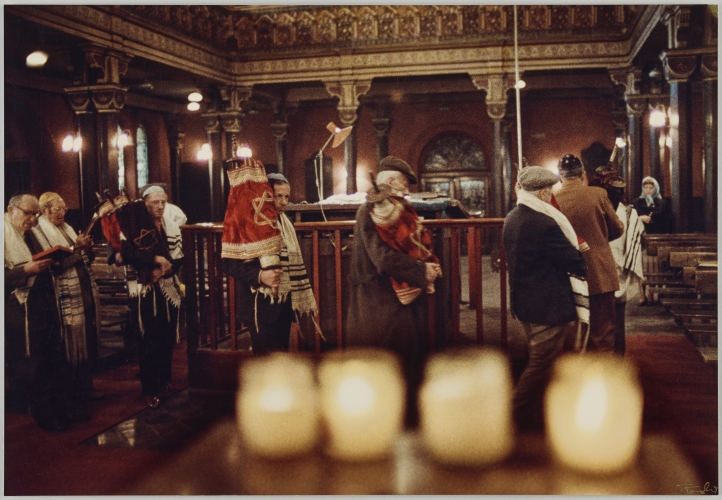
The synagogue (from the Greek to gather), the Jewish house of prayer and religious study, is also a place for joyful community celebration of the great holidays Shemini Atzeret (Hebrew: Eighth Day of Assembly) and Simchat Torah (Hebrew: Rejoicing of the Torah). On Simchat Torah, the annual cycle of Torah readings comes to an end and begins anew. This is accompanied by hakafot (Hebrew: circuits) - joyful dances and songs, while carrying the Torah scrolls (Sefer Torah) - both inside and outside the synagogue. After the Holocaust, Simchat Torah was celebrated in only a few synagogues. One of these rare post-war ceremonies took place in 1983 at the Tempel Synagogue in Kraków and was captured in a photo-graph by Tomasz Tomaszewski.
Fasts of Mourning
The second mandatory communal fast, apart from Yom Kippur, occurs on the saddest day of the Jewish year - Tisha B'Av (Hebrew: the ninth day of the month of Av). This day commemorates the dates of the destructions of the First and Second Temples in Jerusalem. It is a day with a profoundly mournful character, during which the recitation of kinot (Hebrew: elegies) is obligatory, following mourning customs similar to those observed after the loss of a close loved one.
There are four communal minor fasts observed each year, established to commemorate various difficult historical events. These fasts require the refraining from eating and drinking from dawn to dusk on the designated day.
In addition, there are local fasts, established by communities affected by exceptional tragedies. One such fast was decreed by the Vaad Arba Aratzot (Hebrew: Council of the Four Lands), the most important Jewish self-governing body in a former Republic of Poland. The council decided to commemorate the bloody pogroms of the Chmielnicki Uprising by setting the fast on the 20th of Sivan, as this date marks the massacre of Jews in Niemirów in 1648.
Rosh Hashanah and Yom Kippur
Also in the synagogue, Jews pray with particular length and seriousness during the High Holy Days of Rosh Hashanah (Hebrew: Beginning of the Year) and Yom Kippur (Hebrew: Day of Atonement or Day of Reconciliation). The period, between these two holidays, is called the “Ten Days of Repentance”.
Especially on Yom Kippur, the holiest day of the Jewish year, during long and solemn penitential prayers, everyone is obligated to ask God for forgiveness of sins and to be inscribed in the “Book of Life”.
This is the culminating moment of the year, where repentance (teshuvah) and reconciliation, with God and with fellow human beings, are of utmost importance. Acts of asking for forgiveness with words and making reparations through deeds for wrongdoings and possible harm are required. The tradition calls for spiritual introspection and life repair to begin even before these holidays, through daily participation in additional penitential prayers called Selichot (in Yiddish: Sliches).
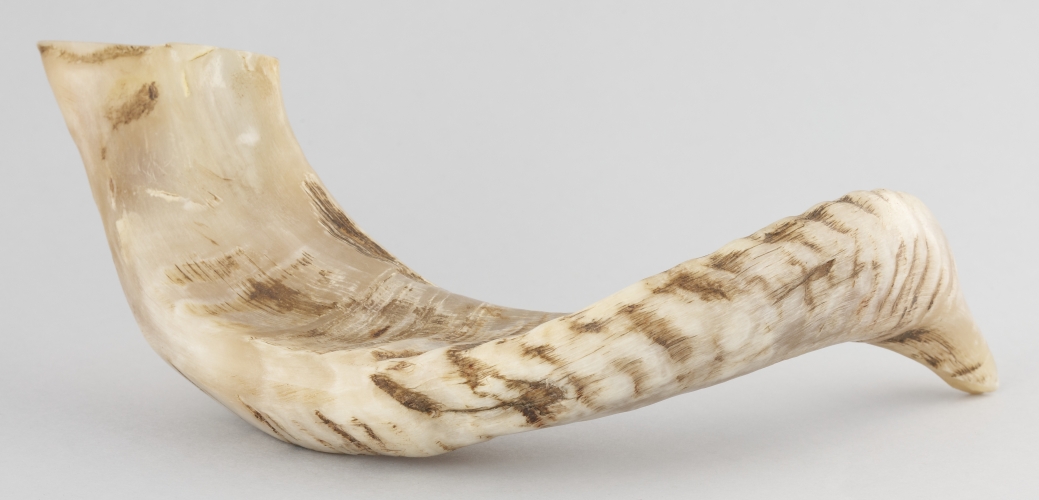
A key part of repentance, during this period, is the blowing of the shofar (Hebrew: ram's horn) and listening to the sound of this instrument is a very important mitzvah (commandment) on Rosh Hashanah. For this reason, in Poland, Rosh Hashanah is sometimes referred to as the Festival of Trumpets.
On this day, a popular custom is to go to a body of living water (river, lake, sea, etc.) to recite Tashlich (Hebrew: cast away), a prayer asking for the "casting away" of the sins from the previous year. This is also a period very conducive to fulfilling the mitzvah of tzedakah (Hebrew: social justice or charity), or giving money to those in need. Such individuals should be noticed and supported throughout the year.
(Further details on the Halachic commandment regarding support for others can be found in the text “What Does It Mean to Be a Devout Jew”).
Purim and Channukah
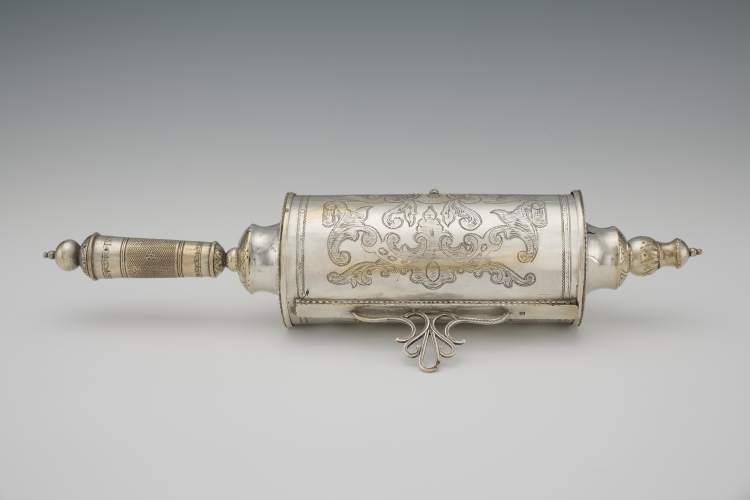
The most important historical Jewish holidays, which are not derived from the Torah, but were established by rabbinic decisions, are Purim and Channukah. The joyful celebration of Purim is significant for the community, as it is commanded to gather together to read the Megillat Esther (Hebrew: The Book of Esther). For the scroll of Esther, beautiful bindings were often commissioned, such as one created by Franciszek Piątkowski in 1846 in Kraków. During Purim, it is customary to exchange gifts, give charity to the poor, and engage in lively celebrations.
A special feature of Purim observance is the excessive drinking of alcohol and masquerades (purimschpiel in Yiddish), making the day unique. The museum's collection includes photos from Purim parades (including those from pre-war Palestine) and from Purim parties (e.g., from the Grand Shelter House in Warsaw).

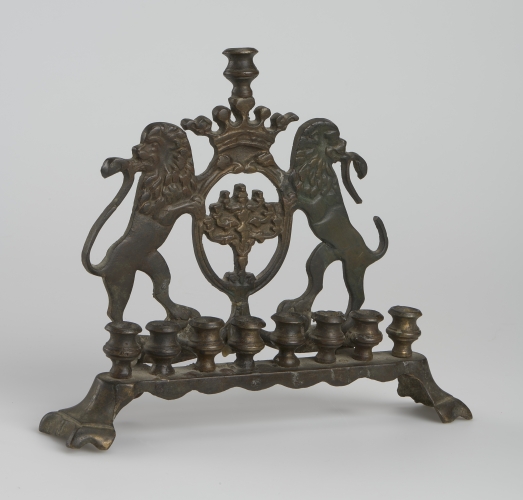
Channukah is a more family-oriented holiday. Its essence is in the family gathering at home each festive evening to perform the ceremony of lighting the Channukah lights on the chanukiah (Hebrew: Chanukah menorah). The museum's collection includes several home Channukah lamps, and the collection continues to grow.
Piotr Kowalik